Imagine a street where music pours out of every doorway in the evening. Trumpets sing, drums beat, and people dance inside the clubs. This isn’t a fairy tale—it was a real street in Seattle called Jackson Street. And the most surprising part is that this musical street emerged because of a deeply unfair rule. Let’s look at how something beautiful grew out of a bad rule—and how that beauty is still alive today.
The Rule That Separated People
Many years ago, in the 1930s and 1940s, an unfair rule existed in America: Black people and white people were forced to live, study, and spend their free time separately. This was called segregation. Black musicians were not allowed to perform in “white” concert halls and clubs in the city center.
But musicians had their own union—a kind of large mutual-aid club for people in the same profession. That union was also divided in two: one for white musicians and another for Black musicians. The Black musicians’ union was called Local 493.
It seemed like a sad story. But Black musicians did not give up. They began opening their own clubs on Jackson Street, in a neighborhood where many of Seattle’s Black families lived. There were so many clubs, and the music was so good, that people from all over the city began coming there—both Black and white, despite all the rules.
Two Teenagers Who Became Legends
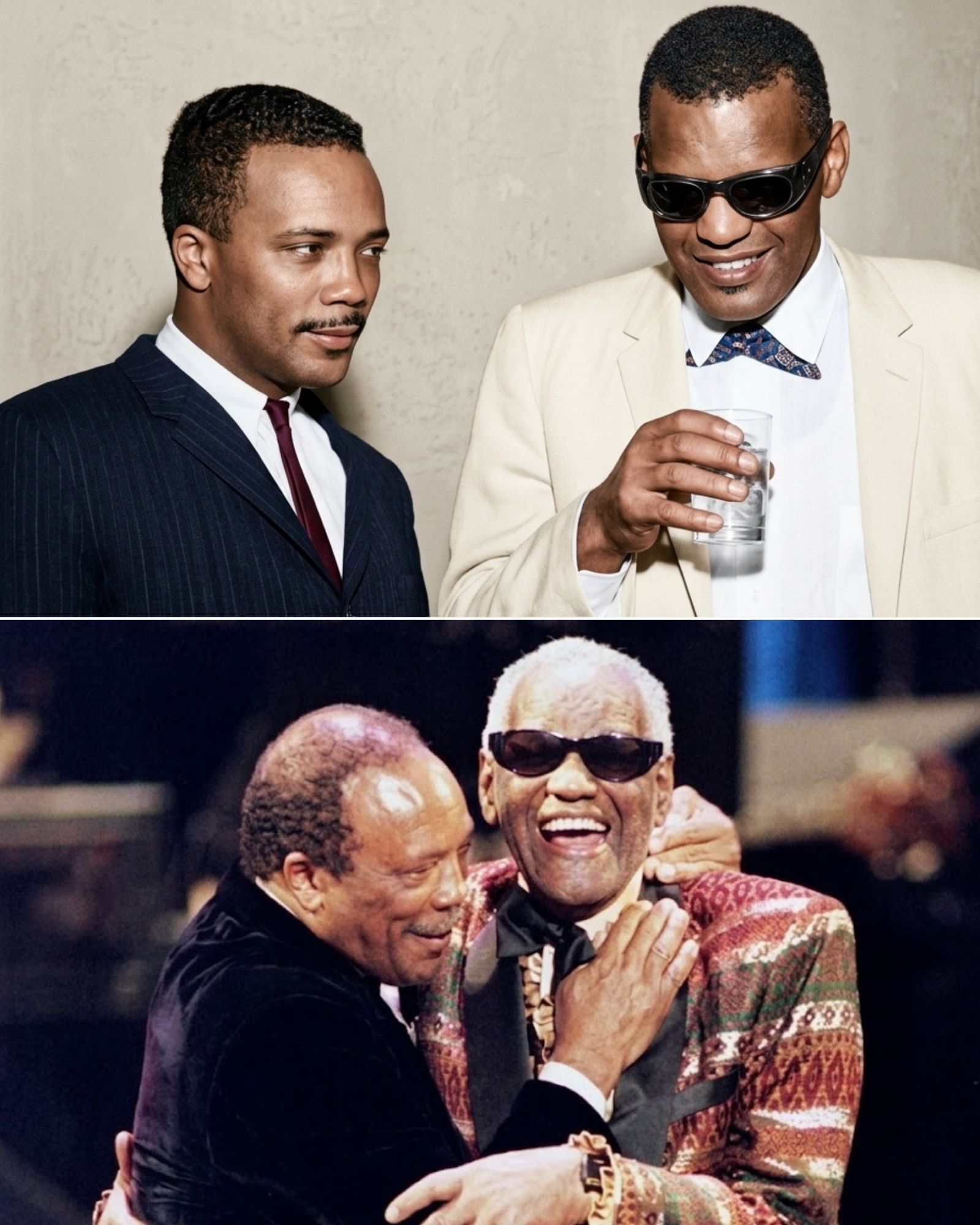
On that very street, a meeting took place in the late 1940s that changed the history of music. A blind young man named Ray Charles came to Seattle when he was very young—he was only 17. He began playing in the clubs on Jackson Street.
There, he met another teenager—Quincy Jones, who was only 14. Quincy loved music and dreamed of becoming a composer. Although Ray was blind, he recognized a genuine talent in the boy and began teaching him—showing him how to compose music and play chords on the piano.
Quincy Jones later recalled that Ray Charles taught him more than any school could have.
Imagine it: two ordinary teenagers met on a musical street—and many years later, one became one of the world’s most famous singers, while the other became a legendary producer who even worked with Michael Jackson! This is what can happen when there is a place where people can simply play music together.
How the Two Unions Came Together
Years passed, and people gradually began to understand that separating musicians into “Black” and “white” groups was foolish and unfair. After all, music does not ask what color skin the person playing it has.
In 1958, Seattle’s two musicians’ unions—the white union and the Black union—merged into one. This happened earlier than in many other American cities, especially in the South, where segregation lasted much longer. In this respect, Seattle was slightly ahead of its time.
Here is how the situation changed:
| Year | Event |
|---|---|
| 1930s | Segregation divides musicians into two unions |
| 1940s | Clubs on Jackson Street flourish, and a young Ray Charles arrives |
| 1948 | Quincy Jones meets Ray Charles |
| 1958 | Seattle’s two musicians’ unions merge into one |
The Music Lives On Today
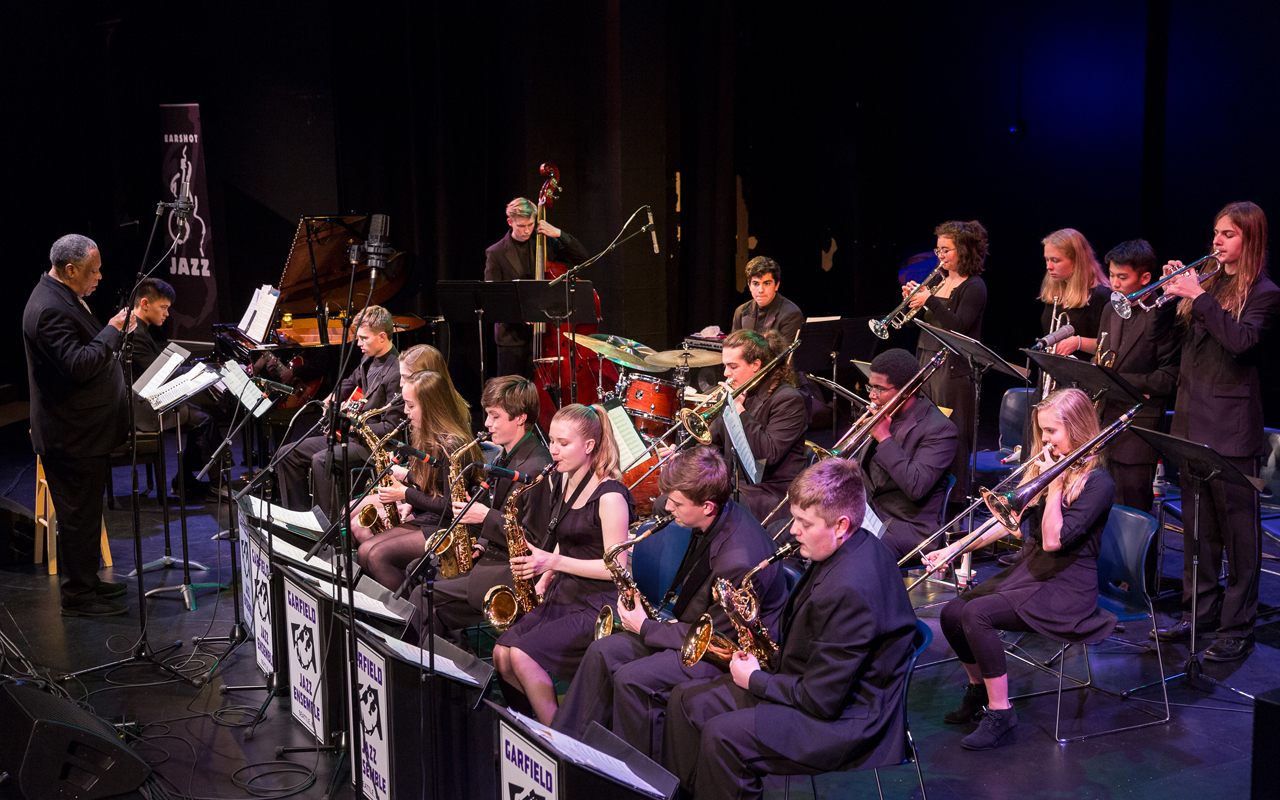
Now for the most interesting part: that musical tradition did not disappear. In the same neighborhood where Jackson Street once thrived, Garfield High School stands today. The school has a jazz band that is considered one of the best high-school jazz bands in the entire world! The students travel to international competitions—for example, in New York—and win, competing against musicians from around the globe.
This creates an astonishing chain of events: an unfair rule forced Black musicians to create their own clubs → two future musical geniuses met and became friends in those clubs → the neighborhood’s musical tradition survived → and today, ordinary schoolchildren in the same Seattle neighborhood play jazz so well that they amaze the world.
This story teaches an important lesson: even when rules are unfair and hurt people, people themselves can create something beautiful in spite of everything. Music, friendship, and talent proved stronger than bad rules—and that strength can still be felt in Seattle whenever a trumpet sounds at Garfield High School.