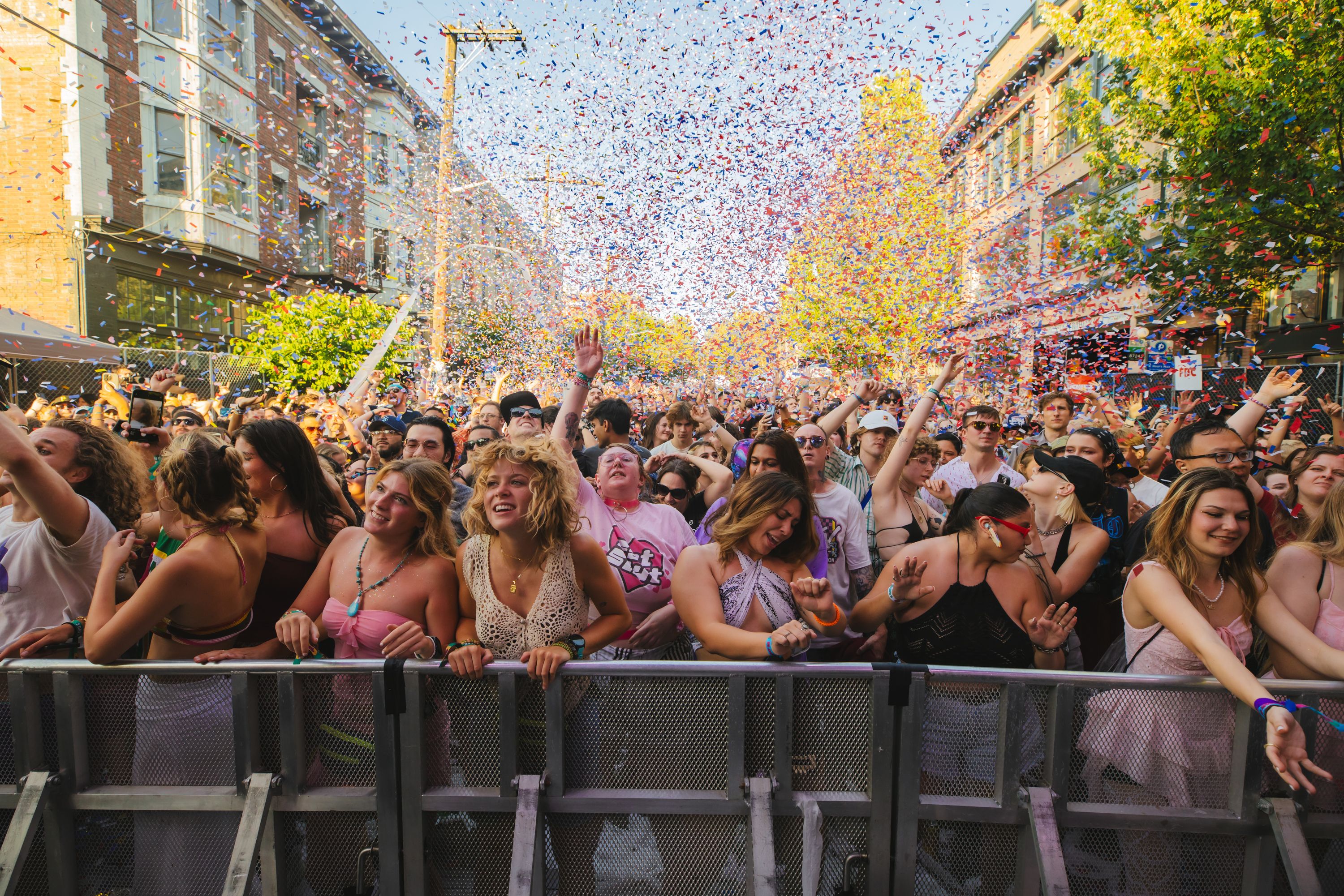
Every summer in Seattle, on a hill with a very important-sounding name—Capitol Hill—one of the streets is closed to cars. In their place, the asphalt fills with stages, musicians, ice cream, and crowds of people dancing right where buses usually go. The festival is called Capitol Hill Block Party. It started small, in the late 1990s, as a party for neighbors. And the place where it grew up used to belong not to music, but to cars.
A Hill with a “Big” Name
The name “Capitol Hill” sounds as if there’s a huge government building on the hill. But there isn’t. Washington State’s government is based in Olympia, while ordinary people, cafés, and clubs are what you’ll find on this Seattle hill.
The name was coined in the early 20th century by developer James Moore. It’s thought that he borrowed it from a neighborhood of the same name in Denver. Moore hoped the state capital would move to his hill, which would make the land more valuable. The capital never moved, but the name stuck.
Imagine naming your room “The Royal Hall,” hoping that a real queen might visit one day. The queen never came, but your friends did, and the room became a lot of fun. That’s more or less what happened with this hill.
Auto Row Turns into a Home for Music
In the 1920s, part of the hill around Pike and Pine streets was known as Auto Row. It was lined with large buildings where cars were sold and repaired. They had high ceilings and wide windows so the cars would look good behind the glass.
Over time, car dealerships moved elsewhere, and the buildings fell empty. They could have been torn down, but it was often easier and cheaper for their owners to rent them out. Rents were low, and people without much money—but with guitars, drums, and ideas—took notice: musicians, artists, and small bar owners. The high ceilings turned out to be perfect for sound.
From an environmental perspective, this is a good story. Building something new is difficult; it takes concrete, steel, and energy. Giving an old building a new purpose saves all of that. A former car showroom became a concert venue, with almost no new construction needed.
A Party for the Neighborhood
As more musicians filled the clubs and bars, someone came up with the idea of holding a big celebration for all the neighbors. It’s usually called a “block party”—a party for one neighborhood block. It’s an old American tradition: residents close their street, bring out tables, and play music.
That’s exactly how Capitol Hill Block Party began. Small stages, local bands, neighbors who knew one another by name. Much like a party in your own courtyard, where there’s room for everyone.
Then the festival grew. More and more people came, there were more stages, and well-known bands performed. Later, the streets were fenced off, and people began to be charged for entry. Not everyone liked that. Some neighbors felt the festival had become too big and noisy. Others were glad their neighborhood had become famous across the city. The disagreement remained, as it does in big families where everyone loves the party in their own way.
The Festival and Caring for the Planet
The more people attend a festival, the bigger their footprint. How they get there and what they do with their trash matter.
Capitol Hill is convenient because you can get around without a car. Shops, cafés, and stages are close together, so visitors walk or ride bikes. Since 2016, the hill has had a light rail station, making it even easier to get there. So people arrive on foot or by train at a place where cars used to be sold.
Seattle takes waste seriously in general. The city requires disposable food-service ware to be recyclable or compostable—that is, able to break down into soil over time. In 2018, Seattle became one of the first major U.S. cities to ban plastic straws and utensils at food-service businesses. So at a festival where food and drinks are sold, people are increasingly using tableware that won’t spend hundreds of years in a landfill.
What I Especially Like About This Story
Here’s what matters most to me. The festival wasn’t created by big companies; it grew out of the neighbors’ desire to get together. Former garages found a new life instead of becoming waste. And a place ruled by cars became a street for people for two days.
Of course, the festival has its challenges: noise, fences, and arguments over ticket prices. But I think these kinds of arguments only happen where people care about what’s going on in their neighborhood.
A Street That Belongs to People
The story of Capitol Hill Block Party shows that a city can change without major construction projects. Sometimes it’s enough to look at what’s already there in a different way: an old garage, an empty street, neighbors with guitars. Then the former Auto Row becomes a music venue, and a hill with a borrowed name becomes a place that truly belongs to its people. And every July, it reminds us that streets can belong not only to cars, but also to the people who walk, sing, and dance along them.