Imagine a library where you can walk and walk along rows of bookshelves — and you never run into a staircase. The shelves don’t end. The books don’t stop. You simply move along a gentle incline, as if you’re climbing a very sloping hill, and all around you are thousands and thousands of books. This kind of place exists in Seattle. It’s called the “Book Spiral.” And it almost disappeared before it could even be built.
A Broken Staircase
In a typical library, books are arranged by a system — created by American Melvil Dewey back in 1876. Each book gets its own number: for example, all books about dinosaurs sit together, and next to them are books about other animals. It’s convenient. But there’s one problem that almost nobody thinks about: libraries have multiple floors. And when the numbers of the books “run out” on one floor, you have to go to the stairs, go up higher, find the elevator — and only then continue along the shelves. The Dewey system “breaks” at every staircase.
Seattle Public Library director Deborah Jacobs had been thinking about this for years. She worked with books and with the people who look for them, and she saw how readers get lost, confused, and tired. In the late 1990s, city officials decided to build a new library building — the old one, opened back in 1960, had long since become cramped and inconvenient. And then Deborah did something unusual.
A Woman Who Didn’t Come With a Blueprint, but With Questions
When the project brought in the famous Dutch architect Rem Koolhaas, many expected the library director to tell him, “Give us a big reading hall, lots of shelves, a beautiful entrance.” But Deborah did the opposite. She came to him with a list of problems, not with a plan of rooms.
It’s like asking a bike mechanic to fix your bicycle — not “paint it blue” or “put on a new seat,” but “it keeps slipping off the road on turns, and I don’t know why.” A real master would then come up with a solution you may never have even thought to suggest.
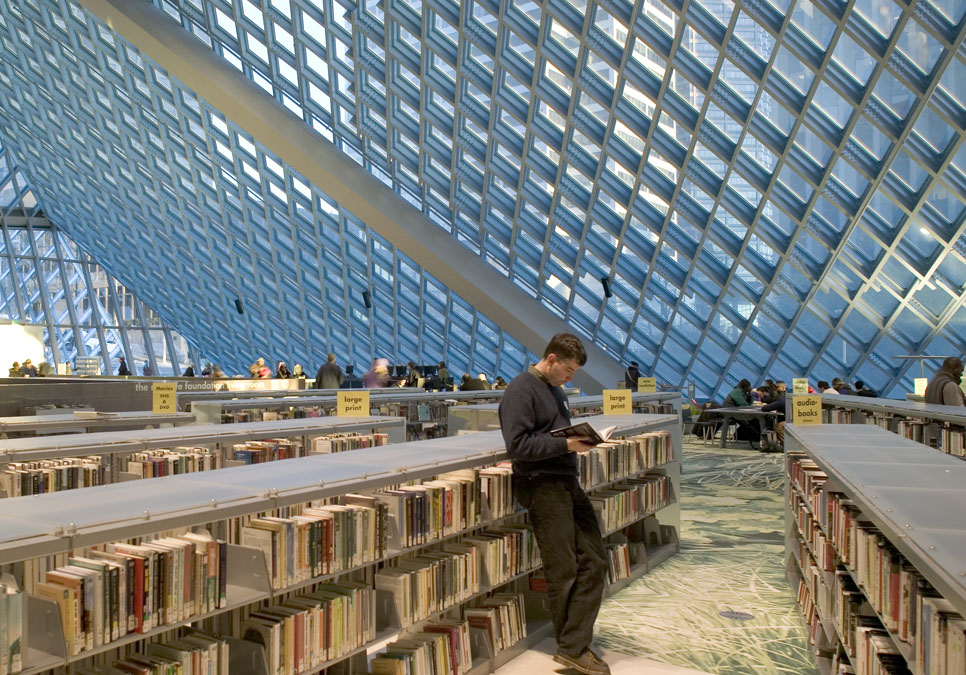
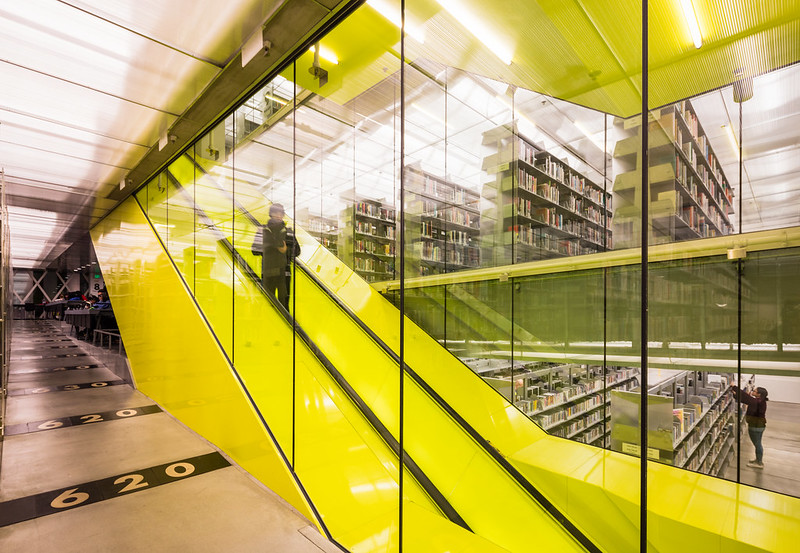
Koolhaas heard about the “broken staircase” — and came up with a spiral. Instead of floors separated by staircases, there would be one long, smooth ramp rising across four levels. The books line it continuously, from the first number to the last. You simply walk — and read the spines. No staircases. No interruptions. As if the entire library were one very long shelf, coiled up like a snail.
The Fight for a Strange Building
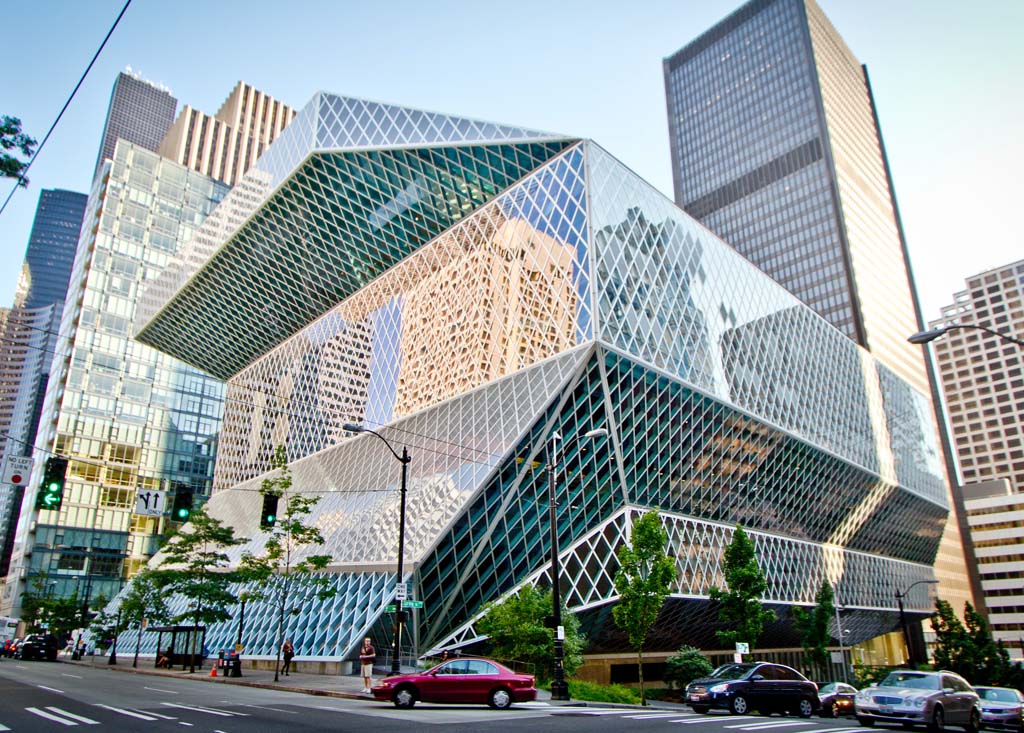
When the project was shown to city officials and Seattle residents, many were bewildered. From the outside, the building looked like a huge crystal of glass and steel — angular, unfamiliar, nothing like what people were used to calling a “library.” Some said it was ugly. Others said it was too expensive. Still others suggested removing the spiral and making ordinary floors: cheaper, simpler, more familiar.
That’s when the real battle began. Deborah Jacobs had to explain again and again why the spiral mattered. She brought library staff, readers, and teachers to meetings. In 1998, Seattle residents voted to allocate money for construction — nearly two hundred million dollars. It was a vote by ordinary people: they said “yes” to a strange building that nobody had seen yet, because they believed those who defended it.
The pressure didn’t stop during construction either. Several times, officials returned to the idea of “simplifying” the design. Each time, Deborah and her allies stood their ground. The spiral stayed.
A Place You Want to Go Back To
The library opened on May 23, 2004. In the first days, thousands of people came — not only for books, but just to take a look. Inside, it was bright and spacious: glass walls let in so much sunlight that it felt as if you were sitting outside. The “living room” on the third floor — a huge open space with soft couches — became a place people came just to relax, read, and talk.
And the spiral… Those who walked through it for the first time said it felt like taking a walk inside a giant book. You move along, and the shelves rise slowly with you. Books on nature give way to books on history, history to philosophy, and philosophy to art. No staircases. No breaks.
Architectural journals around the world named the building one of the best public structures of the early 21st century. The library received many awards. But perhaps the most important award is what people in Seattle still call it: theirs. Not a museum of architecture, not a tourist attraction — but a place they go every week.
The Boldest Choice Can Sometimes Be the Strangest
The story of the Seattle library is the story of what happens when someone refuses to say, “Do it the usual way.” Deborah Jacobs wasn’t an architect or an artist. She was a librarian who knew very well what prevents people from loving books. And she found a person who could solve problems — not just draw beautiful buildings.
While everyone around her said, “Simplify it,” “Make it cheaper,” “Make it like everyone else,” she and thousands of Seattle residents said, “No.” They defended the spiral — and in doing so, defended the idea that a library shouldn’t be a storage facility for books, but a place you want to go. A place where even the journey between the shelves can be an adventure.
Sometimes the most important thing is not to settle for “good enough” when you have a chance to make it truly great.