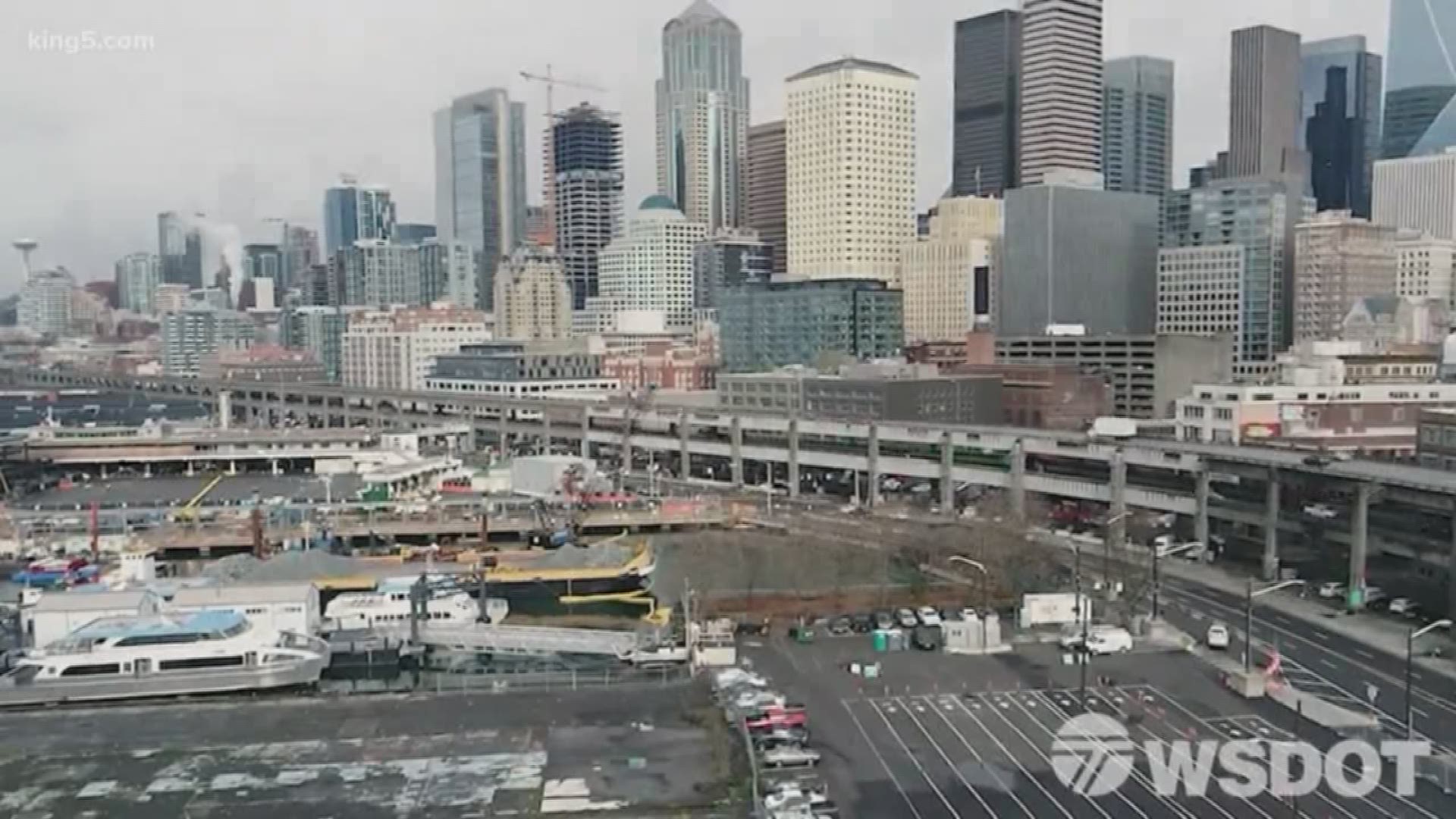
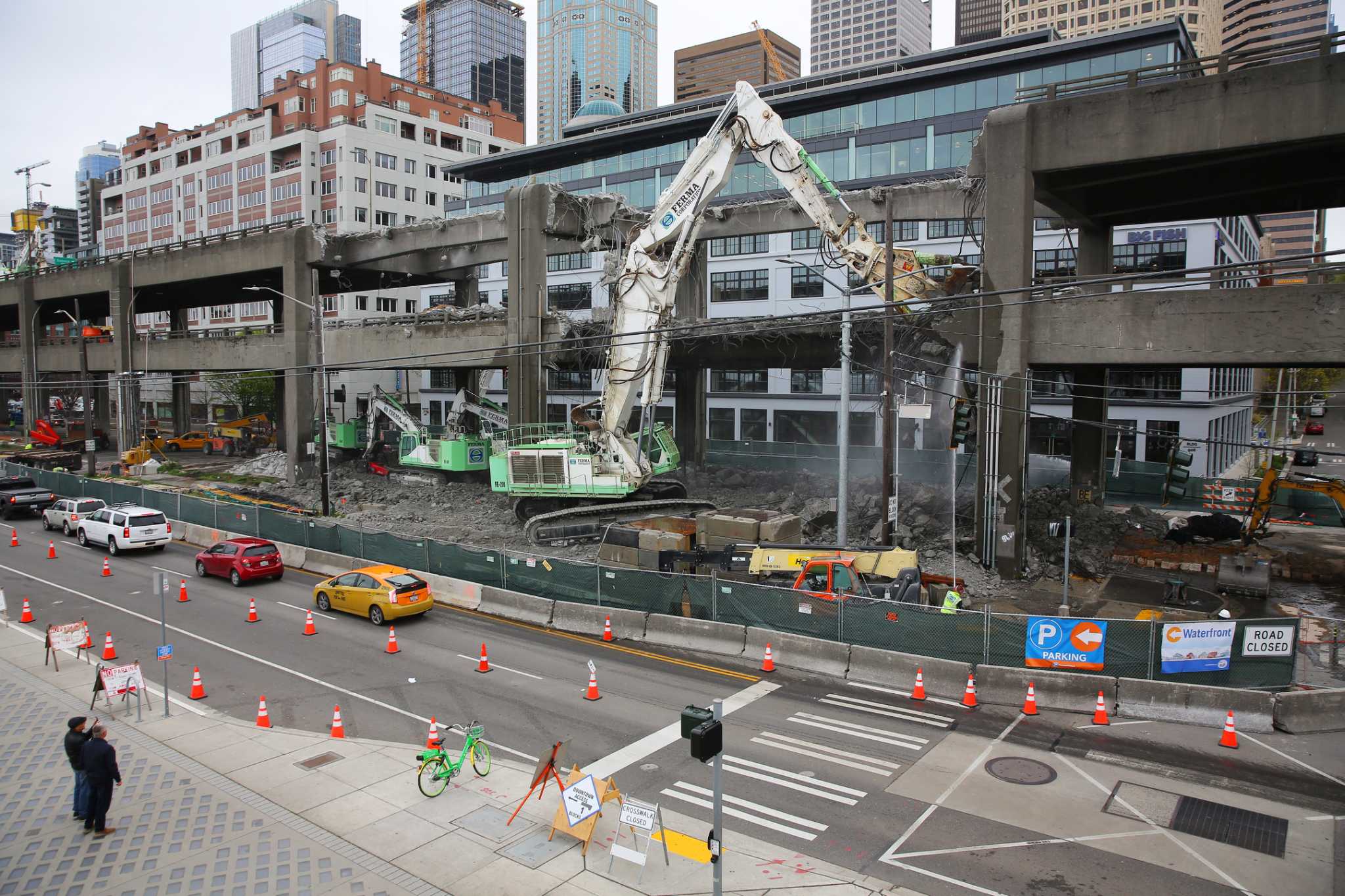
Imagine that a huge gray curtain has hung outside your window for many, many years. It is so large that you cannot see the sea behind it at all. That is how residents of the American city of Seattle lived beside a tall elevated highway called the Alaskan Way Viaduct. It stood along the waterfront for more than fifty years—and one day, the city decided to remove it. But the most interesting part happened not when the road was built, but when workers began taking it apart: they found real secrets from the past beneath it.
The Road That Blocked the Sea
The Alaskan Way Viaduct was a two-level concrete highway built in 1953. It stretched along the waterfront like a huge gray bridge standing on thick columns. Cars drove directly above the heads of people walking below.
The problem was that the road blocked the view of the water. For years, people who lived and worked in Seattle could not see the bay simply by walking outside—the shadow of the massive concrete structure stood in their way.
The road was also dangerous. In 2001, an earthquake struck Seattle, and the viaduct’s concrete began to crack. Engineers—people who check whether buildings and roads are strong and safe—said the structure could collapse in the next major earthquake. Something had to be done.
What They Found When They Began Dismantling the Viaduct
City officials decided to build an underground tunnel beneath the waterfront and demolish the old elevated highway. Work began in 2016 and took several years.
That was when the most interesting discoveries were made. As workers began breaking up the concrete, they found unusual objects:
- Old coins that builders in the 1950s had tossed into the foundation “for good luck”—a tradition many workers followed when beginning a major construction project.
- Time capsules—special containers that people in the past buried for future generations, filled with notes and small objects.
- Pieces of the concrete bearing the marks of old builders’ inscriptions and tools.
City museums and volunteers decided not to throw away the discoveries. Some pieces of concrete were turned into small souvenirs and given to local residents—as pieces of real history they could hold in their hands.
As Seattle historians say, “Demolition can also be a way to tell a story if it is done carefully.” That is exactly what happened: the city did not simply destroy the old road, but said goodbye to it with care.
What Replaced the Old Road
After the viaduct was demolished, the area was not left empty. The city built:
| Before | What appeared afterward |
|---|---|
| A gray elevated highway over the water | A wide waterfront promenade with views of the bay |
| Shade and the noise of traffic | A new park and walking paths |
| A hidden horizon | An underground tunnel for cars |
Now residents and tourists can simply walk along the waterfront and see the sea, boats, and sunsets—things that had been hidden for more than fifty years.
Why It Is Important to Remember
It may seem that an old, boring road is just concrete and asphalt. But even things like that preserve the stories of the people who built them: their hopes, their “lucky” coins, and their desire to leave something behind for the city’s future residents.
When we take apart something old—a building, a road, or even an old toy—it is worth remembering that a small secret from the past may be hidden inside. Sometimes the most interesting things are not found in what is new, but in what we are about to remove.