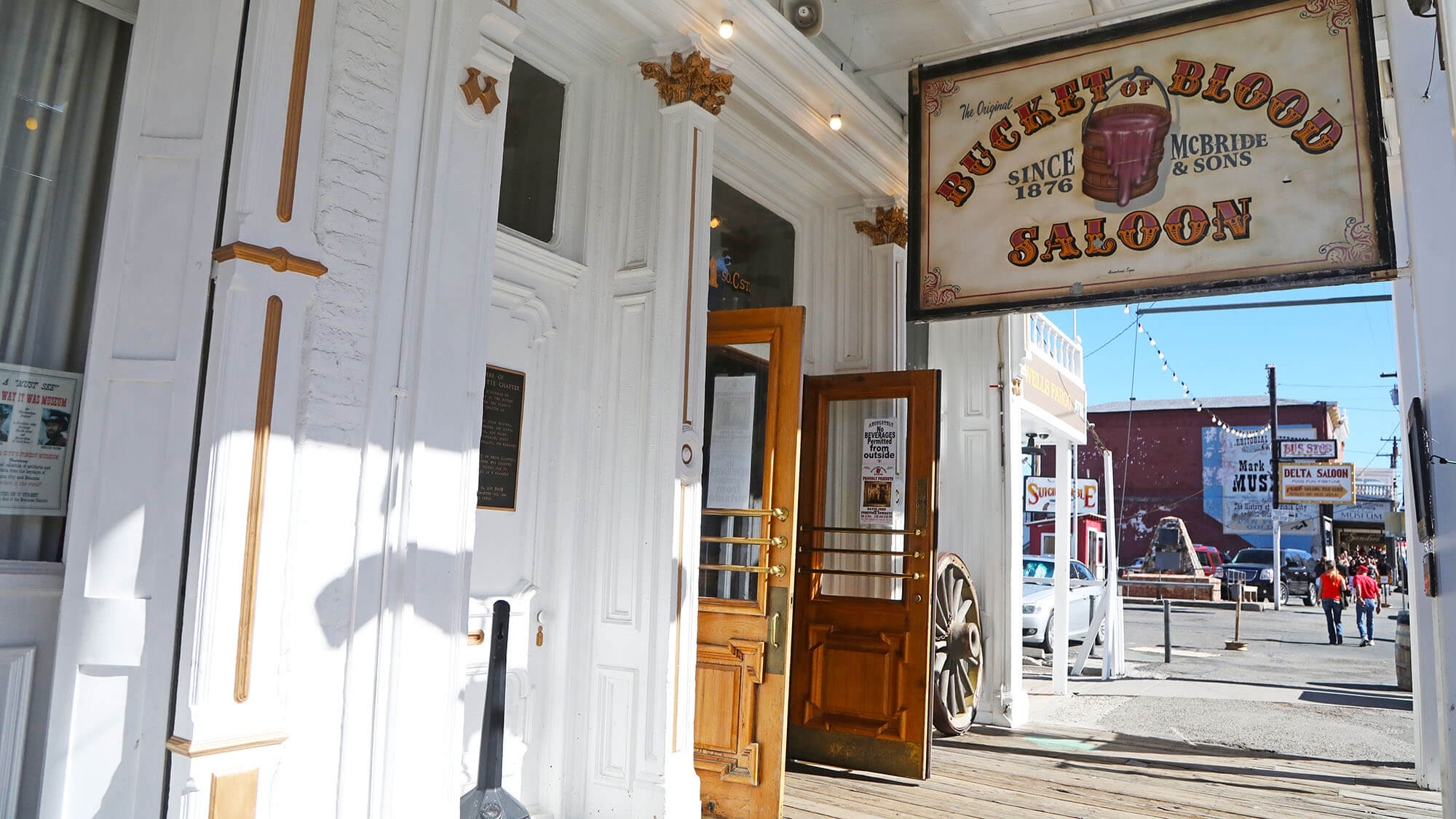
Imagine a wooden building with doors that creak in the wind. Above the entrance hangs a sign that sends chills down your spine: "Bucket of Blood." Yes—one of old Seattle’s most notorious saloons at the end of the 1800s was called that. But this story isn’t about frightful tales—it’s about how the roughest place in town helped create what Seattle is famous for today: cozy coffeehouses where people meet, talk, and become friends.
What was inside the saloon with the terrifying name
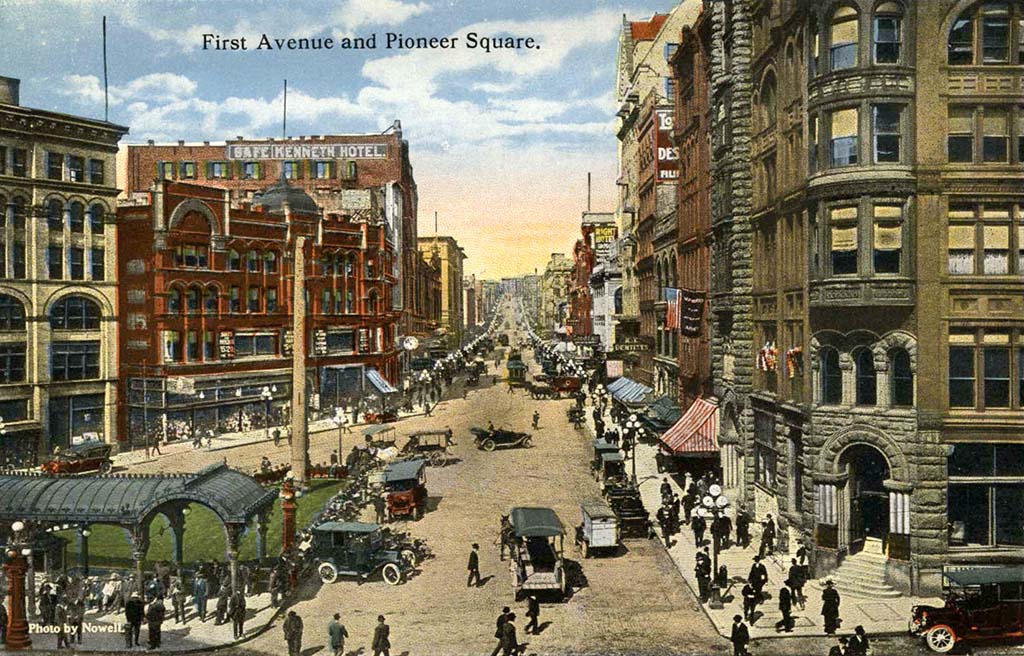
Back then Seattle didn’t look anything like the modern city with tall buildings and clean streets. It was a rough port town visited by lumberjacks, gold prospectors, and sailors. The neighborhood where the "Bucket of Blood" stood was called Skid Road—logs slid down muddy streets directly to the sea.
The saloon got its name not because anything genuinely horrific happened there. Men who had worked hard all day in the woods or on ships came to unwind, and sometimes arguments and fights broke out. The floor was covered with sawdust that soaked up spilled drinks—hence the grisly name. But most importantly: it was a place where people gathered. They told work stories, shared news, and made friends. The saloon was always noisy and crowded and… strangely enough, a seedbed for a sense of community.
The owner, an old sailor named John Connor, kept a large brass bell on the bar. When someone wanted to treat everyone present, he rang the bell—that was a sign of friendship and generosity. Despite the roughness and simplicity, there was something important in that: people learned to be together.
The fire that changed everything
On June 6, 1889, something happened that changed Seattle forever. In a woodworking shop on Madison Street someone carelessly heated glue over a flame. A spark reached the sawdust—and it started. The fire spread incredibly fast because almost all the buildings were wooden. Within hours 25 city blocks burned, including the entire Skid Road district.
The "Bucket of Blood" burned to the ground along with dozens of other saloons. But Seattle’s residents did not despair. Instead they decided: "We will rebuild the city, and it will be better!" The new Seattle was built from stone and brick. Streets were raised so they wouldn’t flood at high tide. And most importantly—people began to rethink what places for gathering the city should be like.
A little girl named Mary Doherty, who lived in Seattle at the time, later recalled: "After the fire adults said: we need places where families can gather, where children can come in, where people talk instead of fight." The city seemed to choose to grow up.
From saloon to coffeehouse: how the idea changed
When Seattle was rebuilt, other establishments took the places of the old saloons. Some remained saloons, but more respectable. Others became restaurants. Then, gradually, coffeehouses began to open.
The first coffeehouses in Seattle appeared in the early 1900s. Owners seemed to take the saloon idea—a place where people gather, talk, and share news—and turn it into something entirely new. Instead of alcohol—coffee. Instead of sawdust on the floor—clean tables. Instead of fights—friendly conversations. But the main thing remained: places for meetings, for conversation, to feel part of a community.
By the mid-20th century dozens of coffeehouses operated in the neighborhood where the "Bucket of Blood" once stood. And in 1971 a small coffee shop called Starbucks opened in Seattle. Its founders wanted to create a "third place"—not home, not work, but a place where people could simply be together. It was the same idea as the old saloon, only in a new, kinder form.
What the saloon taught a whole city
Today Seattle is known worldwide as the "coffee capital." There are more coffeehouses per square mile here than in almost any other American city. And that’s not a coincidence—it’s part of the city’s history.
Historian Paul Dorpat, who has spent his life studying Seattle, says: "The old saloons, even with terrible names like 'Bucket of Blood,' taught the city an important thing: people need places to meet. When the city decided to become better, it didn’t abandon that idea—it improved it."
The Pioneer Square neighborhood, where Skid Road and its saloons once stood, is now one of Seattle’s most interesting areas. Buildings constructed after the 1889 fire still stand. They now house coffeehouses, bookstores, and art galleries. Walk those streets and you’ll see bronze plaques in the pavement marking where the old saloons stood. One of them is exactly where the "Bucket of Blood" once was.
It seems to me an important lesson: something rough and imperfect can grow into something beautiful. A city is like a caterpillar turning into a butterfly. The old saloon was like the caterpillar—not very pretty, but alive and real. Seattle’s modern coffeehouses are the butterfly that kept the most important thing: wings for people to meet and make friends.
The next time you go into a café with your parents, think: perhaps hundreds of years ago this very spot was also a meeting place, but it looked very different. The essential thing across time remains unchanged—people need to be together, to talk, to share stories. And it’s good we learned to do it in warm, cozy places that smell of fresh coffee, not saloons with frightening names!