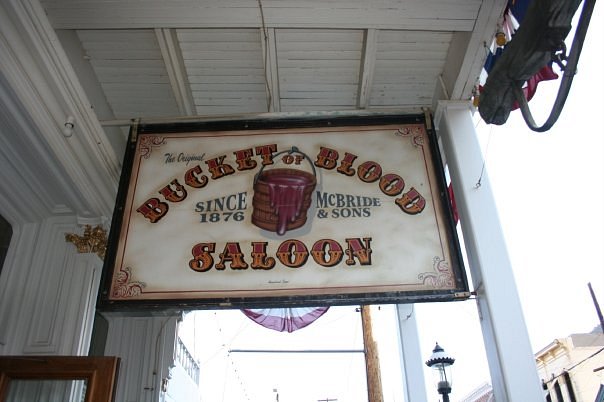
Imagine you need to keep ice cream cold all year, but you have no refrigerator, no freezer, and not even electricity. Impossible? That’s what many people thought until the saloons with the ominous name "Bucket of Blood" appeared in American Gold Rush towns. These establishments became famous not only for their frightening name but for an ingenious engineering trick: their owners figured out how to store ice year-round in a hot climate using only what nature provided. That invention changed not only building methods but also how people met and made important decisions in their towns.
An underground secret that worked better than modern refrigerators
Owners of the "Bucket of Blood" saloons (there were several such places in different states, including Nevada and Arizona) faced a serious problem: how to serve customers cold drinks when it was +40°C (about 104°F) outside and the nearest glacier was hundreds of miles away? The solution turned out to be literally beneath their feet.
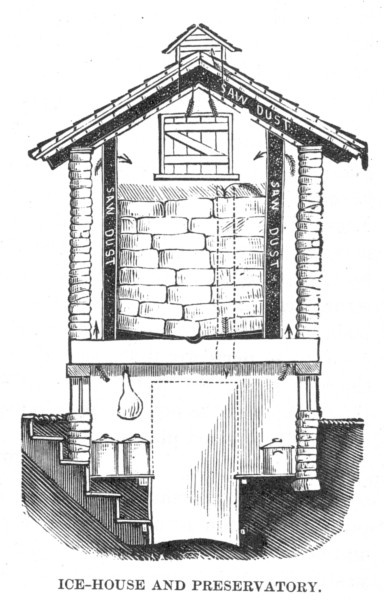
Engineers of the time dug deep cellars beneath the saloons, sometimes 6–8 meters (20–26 feet) down. There the temperature stayed around +10°C (about 50°F), even when the pavement above was melting. But that was only the beginning. They built a system of several rooms connected by narrow corridors, each with a specific function. The first room acted as an airlock—preventing warm air from penetrating further. The second served as storage for food. In the farthest, coldest room they kept huge blocks of ice.
These blocks were brought down from the mountains in winter or cut from frozen lakes, wrapped in sawdust and straw (which worked like modern foam insulation), and stacked in the cellar. Thanks to the constant cool temperature of the earth and clever insulation, the ice could last up to 10 months! By comparison: if you put an ice cube in a cooler bag and leave it in the shade, it will melt in a few hours. Nineteenth-century engineers preserved tons of ice for nearly a year.
Ventilation inspired by the desert itself
But a cool cellar was not enough. The most interesting part began when builders realized they also needed to cool the building above, otherwise patrons would still suffer from the heat. Here they borrowed an idea from nature—more precisely, from African termite mounds.
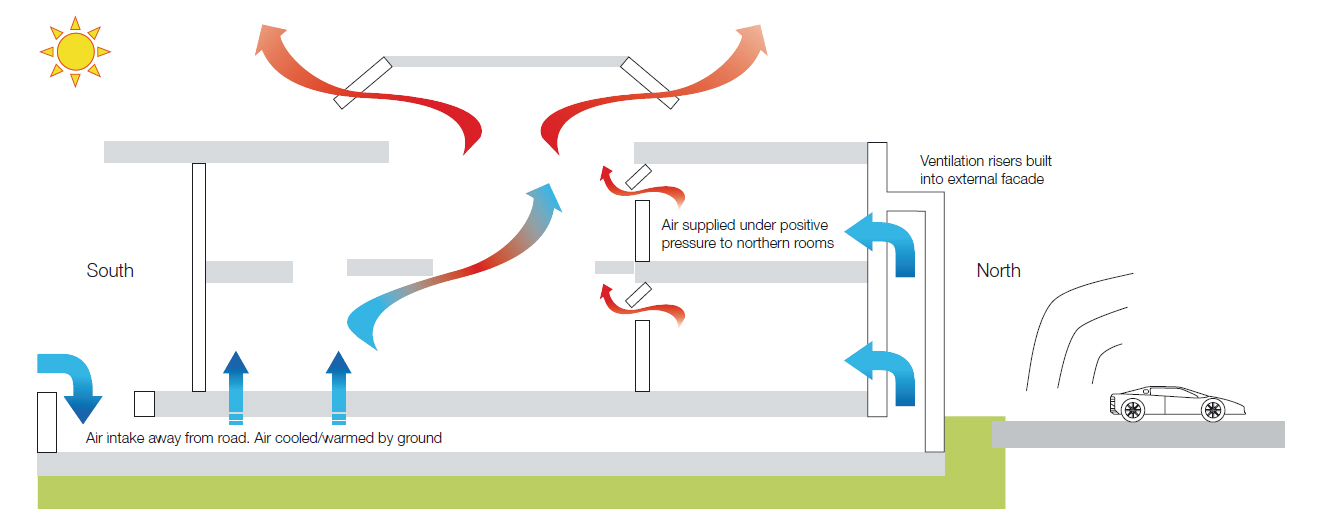
Termites build structures with vertical shafts that create natural air circulation: hot air rises and exits, drawing in cooler air from below. Saloon engineers applied the same principle. They ran special ducts from the ice cellar up to the main room. Cold air from the ice naturally moved through these pipes (because warm air is lighter and displaces cold air), cooling the space. Exhaust openings in the ceiling let hot air escape.
The result was a true air-conditioning system with no motors! According to visitors, in the "Bucket of Blood" saloon in Virginia City, Nevada, on the hottest day you could sit in relative comfort while people outside hid in the shade and fanned themselves with newspapers.
How a dangerous place became the heart of democracy
Now for the most surprising part: these saloons with scary names and dubious reputations became crucial social centers in the Wild West. Why? Because they were often the only cool public places anyone could enter.
During the Gold Rush towns sprang up quickly, often without proper town halls, libraries, or community centers. But saloons existed. Thanks to their cooling ingenuity, they attracted people not only for drinks but as gathering places. People discussed news, made decisions about building roads or schools, elected sheriffs, and settled disputes there.
Historians have found records that in the "Bucket of Blood" saloon in Arizona in 1877, townspeople held a vote to establish the first school. Imagine: a place named for brawls and disorder helped create a school! That happened because the saloon could hold many people at once and remained cool enough to conduct a long meeting in July heat.
Moreover, saloon owners often became informal community leaders. They knew everyone, heard all the news, and could organize people. Their engineering know-how (how to build a cool building) made them respected figures. Some later became mayors or members of city councils.
A legacy that lived on into skyscrapers
The engineering solutions devised for the "Bucket of Blood" saloons and similar establishments did not disappear with the advent of electricity. On the contrary, they inspired modern architects to design energy-efficient buildings.
The principle of underground cold storage is used today in geothermal cooling. For example, in Canada and Scandinavia houses are built with pipes that run deep into the ground to draw coolness in summer and warmth in winter, saving up to 70% of energy for heating and cooling. It’s the same idea as in nineteenth-century saloons, only with modern materials.
And the natural ventilation system, copied from termites and applied in the saloons, inspired architect Mick Pearce to design the Eastgate Centre in Harare, Zimbabwe (1996). This large shopping complex is cooled without air conditioners, using only natural air circulation—just like the old saloons. Owners save about 10% of the building’s costs simply by not installing conventional air-conditioning.
Why this matters today
The story of the "Bucket of Blood" saloons teaches several important lessons. First, the smartest solutions often come not from scientists in labs but from ordinary people who faced a real problem and had to solve it immediately. Saloon owners were not degree-holding engineers—they were entrepreneurs who observed nature and learned from it.
Second, even places with bad reputations can play a vital role in society. Saloons were considered dangerous and immoral, yet they were where democracy in small towns took root, because they were the only spaces where everyone could gather comfortably.
And third, old technologies are not always inferior to new ones. Today, as we think about combating climate change and saving energy, engineers increasingly look to past solutions—how people lived in harmony with nature, using its laws rather than fighting them.
So next time you enjoy a cool breeze on a hot day, remember the saloons with a frightening name that taught the world how to cool buildings without electricity—and in doing so, accidentally helped build a fairer society.