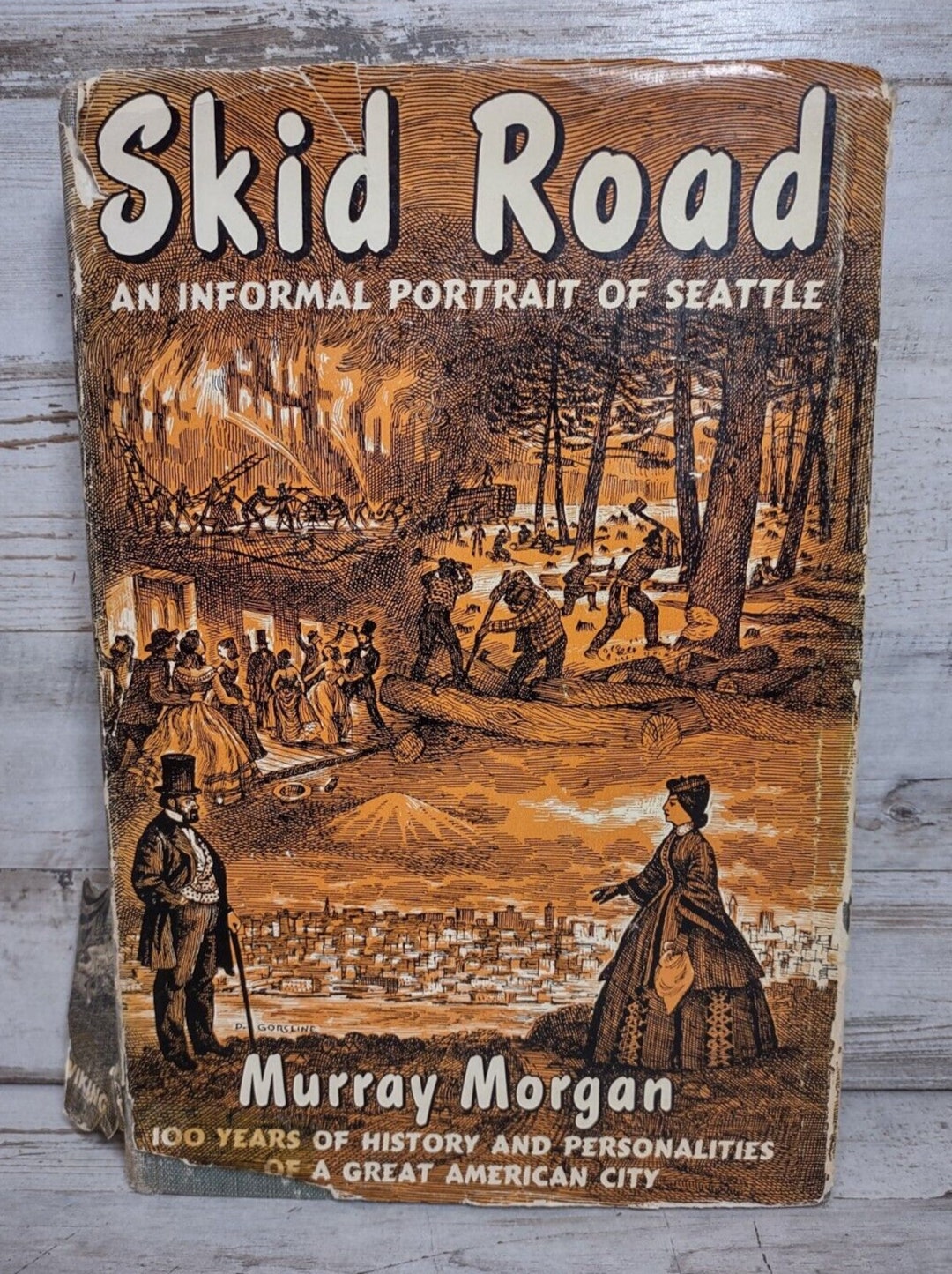
Imagine a huge log — so big that three people couldn't wrap their arms around it. Now imagine it sliding down a hillside, leaving a deep, dirty groove behind. That’s what Seattle’s very first “real” street looked like in the 1850s. It was called Skid Road — a road for sliding logs. And nobody then knew that, many years later, that name would become a sad word used around the world.
Henry Yesler and his slippery idea
In 1852 a man named Henry Yesler arrived in the tiny settlement of Seattle. He looked at the enormous trees growing on the hills and at the bay below — and he came up with a plan. Yesler built the first steam-powered sawmill (a machine that cuts trees into boards) right on the waterfront. Ships could pull up and pick up the finished planks. But there was a problem: how to get the massive logs down the hill to the mill?
Yesler used an old method taught to him by local Native Americans. Workers laid small logs across the road like the rungs of a ladder lying on the ground. Then they poured water or fish oil over those logs to make them slippery. The big logs were hitched to oxen or horses — and they slid down that special road like sleds going downhill! This was called a “skid road” — a road for sliding.
The work was dangerous and hard. Loggers rose before dawn, sawed down huge trees all day (there were no chainsaws then!), and then sent the logs down the hill. By evening they were dirty, exhausted, and hungry.
How the road became a street (and why that mattered)
Very quickly buildings began to appear along that road. First came taverns and eateries where tired loggers could eat and drink. Then cheap hotels where you could spend the night for a few cents. Shops selling work clothes and tools. Barber shops. Even a small theater!
Loggers were paid weekly or monthly — and they spent nearly all their money right there on Skid Road. Tavern and hotel owners grew rich. The town grew. By the 1880s Seattle was a real city, and Skid Road (later renamed Yesler Way) became its heart.
But here’s what’s interesting: while some people were getting rich, others were becoming poorer. Logging work was temporary — the trees ran out, and people were laid off. Many were left without jobs and without money. They stayed in the cheap hotels on Skid Road because they had nowhere else to go. Gradually the street changed character.
When the word turned sad
By the early 1900s Skid Road in Seattle looked very different. Wealthy people moved to other neighborhoods and built fine homes on other streets. What remained were those who had nowhere to go: people without work, without families, without money. The old hotels turned into flophouses, where dozens of people slept in a single room on wooden bunks.
Reporters began to write about “life on Skid Road” — meaning poverty and hardship. The phrase then spread to other cities. Across America there were many streets where poor people lived, and those places too began to be called “skid road” or “skid row” (a slightly altered pronunciation).
So the word that once simply meant “road for logs” came to mean “a poor neighborhood” or “a place where people live in hardship.” When someone says “he’s fallen onto skid row,” it means “he’s hit hard times; he’s lost everything.” A sad meaning for a word that began with ordinary work, isn’t it?
What happened to the original Skid Road
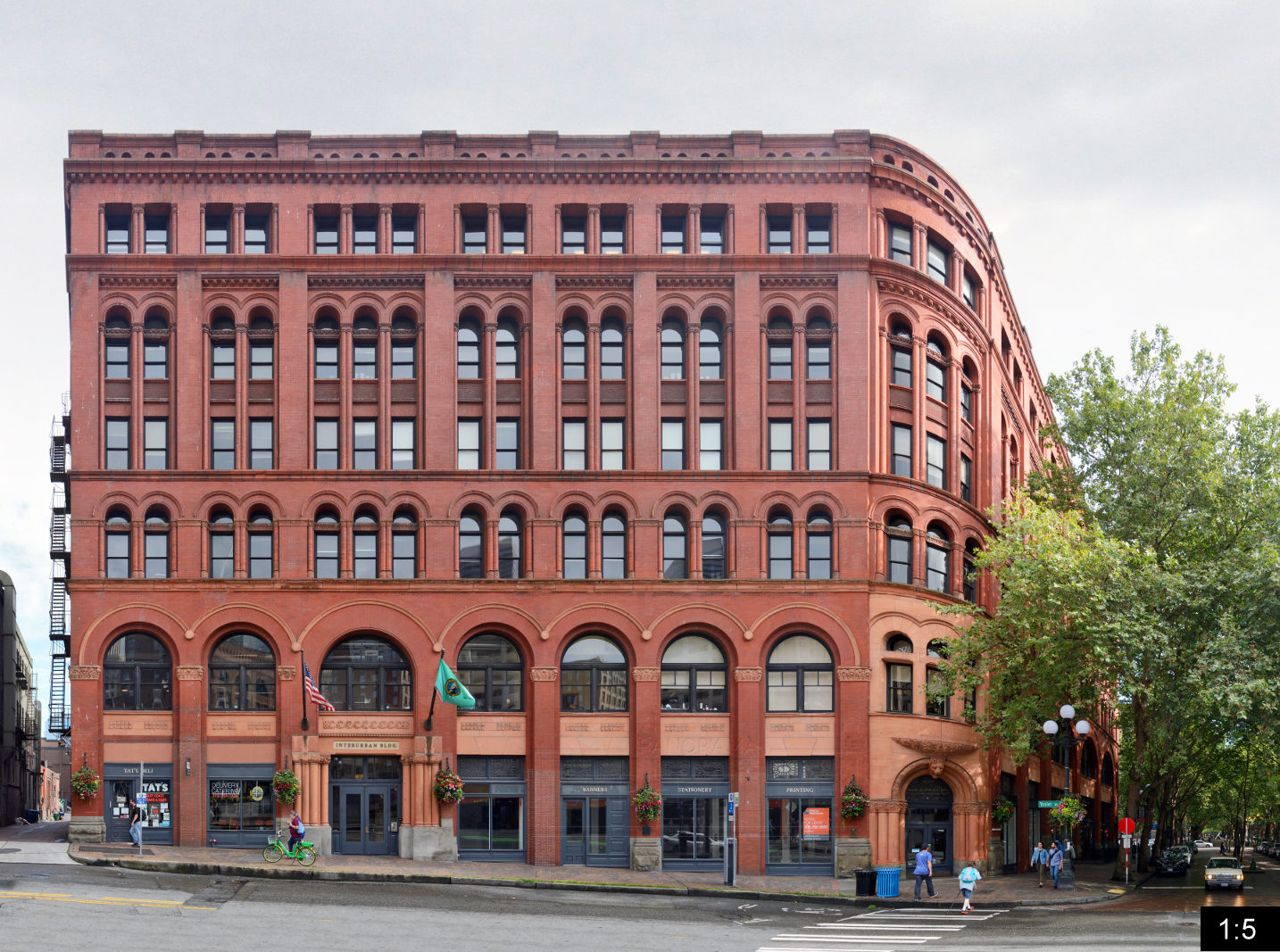
The original street in Seattle still exists. It’s called Yesler Way and runs from the hills down to the bay — along the same path the logs slid 170 years ago. Walk it and you can see old brick buildings from the 1890s that remember loggers, wealthy merchants, and hard times.
Today the street is changing again. The city is building new housing, cafés and shops are opening. Some old buildings have been renovated and turned into museums or galleries. But part of the neighborhood still serves people in need — there are soup kitchens, shelters, and help centers.
The story of Skid Road teaches us an important lesson: cities are always changing. A place that seems important and prosperous today can be poor in 30 years. And a poor neighborhood can become thriving again. People come and go, buildings are built and fall down, and streets remember it all.
And this story also reminds us: behind every word are real people and real events. When we say “skid row,” we recall (even without knowing it!) the loggers who 170 years ago slid logs down a slick slope in a small town by the ocean. Their hard work built the city — and gave the world a new word.