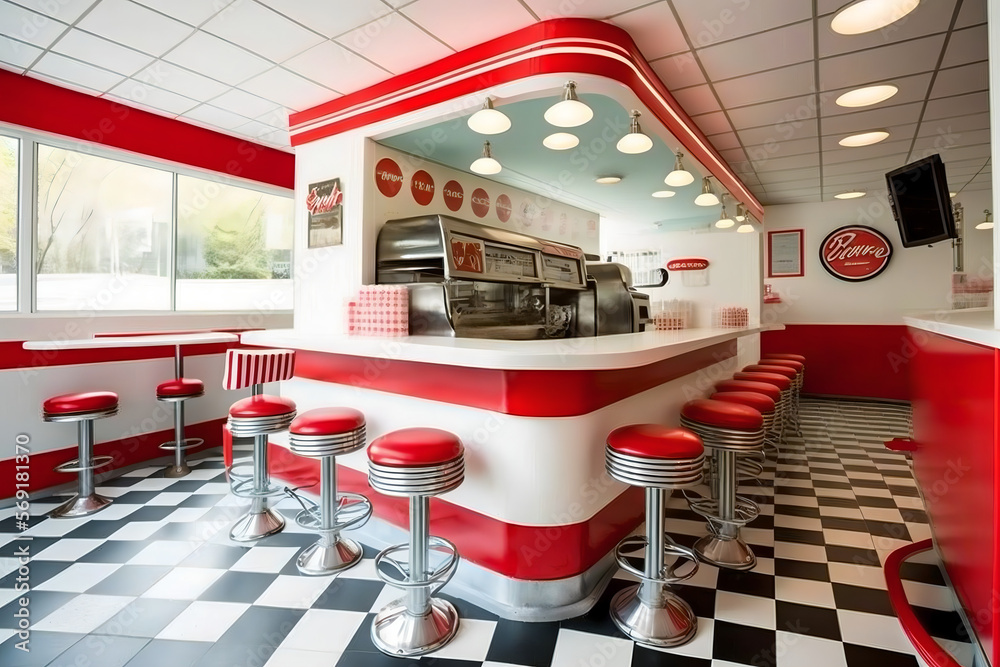
Imagine a restaurant that looks exactly the same as it did 70 years ago. The same red-and-white buildings, the same hamburgers, the same prices on the board. No, it’s not a museum or a movie set. It’s Dick’s Drive-In — a fast-food chain in Seattle that accidentally taught an entire city a very important lesson: if you build a place for people the right way, you don’t have to keep rebuilding it.
But the most surprising thing isn’t the buildings. The most surprising thing is that the owners of Dick’s understood: architecture is not just walls and roofs. Architecture is how you shape the lives of the people who work inside those walls. And that idea changed how offices and workplaces are built across Seattle.
The secret ingredient you won’t find on the menu
In 1954, Dick Spady opened his first restaurant. It was very simple: a small building, a few order windows, a parking lot. No indoor seating, no decorations. Everything was designed to work quickly and simply. But Dick came up with something unusual.
He decided he would pay his workers more than other restaurants. A lot more. He provided health insurance — at a time when almost no one did that for people who were just flipping patties and frying fries. And then he invented something almost magical: a scholarship program.
Every employee who had worked at Dick’s for at least six months could get money for college. Up to $28,000! It’s as if your after-school job didn’t just give you pocket money, it paid for your future education. Over the years Dick’s has helped thousands of young people get a higher education.
One former worker said: “I flipped burgers in the summer, and thanks to that I was able to become an engineer. Dick’s built not just a restaurant — it built a bridge to my future life.”
A building that doesn’t need changing
Now for the most interesting part: what does this have to do with architecture?
Look at most fast-food restaurants. They’re constantly changing. New design, new menu, new signs, renovations every few years. It costs a fortune. Owners spend millions to make their restaurants look “modern.”
Dick’s does the opposite. Their buildings look exactly the same as in 1954. Simple rectangular boxes. Red and white stripes. Large order windows. No dining room. And do you know why they can afford this?
Because they don’t spend money on firing and constantly recruiting new staff. When you treat people well, they stay for years. They know the job inside out. They work quickly and well. You don’t need to train new people every month. You save money — and can keep prices low and buildings simple.
An architect who studied Dick’s buildings said: “This is architecture of honesty. The building says: I don’t need to pretend to be something special. I just do my job well, and that’s enough.”
How hamburgers taught tech companies to build offices
And now — the most surprising part of the story.
In the 1990s and 2000s, huge tech companies began to grow in Seattle. Microsoft, Amazon, then hundreds of small startups. They needed to build offices for thousands of workers. And they wondered: how do we make smart people want to work for us and not leave for competitors?
Someone remembered Dick’s Drive-In.
The owners of a small chain serving three-dollar burgers had somehow created a place where people worked for decades. Where former employees brought their kids to work. Where nobody wanted to leave. How did they do it?
Tech companies began to copy Dick’s philosophy — in their own way. They started building offices with free cafeterias, gyms, and break rooms. They began paying for employees’ education, providing good health insurance, and offering high salaries. They realized: workplace architecture is not just a pretty building. It’s a system of care for people.
Today in Seattle there are offices with slides inside, rooftop gardens, libraries and daycares. But they all follow one rule Dick Spady invented in his little restaurant: when you build a place for people, think about the people first, then the walls.
A recipe that has worked for 70 years
Today eight Dick’s Drive-In restaurants operate in Seattle. They all look almost identical. The menu has barely changed since 1954. A hamburger costs just $1.90 — in a city where a typical burger elsewhere can cost $15.
How is that possible? The secret is simple, but hard to replicate.
Dick’s doesn’t spend money on advertising — people already know and love them. Dick’s doesn’t spend money on constantly updating interiors — their simple buildings have become part of the city’s history. Dick’s doesn’t spend money on recruiting new staff every month — their employees stay a long time.
Instead they invest money in people. And those people make the restaurant successful. It’s a kind of virtuous circle: you care for people, people care for your business, the business thrives, and you have more capacity to care for people.
One Seattle architect wrote in his book: “Dick’s Drive-In proved that real architecture begins not with building plans, but with plans for human relationships. First build a system where people enjoy working — then it won’t matter what materials the walls are made of.”
A lesson for the whole city
The story of Dick’s Drive-In is a story about how sometimes the most important architectural decisions are invisible. You can’t touch a scholarship. You can’t photograph good treatment of workers. But these invisible things are what make a building truly important to a city.
Today, when you walk through Seattle and see all those modern tech offices with their employee amenities, remember: it all began with a little diner that decided people mattered more than profit. And it turned out that when you put people first, profit follows.
Dick’s Drive-In never built skyscrapers. But it built something more important — an idea. The idea that architecture is not just about buildings. It’s about how we shape the lives of the people inside those buildings. And that idea changed a whole city.
So next time someone tells you architecture is just pretty buildings, tell them about the restaurant that looks like an ordinary box but taught a whole city to think about people differently. Sometimes the most important architecture is the kind you can’t see in photographs.