Imagine your grandmother left you the recipe for the world’s best cake but wrote it like this: "add a bit of flour, bake until done." You try to bake the cake but don’t know how much "a bit" is or what "done" means. A similar problem confronted engineers in Seattle when they tried to repair the Space Needle — the city's most famous tower. Only instead of a cake, they had to fix a restaurant that rotates in the sky, and the instructions were written in a language modern engineers had almost forgotten.
The restaurant meant to amaze the world
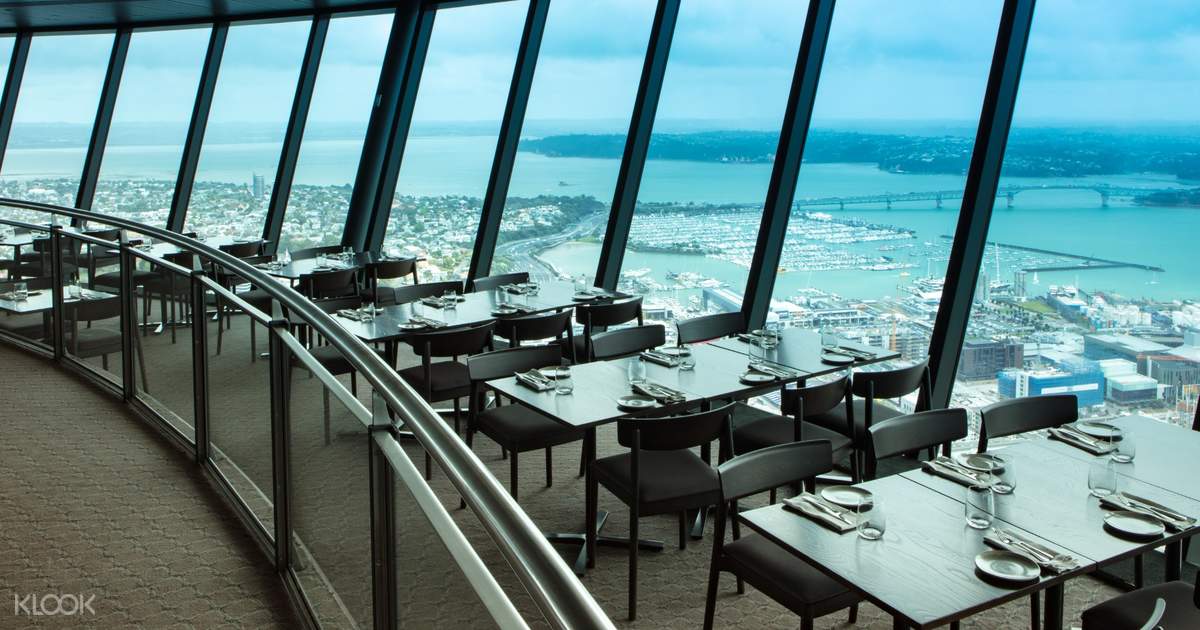
In 1962, Seattle hosted the World's Fair — a huge celebration that drew people from around the globe to look at the future. The organizers wanted to build something utterly unprecedented. They conceived a tower 184 meters tall (that’s like stacking 60 giraffes!) with a restaurant at the top. But the most astonishing thing wasn’t the height — the restaurant was supposed to rotate like a carousel so diners could see the entire city without leaving their seats.
The problem was that no one in the world had built anything like it before. Engineers John Graham and his team had to invent everything from scratch. How do you make a huge room with hundreds of people, tables, plates and food smoothly rotate 150 meters above ground? How do you make it safe? And the hardest part — how do you supply electricity and water to a room that’s constantly turning?
They created a mechanism like a giant music box. Imagine a huge ring 27 meters in diameter (about the size of a small house) resting on special wheels. Inside the ring was a motor the size of a refrigerator. That motor pushed the ring, and the entire restaurant floor turned slowly. The engineers borrowed technologies from aircraft, shipbuilding and even tank design — they took the best from everywhere and combined it.
The magical speed: why exactly one hour?
But the most interesting decision wasn’t driven by technology but by... people. They decided the restaurant should make a full revolution in exactly one hour. Why one hour and not 45 minutes or two hours?
In the early 1960s scientists studied how long people could look at one thing without losing interest. They found that after about an hour a person begins to get bored and wants to see something new. The Space Needle engineers thought: if the restaurant rotates once per hour, then when a guest finishes dinner (a meal in the restaurant typically took about an hour) they will have seen the whole city — all 360 degrees — exactly once. Not so fast that it makes you dizzy, and not so slow that it becomes boring. Perfect!
They set the motor to 0.1 revolutions per minute. That’s so slow that if you put a pencil on the table you wouldn’t notice it moving. But if you sit by the window, put a napkin next to it and look at it again in 15 minutes, the napkin will be in a different position relative to the city outside. Magic!
When the future became the past
Forty years passed. The restaurant rotated every day, every hour, every minute. Millions of people dined there, looking at Seattle from a bird’s-eye view. But in the early 2000s problems began. The motor started making strange noises. The wheels that the floor rotated on began to wear out. Some parts of the mechanism rusted. The tower’s owners realized a major overhaul was needed.
They hired contemporary engineers, showed them the old blueprints and said: "Fix it." And that’s where things got interesting.
It turned out the drawings were made using an old system of measurements — inches, feet and ounces — units that most of the world no longer uses. Modern engineers work in meters and kilograms. It’s like being handed a recipe listing "2 pounds of flour" and "3 pints of milk" when all you have are scales in kilos and measuring cups in milliliters.
But that was only the first problem. The second was even tougher: many parts of the mechanism were handcrafted specifically for the Space Needle. They couldn’t be bought off the shelf — such parts didn’t exist anywhere else! For example, special bearings (those are components that let wheels turn smoothly) were custom-made for the restaurant. The company that manufactured them had long since closed. The drawings for those bearings were sketched in the style of the 1960s — modern engineers had to literally relearn how to read them, like deciphering ancient hieroglyphs.
Thinking like an engineer from the past
The modern engineering team faced a surprising task: to repair the mechanism they needed not just to understand HOW it worked, but why engineers of the 1960s built it the way they did.
For instance, they discovered that the original motor was far more powerful than required just to rotate the restaurant. Why? At first this looked like a mistake or waste. But then the engineers realized: in the 1960s no one knew exactly how heavy the restaurant would be when full of people, tables and food. The engineers of that era over-specced the motor "just in case" — they couldn’t risk the restaurant getting stuck halfway with hundreds of guests inside!
Take the water supply system for the rotating restaurant. Modern engineers use flexible hoses and special rotating joints for such tasks. But those technologies didn’t exist in the 1960s! The Space Needle engineers devised a clever system of copper pipes arranged telescopically — one pipe slid into another so water could flow even while the restaurant turned. It was ingenious, but very tricky to repair.
The lead engineer on the restoration told reporters: "We’re not just fixing a mechanism. We’re trying to understand the thinking of the people who created it 50 years ago. It’s like archaeology, but instead of ancient pots we study old motors."
What happened next
In 2017–2018 the Space Needle closed for a major renovation. Engineers completely disassembled the rotating mechanism, replaced worn parts and installed a new motor. But — and this is important — they tried to preserve the original concept. The restaurant still makes a full revolution in exactly one hour. Why? Because that choice proved right not only in 1962 but also for our time.
Contemporary research shows people do feel more comfortable when motion is very slow and predictable. If the restaurant turned faster, guests would feel uneasy. If slower, they wouldn’t see the whole city during a meal. The 1960s engineers guessed the ideal speed without the knowledge we now have!
Why this matters for the whole Seattle Center
The Space Needle restaurant story is not just the story of one building. It’s the story of the entire Seattle Center — a huge park built for the 1962 World’s Fair. There are theaters, museums and fountains — all built by people who dreamed of the future. They used the most advanced technologies of their time and made decisions they thought were right.
But sixty years have passed, and many of these buildings now need repairs or updates. Each time engineers face the same problem: how to change something without losing the original idea? How to use modern technology yet preserve the spirit of the 1960s?
For example, the Seattle Center has a monorail — a single-rail train that runs above the streets. It was also built for the 1962 fair. Today it carries many more people than originally planned and often breaks down. The city must choose: build a new monorail with modern technology, or repair the old one and keep its historic value?
Or take the Pacific Science Center — a hands-on science museum where kids touch exhibits and run experiments. The building is styled in the 1960s, but modern children need different technologies — computers, virtual reality, robots. How do you add all that into an old building without spoiling it?
A lesson for the future
When engineers repaired the rotating restaurant they learned an important thing: innovation is not only inventing something new. Sometimes innovation is the ability to understand and preserve something old but valuable.
The engineers of the 1960s couldn’t know their restaurant would operate for more than 50 years. They couldn’t predict which technologies would emerge. But they did something remarkable: they created a mechanism that could be repaired even after much knowledge was lost. They left detailed records, blueprints and explanations. They thought not only about how to build the restaurant but about how people in the future would service it.
This is a vital lesson for today’s builders and engineers. When we create something new, we should ask: will people 50 or 100 years from now be able to understand how it works? Are we leaving enough information? Are we using technologies that can be repaired in the future?
Now, when you enter the restaurant at the top of the Space Needle and watch the city drift slowly by, remember: beneath your feet rotates more than a mechanism. There turns a story about people who dreamed of the future, about others who learned to understand those dreams, and about how past and present can work together to create something beautiful.
Each revolution — exactly one hour. That’s how it was 60 years ago, how it is now, and perhaps how it will be for many years to come. Because sometimes people of the past knew something important — and our job is not to forget it, but to pass that knowledge forward.