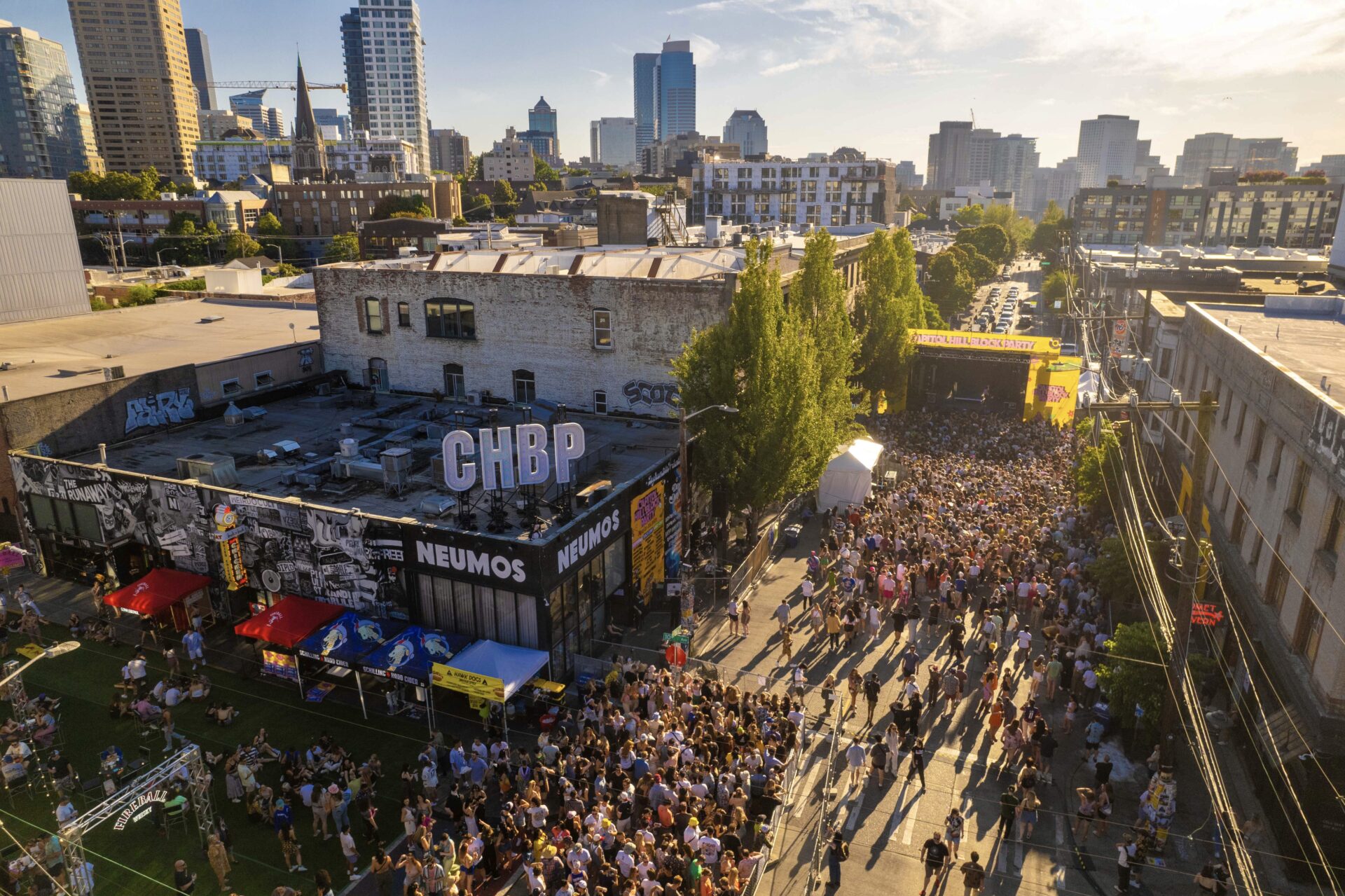
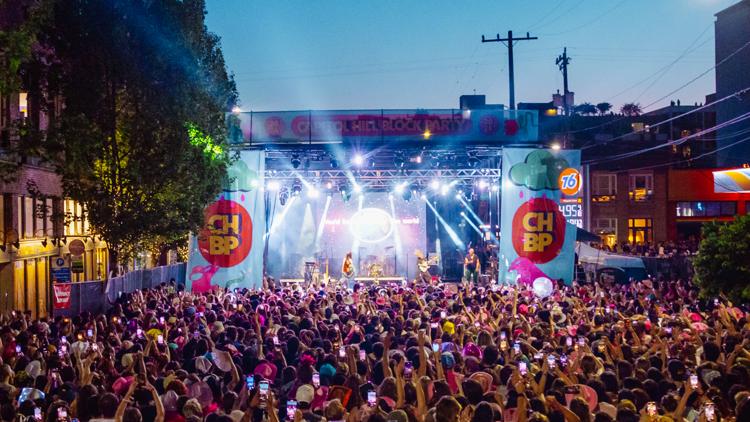
In 1997 something unusual happened on a single street in Seattle's Capitol Hill neighborhood. The owners of small music shops were very upset. Big chain stores were opening everywhere, and people were coming less and less to buy records and CDs in their cozy little shops. Then they came up with a brilliant idea: "What if we throw a party right on the street? With the music we love, and show everyone why our shops are special?" Thus the Capitol Hill Block Party was born — a celebration that transformed an entire neighborhood.
How it all started: three bands and a big dream
The first party was very tiny. Organizers closed off just one block of the street. Three local bands performed on a makeshift stage, playing indie-rock and punk. About 200 people showed up — mostly friends, neighbors, and regular customers of the music shops. No one paid for entry. People just wandered, listened to music, ate hot dogs and ice cream sold by nearby cafes.
The shop owners weren't thinking about big money. They simply wanted people to remember: their neighborhood had real live music, interesting characters, and shops where staff knew every record by heart and could talk for hours about their favorite bands. It was like an invitation: "Come by, let's get to know each other!"
The year it almost ended
People liked the party, and the next year more came. By the third year even more showed up. But then a problem arose. Some neighbors on that street began to complain. The music was too loud. People left trash behind. Parking became difficult. City officials received many complaints and told the organizers: "Maybe it's enough? Stop this party."
The organizers were very upset. Then something surprising happened. Owners of other shops and cafes on Capitol Hill came to help. It turned out that during the party days they were selling three times more pizza, coffee, T‑shirts and books than usual! People came to the concert and then went into the shops. Small businesses realized: this party helped them survive. They all went together to meet with the city and explained how important the celebration was. The city agreed to give the party another chance — but with new rules: better trash cleanup, portable toilets, and an earlier curfew for music.
How a small party became a big festival
Years passed, and the party grew like a tree from a tiny seed. At first it covered one block, then two, then five. Instead of three bands there were thirty, then fifty. Multiple stages appeared so music could play simultaneously in different spots. Now more than 30,000 people attend the Capitol Hill Block Party each year! It’s like an entire small town coming together for one celebration.
But the most interesting part is the money the festival brings to the neighborhood. Economists estimate that over three days local shops, restaurants and hotels make about $3–4 million. That's because people travel from afar: they buy concert tickets (now paid admission to cover organizers and security), book hotel rooms, have breakfast in cafes, and buy souvenirs.
| Year | Approximate number of guests | Number of bands |
|---|---|---|
| 1997 | 200 | 3 |
| 2000 | 2,000 | 12 |
| 2005 | 10,000 | 25 |
| 2010 | 20,000 | 40 |
| 2019 | 30,000+ | 50+ |
One pizzeria owner said: "On a normal summer day I sell 50 pizzas. During the festival I sell 400! I hire extra help, order more supplies. Those three days help me pay rent for the whole month."
Why it matters to all of us
The story of the Capitol Hill Block Party teaches an important lesson: sometimes the biggest changes begin with a small idea and a few brave people. The owners of the music shops could have simply given up when big stores started pushing them out. Instead they invented a way to bring people together and show that their neighborhood was special.
Today the festival helps hundreds of small businesses survive. It provides work for sound engineers, security guards, and cleaners. It helps young musicians gain recognition — many bands that started at this party later became famous. And most importantly: it shows that when neighbors work together and support each other, they can create something truly magical.
The very music shops that started it all are still operating. Of course now they sell not just records, but also T‑shirts, posters, and concert tickets. They survived because they weren't afraid to try something new. And every summer, when music fills the streets of Capitol Hill and thousands of people dance, it reminds everyone: one good party can change a whole neighborhood.