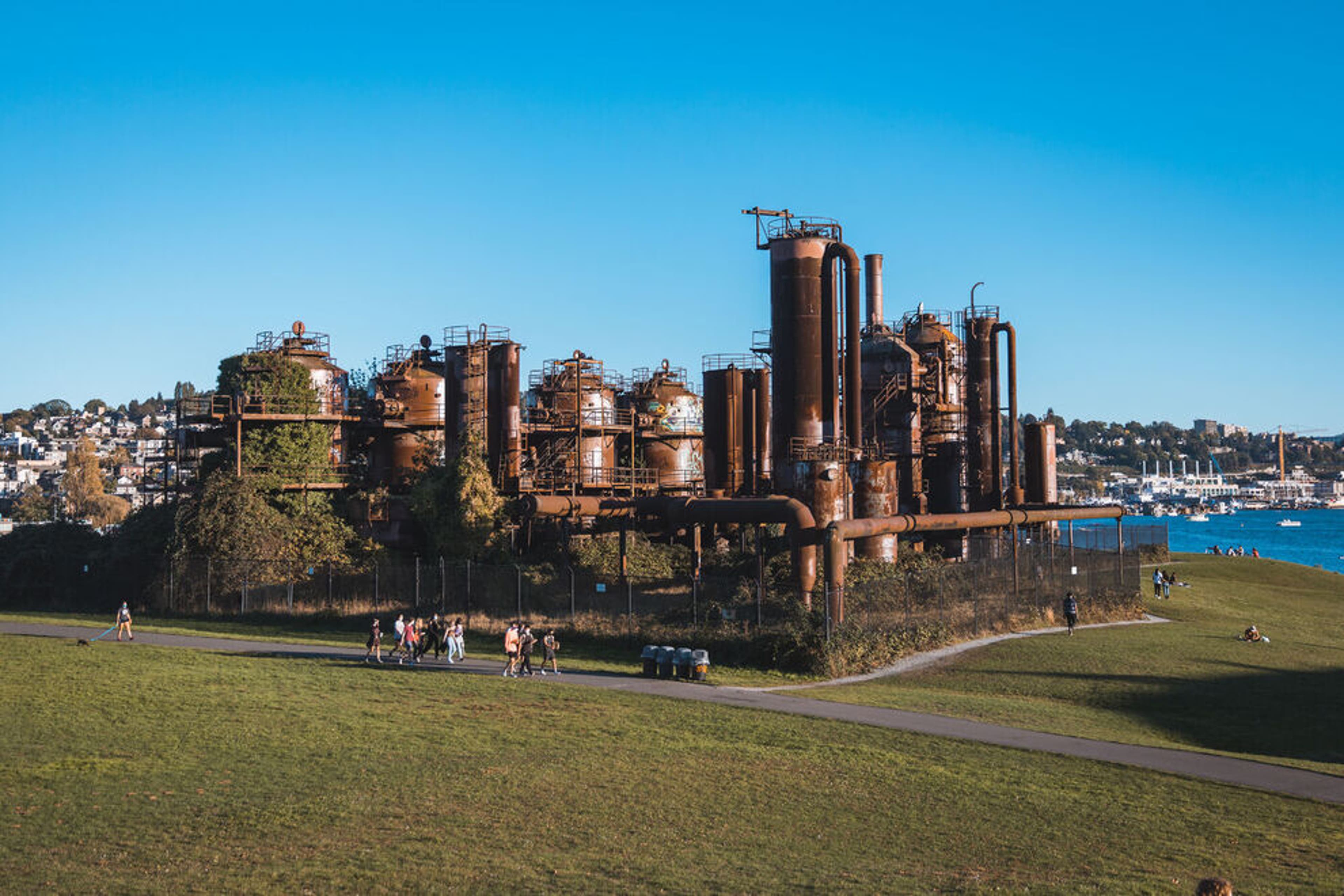
Imagine your city decided to turn an old, rusty factory into a playground. Not tear it down and build something new, but leave all the pipes, towers and strange iron structures right where children play. Sounds crazy? That's what Seattle residents thought in 1975, when Gas Works Park opened — a place that changed Americans' ideas about what parks should be.
But this story is not only about bold design. It's about how a city tries to fix the mistakes of the past, and why some wounds take a very, very long time to heal. It's the story of a park that is still healing — nearly 50 years after it opened.
The man who saw beauty in rust
In 1906 a huge gas plant was built on the shore of Lake Union. It turned coal into gas used to heat Seattle homes. The plant operated for more than 50 years, then closed, leaving behind piles of toxic waste, poisoned soil and giant rusty towers. Most people thought it should all be demolished and forgotten like a bad dream.
But architect Richard Haag saw something different. He looked at these industrial ruins and thought, "What if kids could climb these towers? What if families had picnics next to these pipes?" He believed cities should remember their real history — not just pretty buildings and monuments to heroes, but the factories where ordinary people worked. Even if that history was dirty and ugly.
City officials thought Haag had gone mad. "Who would want to relax in a place that's polluted?" they asked. But Haag was persistent. He convinced the city to try something entirely new: remediate the soil as much as possible but keep the industrial structures as part of the landscape. It was an experiment America had not seen before.
When parents were afraid to let their children play
When the park opened, something strange happened. People came to see the unusual place, took photos against the backdrop of rusty towers, but many parents did not allow their children to run on the grass or touch the soil. Why? Because everyone knew toxic substances had been produced here for decades. Dangerous chemicals remained in the soil — benzene, toluene, heavy metals.
The city performed an initial cleanup before opening the park: it removed the most contaminated top layer of soil and covered it with clean earth. But 1970s technology wasn't as advanced as today. Scientists did not yet fully understand how toxins move through soil or how they affect people over many years.
The result was a park that was open but not entirely safe. It's like recovering from an illness: you're not completely sick, but you're not fully healthy either. Families came to Gas Works Park but approached it cautiously. Some brought blankets so children wouldn't touch the ground directly. Others didn't bring young kids at all.
A park cleaned again and again
Years passed. Scientists developed new ways to measure contamination and understand its health impacts. It turned out the first cleanup wasn't enough. In the 1980s researchers found that toxin levels in some areas of the park were still too high. Particularly dangerous was the area where chemical storage tanks had once stood.
The city carried out a second major cleanup in the 2000s. Workers removed more contaminated soil and installed special barriers to prevent toxins from spreading. But even after that, some zones remained closed. If you visit Gas Works Park today, you'll see a hill you can climb to fly a kite and a playground where you can swing. But you'll also see fenced-off areas with signs: "Do not enter. Soil contaminated."
Each year specialized services take soil and water samples to check whether contamination is increasing. It's like regular doctor visits: even if you feel fine, you need checkups to make sure everything is okay.
The lesson the park teaches the city
Today Gas Works Park is one of Seattle's most beloved places. It offers a stunning view of downtown and the lake. People come to watch Fourth of July fireworks, fly kites and picnic. The rusty towers that once scared people have become a city symbol — photographed by tourists from around the world.
But beneath that beauty lies an important lesson. Gas Works Park teaches us that some problems cannot be solved quickly. When people in the past built factories, they did not think about what would happen 50 or 100 years later. They didn't know toxins would remain in the soil so long. Now we, living today, pay the price for those decisions.
This affects how Seattle makes choices now. When the city plans to build something new or clean another contaminated site, officials remember the experience of Gas Works Park. They ask: "Do we know enough about long-term consequences? Will we be cleaning this place again in 30 years? Are we being honest with people about the risks?"
Why it's important to remember wounds that haven't healed
The story of Gas Works Park shows us something important about how cities grow and change. It would have been easy to simply tear the old plant down, cover everything with clean soil and pretend nothing bad had happened. But Richard Haag and those who supported his idea chose a different path. They decided to preserve the memory of the past — even its dark sides.
Because of that decision, every child playing in Gas Works Park sees real history. Those rusty towers tell stories of people who worked here in heat and cold. They remind us that industry gives us warmth and convenience but can also harm the environment. They teach us to think about the consequences of our actions.
Today there are other contaminated sites around Seattle — old warehouses, abandoned factories, lots where waste was once dumped. The city must decide what to do with them, and the experience of Gas Works Park helps guide wiser decisions. People now understand: turning a toxic site into a safe space is not a one-time act but a long process that can take decades.
Gas Works Park is still healing. It may continue to heal for many more years. But that doesn't make it any less valuable. On the contrary, it makes it honest. It doesn't hide the scars of the past — it shows them and teaches us not to repeat old mistakes. And that may be the most important lesson the park can offer.