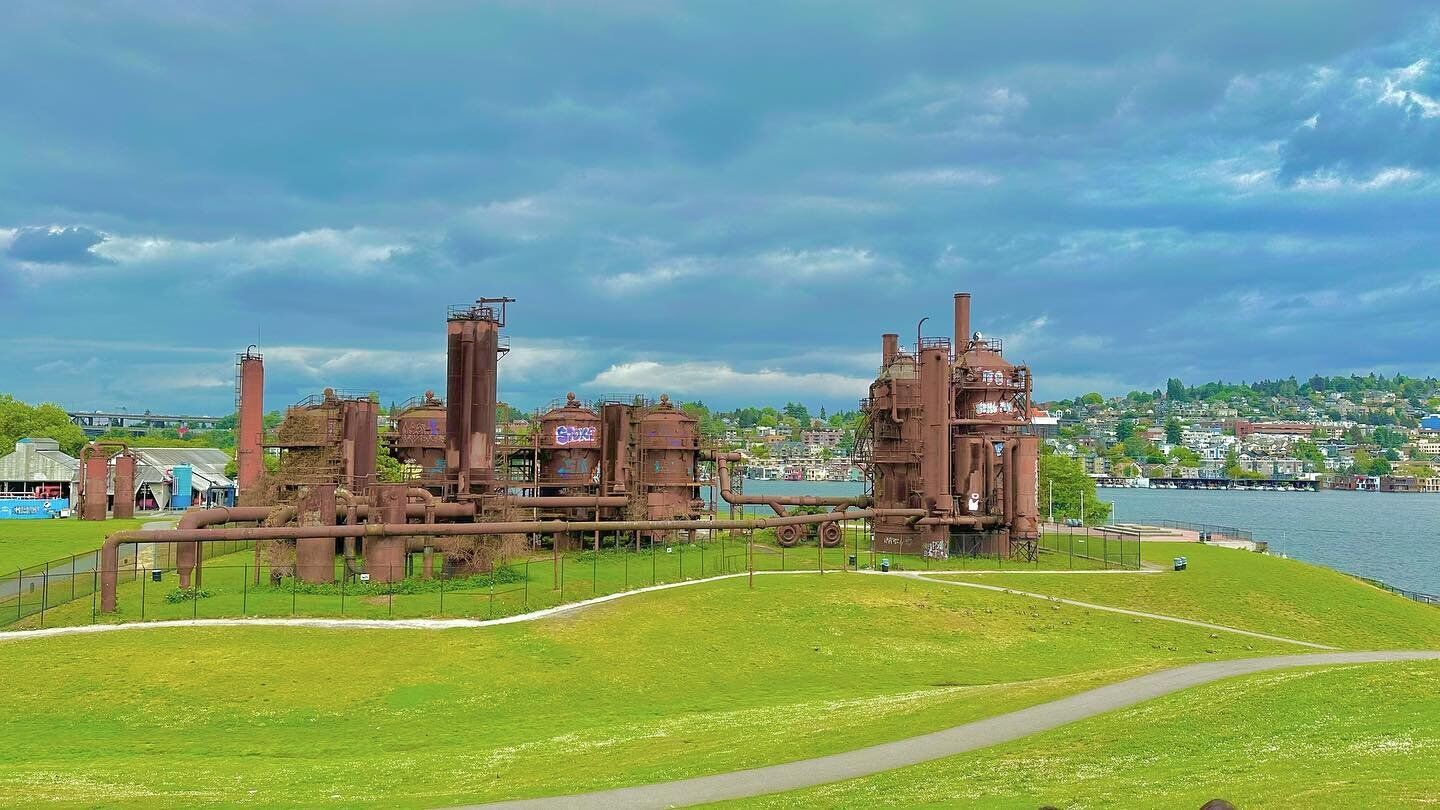
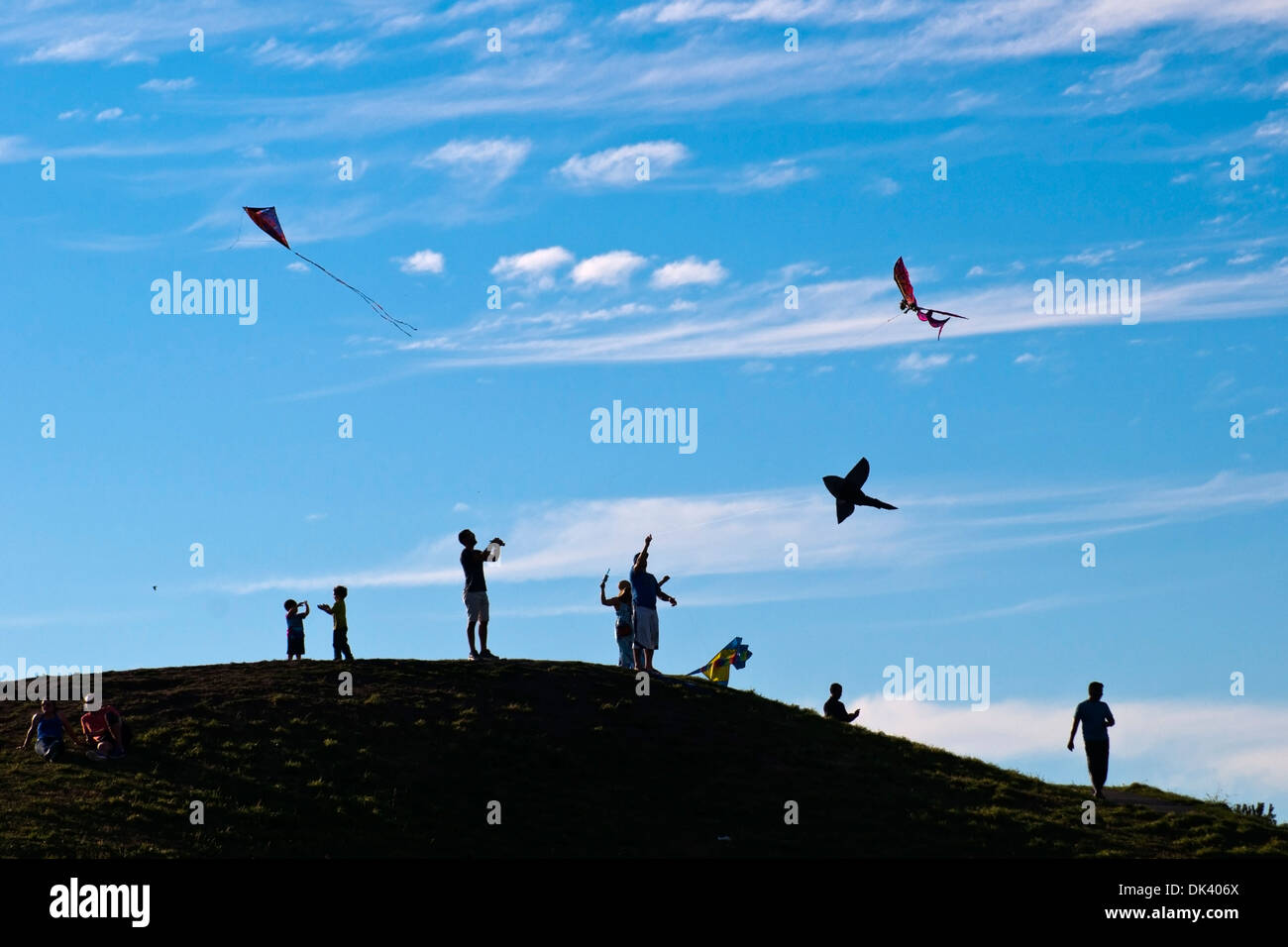
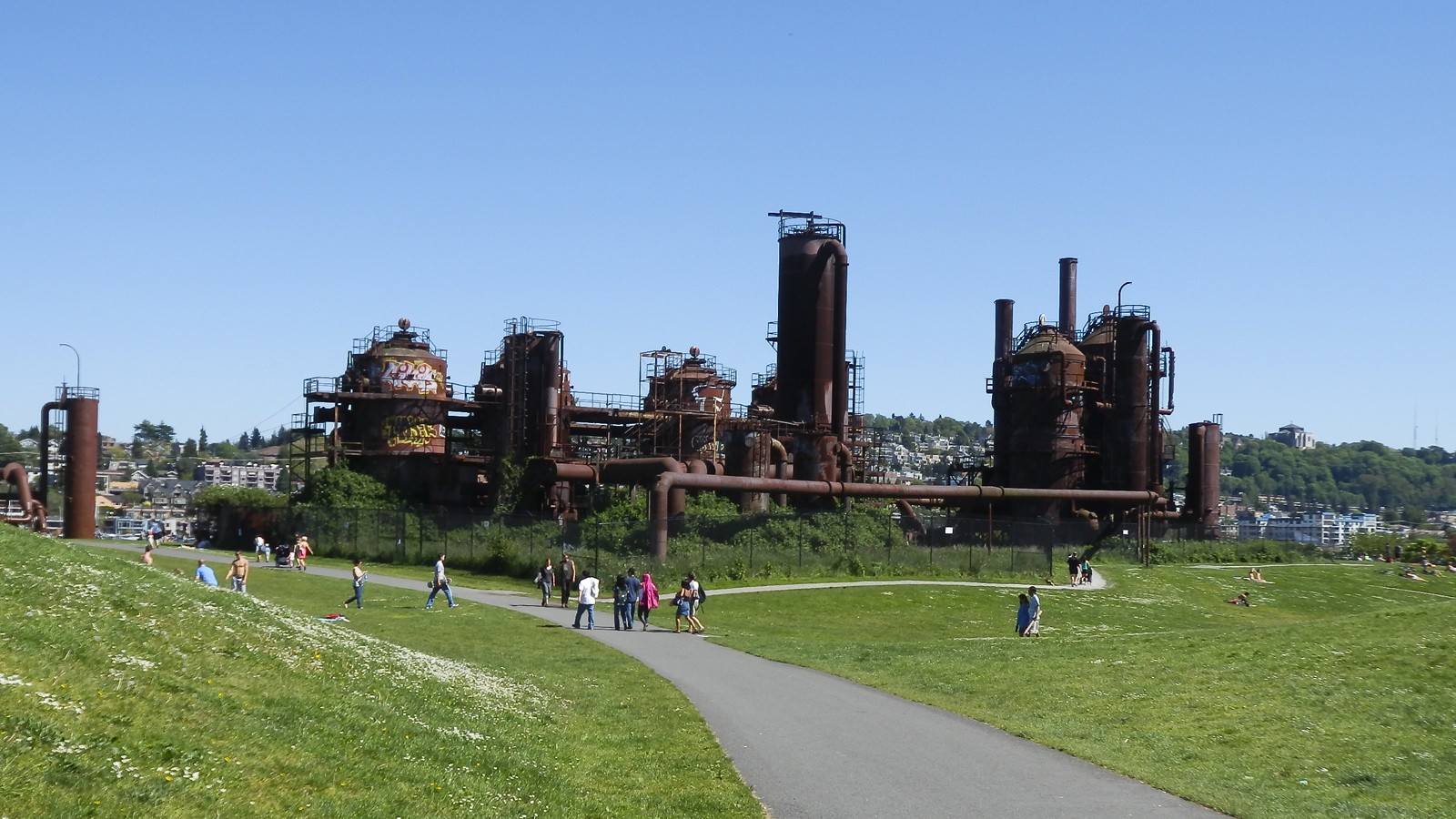
Imagine running across a green hill with a kite in your hands while enormous rusty towers loom beside you, looking like robot skeletons from an old movie. This isn’t a movie set. It’s a real park in Seattle called Gas Works Park. The most astonishing thing about it is that this very site once produced poisonous gas, and the soil was so contaminated that nothing could grow there. But people didn’t try to hide that history. They chose to put it on display—and transformed a frightening past into one of the city’s most beloved places.
The Plant That Poisoned the Soil
Many years ago, before homes had electricity for cooking, people needed gas, which was produced by heating coal at a special plant. The plant on this site, beside Lake Union, operated from 1906 to 1956. It produced gas, but it also left behind a real “chemical waste dump”—tar, oils, and other substances that seeped directly into the soil and the lake.
When the plant finally closed, the surrounding land was so damaged that even grass seemed afraid to grow there. For a long time, city residents wondered what to do with this frightening place. The simplest option was to demolish everything, remove the metal structures, and forget that anything had ever stood there.
The Architect Who Saw Beauty in Rust
But city landscape architect Richard Haag looked at the enormous iron pipes and towers in a completely different way. He thought: What if, instead of hiding the site’s history, we showed it to people? What if children could play beside these towers while adults remembered how the plant used to operate?
It was a remarkably bold idea for the 1970s. Many city residents opposed it—they thought the rusted metal was simply ugly, not art. A real debate began: some wanted to tear everything down, while others, like Haag, believed the old pipes could become part of a beautiful park if green hills and paths were added around them.
“A landscape should tell the truth about a place, rather than pretend its past never existed”—this was roughly how Haag explained his idea to supporters of preserving the plant.
Haag won the debate. The most dangerous and contaminated parts of the plant were removed, but the main towers and pipes were left in place—cleaned, repainted, and incorporated into the landscape. Today, one structure—the former compressor building—serves as a picnic shelter, while another area filled with pipes has become a play space that children call the “Barn” among themselves. Some of its components are even painted bright colors, making it look like a giant metal toy.
Land That Is Still Healing
Here’s what’s most interesting: even after the park opened in 1975, the land beneath it was still not completely healthy. Scientists and city workers didn’t simply cover the contaminated soil with new earth—they used specialized cleanup methods to help the land truly “recover.”
For example, beneath the park’s large green hill, known as Kite Hill—where children fly kites into the sky—specialists laid layers of clean soil and clay to seal off the old contamination and prevent it from rising to the surface. In recent years, city environmental specialists have continued monitoring the soil and water near the park, because fully “healing” a site like this is a long process that can take decades.
Here is a brief table showing how the site has changed over time:
| Year | What happened |
|---|---|
| 1906 | The plant began producing gas from coal |
| 1956 | The plant closed—gas began to be produced in other ways |
| 1962 | The city purchased the site for a future park |
| 1975 | Gas Works Park opened to visitors |
| Today | Soil conditions continue to be monitored |
Why It Is Important to Remember
When I think about this park, it seems like a scar that someone isn’t ashamed to show because it tells a story—a story about how they were wounded, survived, and grew stronger. The rusty towers of Gas Works Park are neither decoration nor an accident. They remind us that cities, like people, can make mistakes, pollute, and cause harm—but can later find a way to make amends and become better.
Today, when children fly kites on the hill above the old plant, they are playing directly on land that was once dangerous and contaminated. But thanks to the people who were not afraid to preserve the truth while also healing the soil, this place has become a symbol of hope: even the most damaged past can be transformed into a happy future if we remember it honestly.