Sometimes the most important decisions in life aren’t made in offices or at big gatherings. They’re made on the water, in silence, when you see something that you simply can’t forget and go home from. That’s exactly what happened to a young man named Ralph Munro—and because of that moment, the life of one orca, and the fate of an entire bay, took a different turn.
When Orcas Were Being Caught Like Fish
In the 1960s, people suddenly fell in love with orcas. Before that, they were considered dangerous—fishermen feared them, and some even called them “killer whales.” But in 1964, a marine park opened in Seattle, and a live orca was brought there. People lined up to see her. Newspapers wrote about her every day. It turned out that orcas are intelligent, beautiful, and not frightening at all—they even allowed themselves to be petted.
And then some people had an idea: what if you caught more? And sold them to aquariums around the world?
Puget Sound in Washington State was then home to a large family of orcas—scientists call them “southern residents.” They weren’t just animals that happened to wander into the bay. They had lived there for hundreds of years, knew every corner of the water, spoke to one another in their own language, and stayed together in family groups. There were about a hundred animals.
From 1965 to 1973, about forty orcas were captured and taken out of the bay. They were sold to marine parks across the United States, to Europe, and to Japan. It was a real business. No one asked whether it was good or bad. No one counted how many orcas remained.
One Day in Penn Cove
August 1970. A young man named Ralph Munro was sailing in a boat in Penn Cove—a small bay on Whidbey Island, near Seattle. Ralph was about twenty-five years old and worked as an aide to the governor of Washington State. That day, he was simply taking a break.
And then he saw it.
Several boats herded a huge group of orcas—about eighty animals—straight into the bay. People yelled and fired guns into the water (not at the orcas—just to frighten them), and they dropped explosive packs. The orcas thrashed around, not understanding where to run. Then they were surrounded with nets. From the water came sounds Ralph had never heard before—something between a scream and a whistle. Later, scientists would explain: those were the calls of orcas summoning one another.
From the whole group, the catchers selected six young ones—those who were younger and smaller, and would fit more easily in a tank. One young female was loaded into a truck and taken to Miami. She was about four years old. She cried the entire way.
Ralph watched all of it from his boat and couldn’t move. “I’ve never seen anything more cruel in my life,” he would say later.
A Secret on the Bottom of the Bay
But there was something else Ralph didn’t know then. Something almost no one knew—nearly twenty-five years.
During that seizure in Penn Cove, seven orcas died. Four adults and three calves. They became tangled in the nets, suffocated, and couldn’t get free. The catchers knew about it. But they didn’t want trouble—because under the law they were required to report deaths of animals. And they did something terrible: they cut the bodies of the orcas, stuffed them with stones and anchors, and drowned them right in the bay. So that no one would find them.
The bodies were found only in 1994—accidentally, by divers. Twenty-four years later.
When people learned about it, they were stunned. But by then Ralph Munro had already been fighting for orcas for a long time—and he had managed to achieve something.
The Long Fight of One Witness
After that day on the boat, Ralph couldn’t simply go back to work and forget. He started telling everyone what he had seen. He wrote letters. He pushed for meetings. People didn’t always listen—because catching orcas was a profitable business, and the catchers had money and connections.
But Ralph wouldn’t stop. He started collecting signatures, talking to journalists, and explaining to politicians what was happening to orca families—how they were torn apart, and how the animals left in the bay had, for years, searched for the ones taken away.
In 1976, Washington State passed a law banning the capture of orcas in its waters. It was a victory. Not a complete one—because orcas were still kept in captivity around the world—but it was an important one. Later, Ralph Munro became the Secretary of State of Washington State, and for the rest of his life he kept speaking about orcas whenever he had the chance.
Sometimes one person—someone who simply can’t stay silent—changes a great deal.
What Became of That Little Orca
And what about that four-year-old female taken to Miami? She was named Lolita. Later—Tokitae, in a language of the indigenous peoples of Washington State, meaning “sprightly in the water.”
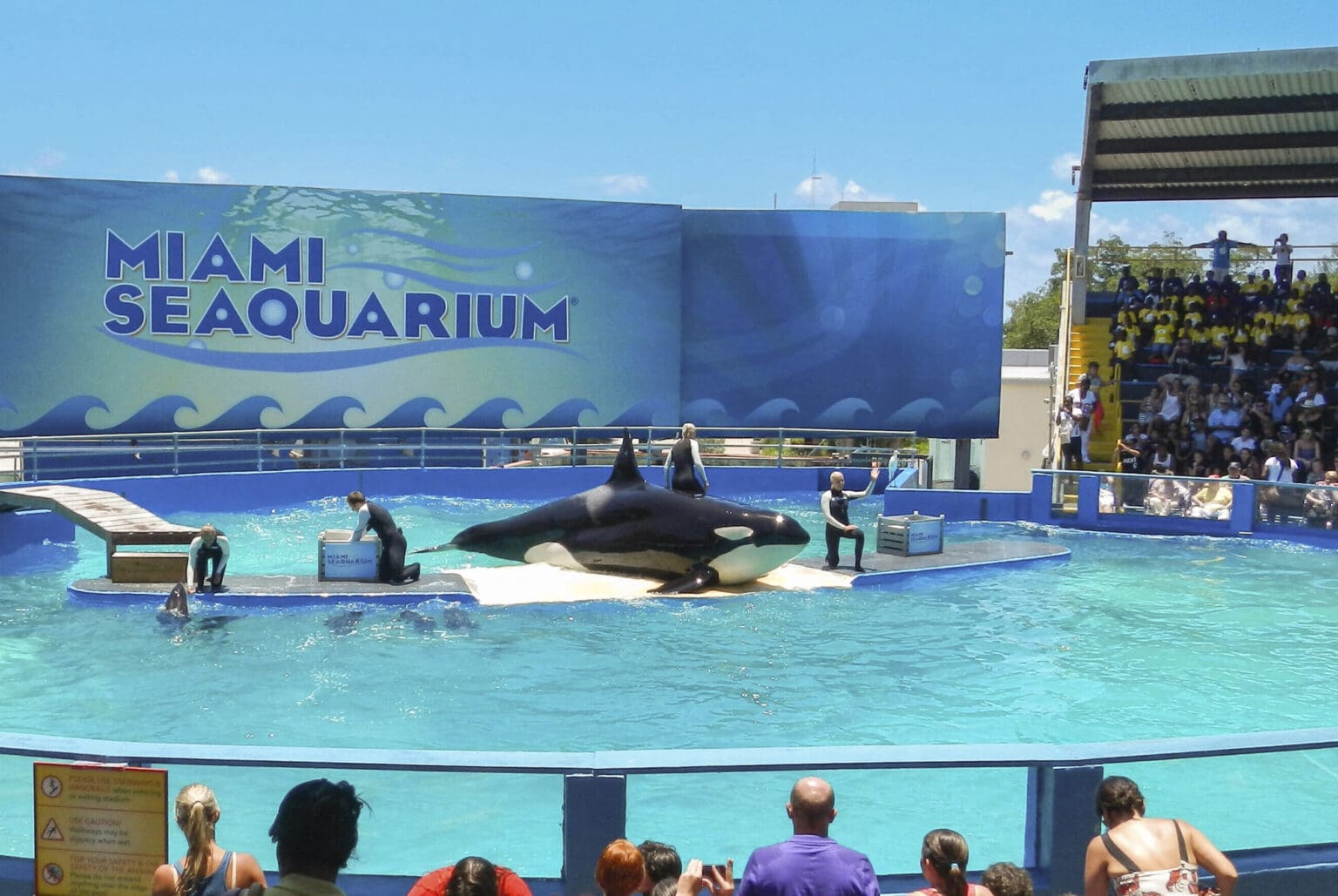
She lived in a small pool at the Miami Seaquarium for more than fifty years. Alone—because the other orcas there had died. She performed in shows twice a day. Scientists who studied the calls of the southern residents said Tokitae remembered her language. When they played recordings of voices from her family in Puget Sound, she responded.
For many years, people fought to bring her home. In 2023, it seemed like it would finally happen—there was a plan, and funding had been allocated. But in August 2023, Tokitae died—before it could happen.
She was about fifty-seven years old. Orcas in the wild live about as long as humans.
Today, about seventy southern residents remain in Puget Sound. That’s very few—scientists say they are still at risk: from ship noise, from water pollution, and from a shortage of fish. But they live. And every time one of them surfaces, people on the shore go still and watch.
Maybe because they remember: one day, a young man on a sailboat also froze and looked—then decided he couldn’t just sail away.