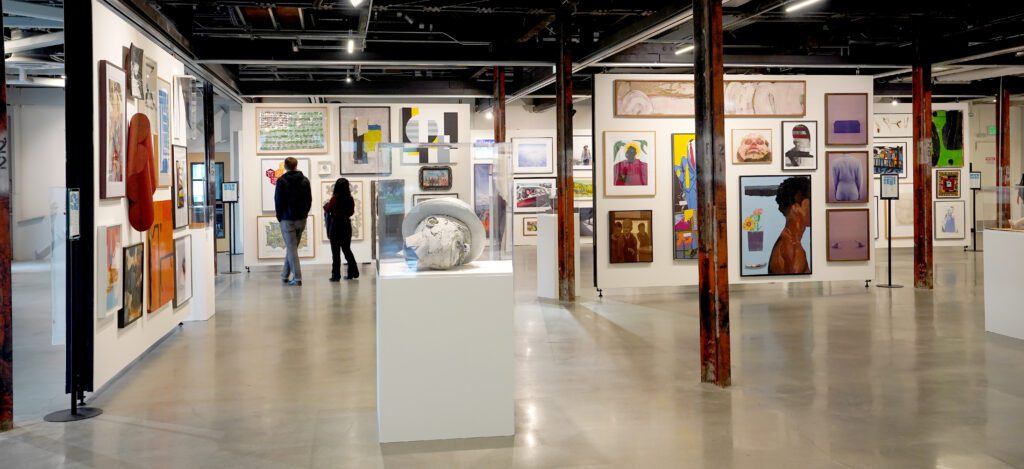
In 1973 the city of Seattle came up with an unusual rule that sounded almost like a magic spell: "For every hundred coins the city spends on construction, one coin must buy beauty." It was called the "One Percent for Art Program," and it seemed simple. But no one expected that this rule would push artists and engineers to solve puzzles together that no one had thought of before: how do you hang a painting on a wall that vibrates? How do you make a sculpture that will live underwater? And most importantly — why decorate places almost no one visits?
A Question Nobody Had Asked Before
When the rule first appeared, everything seemed straightforward. The city builds a new library — an artist creates a mosaic or statue for it. The city makes a park — a fountain or unusual bench appears. But then the real adventures began.
Engineers started coming to artists with unusual requests: "We need art for the water treatment plant. It's always wet there, it smells of chlorine, and usually only workers in rubber boots go inside." Or: "We're building a train tunnel underground. It's dark, noisy, and the walls shake when a train passes. Can you make something beautiful?"
Many artists at first didn't understand why this was needed. Art is usually made for museums, where people come specifically to see it, or for plazas where everyone strolls. But the city insisted: rules are rules. If we spend money on construction, there must be beauty there — even if it's an underground pipe or the roof of a pump station.
When Engineers Became Artists' Helpers
That's when real collaboration began. Artist Betsy Damon wanted to create a work for the West Point water treatment facility. She came up with the idea of a large sculpture that would explain how water travels through filters and becomes clean. But there was a problem: everything around was constantly wet, and materials commonly used for sculptures — wood, paper, some metals — degrade from water.
The plant's engineers sat down with the artist. They told her which materials withstand moisture and chemicals. She showed them her sketches. Together they decided to use special stainless steel and glass that wouldn't be damaged by water or time. The sculpture ended up resembling a huge drop of water, inside which you could see every stage of purification — as if peering into a magical process.
But the most surprising thing happened afterward. Plant workers who came on shift every day began bringing their children and grandchildren. "Look," they'd say, "this is where dad works. Do you see that beautiful thing? It shows how we make the water clean for the whole city." A place that had once seemed dull and technical suddenly became a source of pride.
A similar story happened with the Horgas Bridge. Artist Andrew Kepling was commissioned to create something for the bridge supports — massive concrete columns that hold the roadway above the ground. Usually no one looks at those supports, except maybe birds. But Andrew thought: what if they could look like giant musical instruments?
Engineers were initially worried. A bridge must be strong and safe; you can't just attach random things to it. But the artist was persistent. Together they calculated how to attach metal tubes to the supports so the wind would play melodies on them while the structure remained sturdy and didn’t interfere with traffic. The result was a "singing bridge" — when the wind blows, the supports emit soft humming sounds, as if the bridge is humming to itself.
Beauty for Those Who Didn't Expect It
The most unusual thing about Seattle's program is that art began to appear in places where no one expected to look for it. In underground maintenance passages for subway workers, artists painted bright murals of tree roots — to remind people that even far beneath the earth they're still part of a living city. On the roof of a pump station, a sculpture was installed that only pilots and birds can see — simply because "the sky deserves beauty too."
One water treatment employee, a woman named Margaret, told reporters: "Before I thought my job was just turning valves and checking gauges. Boring and invisible. Then this sculpture appeared, and I realized: what we do is important and beautiful. Now, when I come on shift, I look at that glass drop of water first. It reminds me that I help the city live."
The program taught the city an important lesson: beauty doesn't have to be reserved for special occasions or special people. It can live anywhere — in a tunnel visited only by repair crews, on the wall of a pump station, in the firefighters' break room. Engineers realized their work could be not only functional but inspiring. And artists learned that the real challenge is not only to make something beautiful, but to create beauty that can withstand vibration, water, darkness, and time.
Today Seattle has more than 4,000 works of art created under this program. Many are located in ordinary places — libraries, parks, streets. But the most surprising pieces are hidden where almost no one sees them: under bridges, in tunnels, at treatment plants. They exist not for crowds of tourists, but for those who work in these places every day — for engineers, drivers, custodians, maintenance workers. For the people who keep the city alive, and who are often forgotten.
The one-coin-in-a-hundred rule turned out to be more than a financial law. It became a reminder: every person, even someone working in the darkest underground tunnel, deserves to see something beautiful. And sometimes the most important art is the kind made not for everyone, but for the few who need beauty most among pipes, wires, and concrete.