In 1971 something remarkable happened in the American city of Seattle. Ordinary people — fishmongers, grandmothers buying vegetables, artists and students — stepped in and saved an entire market from demolition. It wasn't a fairy tale where a hero slays a dragon. It was a real story of how city residents realized their voice could be stronger than the plans of wealthy developers and city officials. And that story changed how people around the world think about their cities.
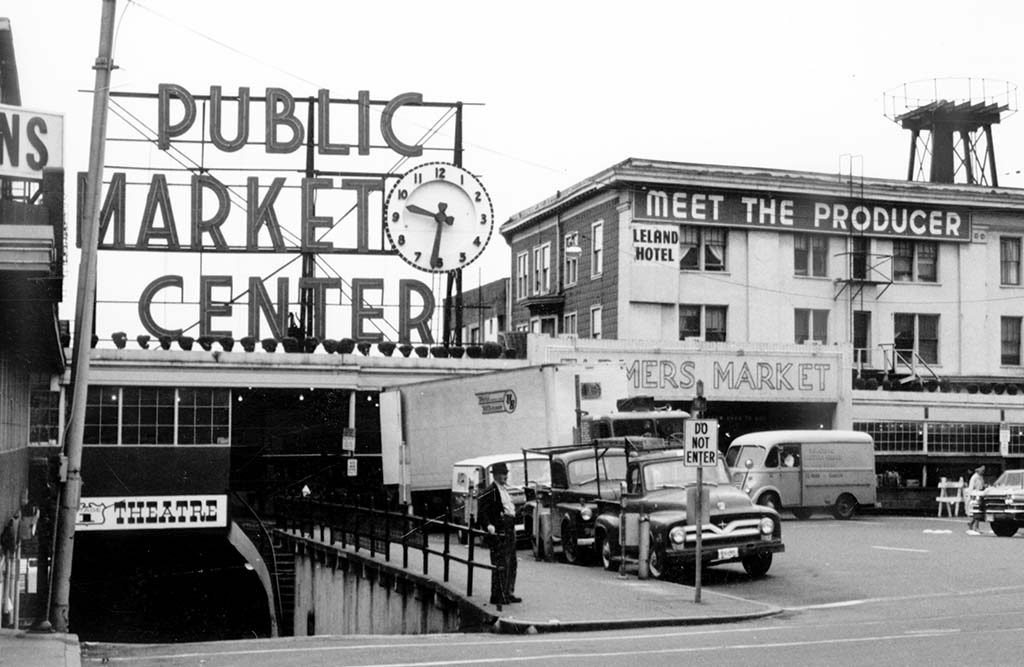
Pike Place Market is not just a place of commerce. It’s a market that has existed since 1907, where fishermen deliver fresh fish every morning, farmers lay out vegetables straight from their gardens, and flower sellers create bouquets that take your breath away. It’s always noisy, smelling of the sea and fresh bread, with vendors shouting and laughing as they toss huge salmon across the stalls. But in the late 1960s the city authorities decided all this was “old-fashioned” and “unsightly.” They wanted to tear the market down and build modern high-rises and huge parking lots in its place.
The architect who drew what could be lost
The central figure in this story was a man named Victor Steinbrueck. He was an architect — someone who designs how buildings should look. But unlike many architects of the time, Victor didn’t want to build only new and shiny things. He understood that old places hold the soul of a city, its history and memory.
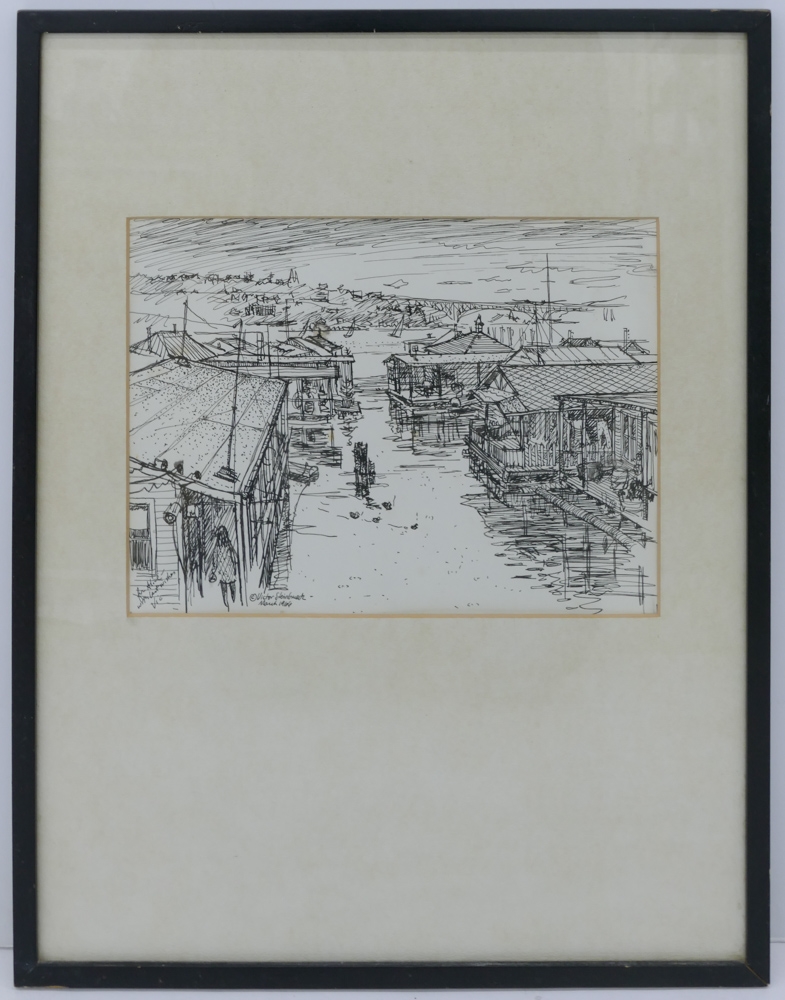
When Victor learned of plans to demolish the market, he did what he did best — he began to draw. He created a series of beautiful ink sketches showing the market as it was: with its wooden stalls, old signs, people of all ages and nationalities. Beside them he drew what the authorities wanted to build: cold glass towers and empty concrete plazas. Those drawings spoke louder than any words: “Look what you will lose.”
But Victor didn’t stop at drawings. He walked the market, talking to vendors, customers, and the artists who worked there. He listened to their stories. One elderly woman told how she’d come to the market every Saturday for 40 years and knew every vendor by sight. A young fisherman explained that if the market closed, he would lose not only his job but also the only place where he could sell his catch directly to people without middlemen. A student confessed that it was there she first tasted food from other countries and realized how diverse the world is.
How ordinary people became an army of defenders
Victor Steinbrueck and his supporters formed an organization called “Friends of the Market.” The name sounds simple, right? But behind that simple name was a real fight. They needed to gather city residents’ signatures to bring the market’s fate to a citywide vote. At the time this was very unusual — decisions about what to build or demolish were normally made only by officials and businessmen.
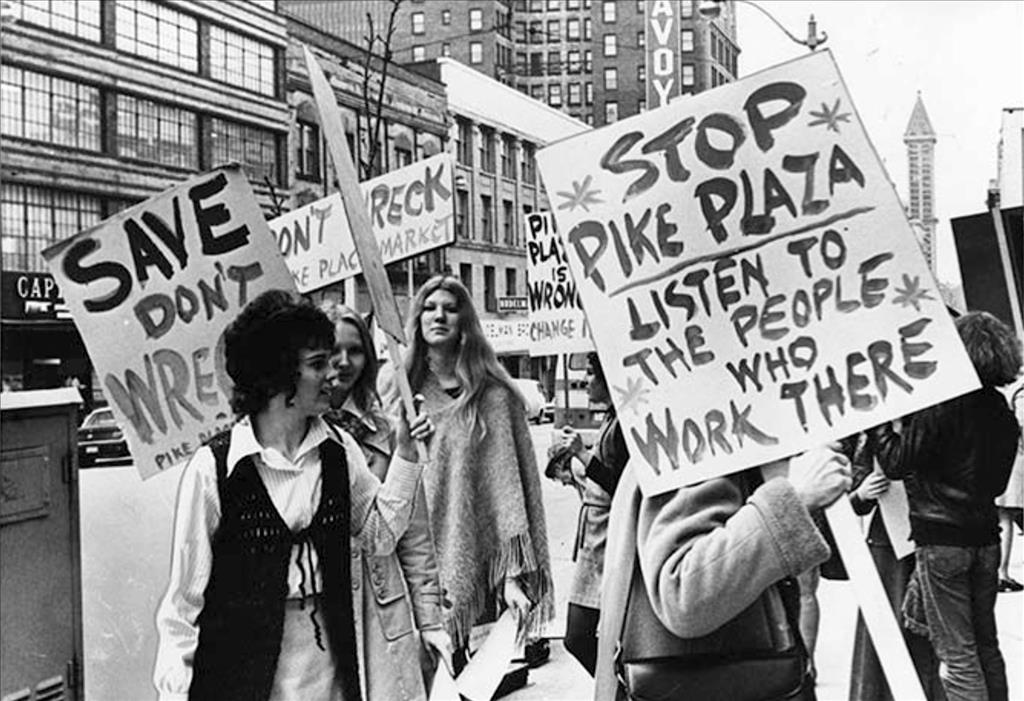
The “Friends of the Market” acted like true grassroots warriors. They stood on streets with clipboards collecting signatures. They organized tours of the market for people who had never been there. They invited journalists to write stories. They even made posters with the slogan “Save the Market” and plastered them around the city.
What’s especially important is that this wasn’t a struggle of rich versus poor or young versus old. People from all walks of life participated: elderly residents who remembered the market from childhood, young hippies who valued its free spirit, families with children, immigrants for whom the market was a piece of home. One movement participant later recalled, “We realized the market is not just a building. It’s where the city remains human.”
The day the city made its choice
On November 2, 1971, Seattle residents went to the polls. Before them stood a question: preserve Pike Place Market as a historic district or allow its demolition and redevelopment? It was one of the first times in United States history that the fate of an entire urban neighborhood was decided by direct citizen vote.
The result was stunning. More than 76,000 people (70% of voters!) said “yes” to preserving the market. Citizens chose noise, smells, old wooden floors and living people over quiet glass towers and parking lots. When the results were announced, the market celebrated. Vendors handed out free flowers, musicians played in the streets, people hugged and cried with joy.
That day Victor Steinbrueck said a phrase later quoted around the world: “Today we proved that the city does not belong to developers or politicians. The city belongs to those who live in it.”
Lessons for the world
The story of saving Pike Place Market became a guidebook for cities worldwide. Until then many believed “progress” necessarily meant tearing down old and building new — that a modern city must be tall glass-and-concrete buildings, wide roads for cars, and shopping malls. Seattle residents showed it’s possible to preserve history and still develop.
After the “Friends of the Market” victory, cities in America, Europe, and Asia began to approach urban planning differently. Laws for protecting historic districts appeared. Authorities started asking residents’ opinions more often before big construction projects. Architects began to think not only about how a building looks on paper but also how people will feel around it.
Russia also has examples where residents defended places important to them. In Moscow people fought to save parks and old buildings. In St. Petersburg neighbors protected historic courtyards. Each time people come together and say, “This place matters to us,” they echo what the “Friends of the Market” did back in 1971.
What happened to the market afterward
Today Pike Place Market is one of the most visited tourist attractions in the United States. About 10 million people visit it each year. But most importantly — it’s still a real market where real farmers and fishermen work, where you can buy fresh produce and talk to the people who grew or caught it.
The market has become a symbol that “old” doesn’t mean “bad,” and “new” isn’t always better. The wooden floors still creak underfoot, fishmongers still put on shows tossing salmon, and the air mixes the scents of sea, flowers, and fresh coffee. Many families have traded there for three or four generations — grandparents passed the business to children, who passed it to grandchildren.
Victor Steinbrueck, the architect-hero of this story, died in 1985. But his name is not forgotten. There is a bronze statue at the market — Victor sits on a bench looking at the bay he loved. There is always a place next to him, and tourists often sit for photos. The pedestal reads: “He taught us to value what we have.”
Why this story matters to you
You might think, “So what? That happened long ago and far away.” But this story is about something very current. It’s about the fact your voice matters, even if you’re still a child. It’s about how adults are not always right when they decide things for everyone else.
Every time something changes in your city or neighborhood — a new building goes up, a park is closed, an old building is torn down — someone makes the decision. The story of Pike Place Market teaches you have the right to ask “why?” and to give your opinion. Maybe there’s an old tree by your school they want to cut down. Or a playground planned to be replaced by a parking lot. You can do what the “Friends of the Market” did — talk to neighbors, draw, write, explain why the place matters.
Cities are built not only by architects and builders. They are built by everyone who lives in them — your parents, teachers, friends. And by you too. Because a city is more than buildings and roads. It’s where we meet, talk, laugh, and remember. It’s what makes us who we are.
The story of a small market on the ocean shore that was nearly eaten by bulldozers is really a story that love for your city is not a weakness but a strength. And that sometimes the most important thing we can do is simply say: “Wait. Let’s think. Maybe there’s a better way?”