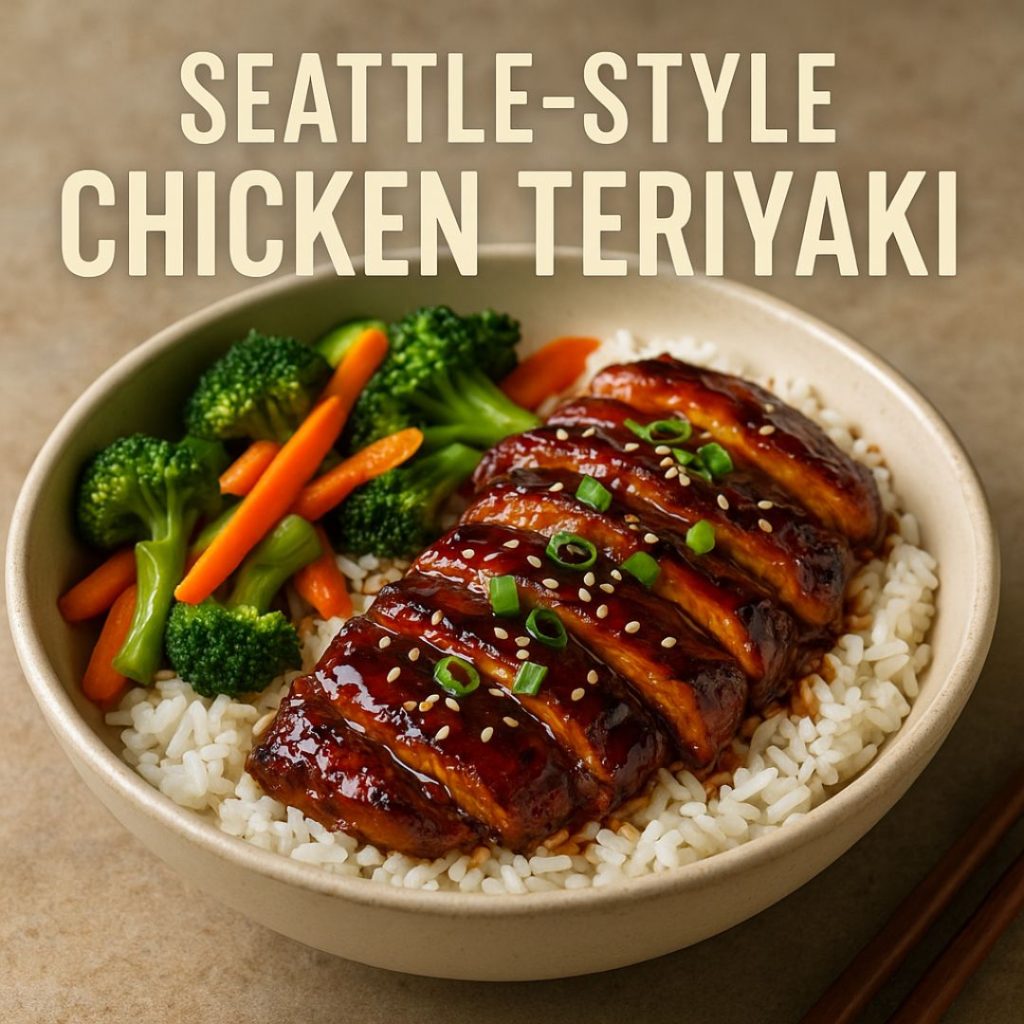
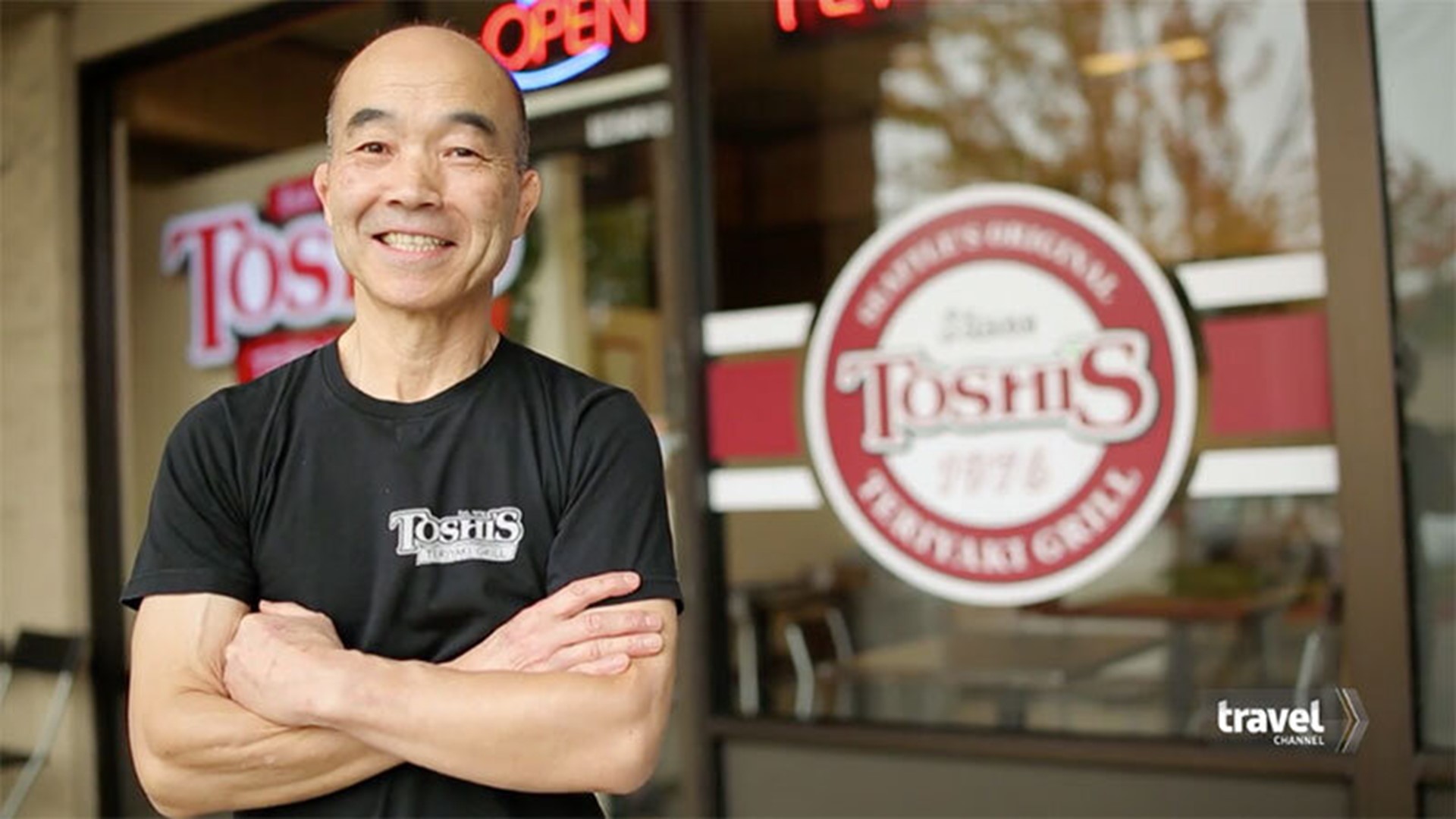
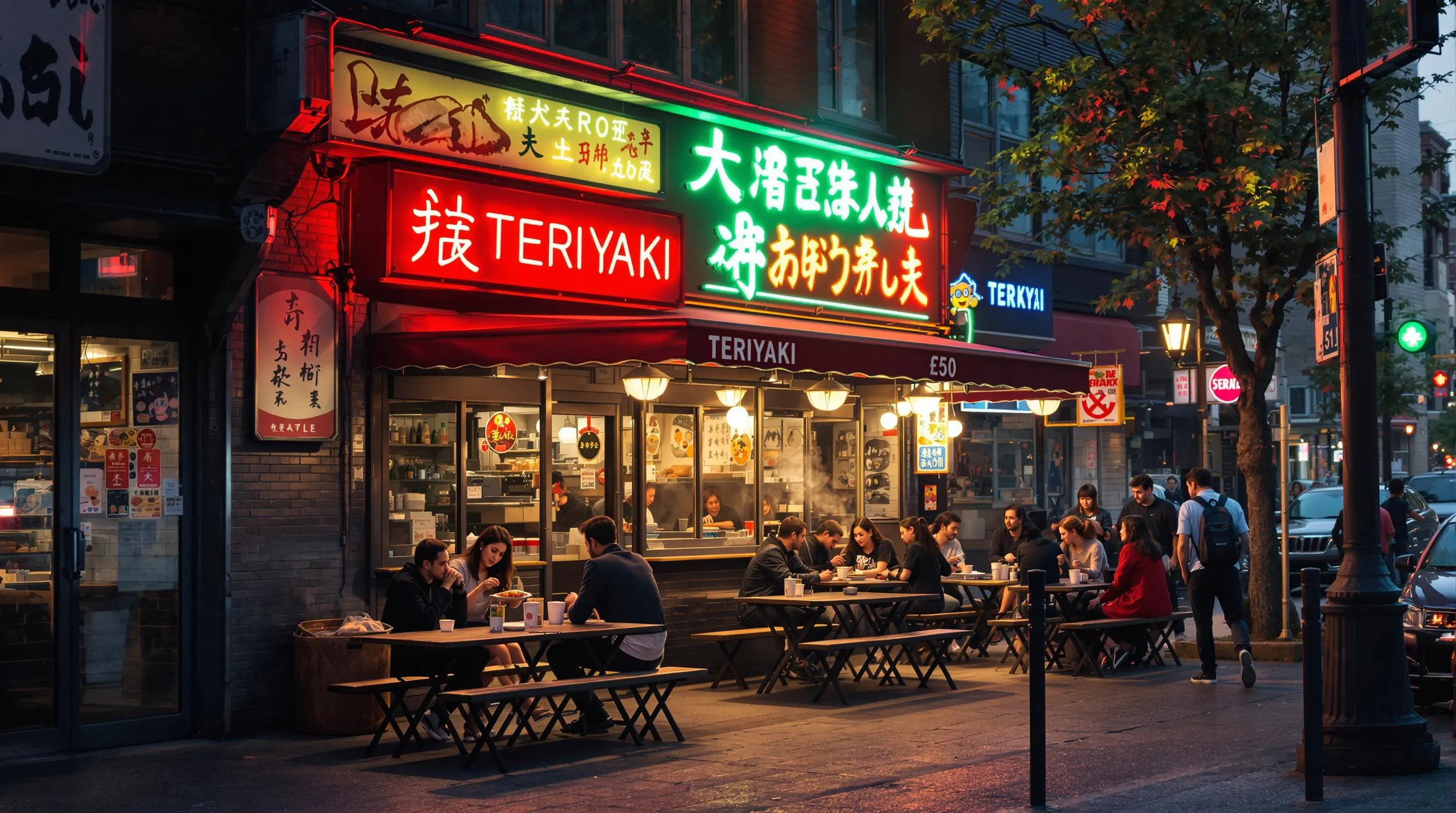
Imagine you’re walking down a street in Seattle and you see a small shop with a sign that says “Teriyaki.” You walk on — another one. Turn the corner — teriyaki again! This city has more of these restaurants than anywhere in the world outside Japan. But the most surprising thing is that they don’t make teriyaki quite like in Japan. It’s a distinct “Seattle teriyaki,” and it has its inventor. His name was Toshi Kasahara, and he was more than a cook — he was a food engineer who figured out how to feed a whole city a tasty lunch for five dollars.
A Puzzle No One Noticed
In 1976 Toshi arrived in Seattle from Japan. He worked a variety of jobs and noticed one odd thing: people in America were always in a hurry. They needed a quick lunch and to get back to work. But fast food then meant hamburgers and fries — the same thing every day. Toshi thought: “What if Japanese food could be just as fast and affordable?”
In Japan, teriyaki is a cooking method: meat or fish is grilled and glazed with a slightly sweet sauce made from soy sauce, sugar, and other ingredients. But in Japanese restaurants it was expensive and time-consuming. Toshi decided to change the game. He opened his first small restaurant and began experimenting like a true inventor.
Kitchen as a Smart Machine
Toshi realized he needed to change not only the recipe but also how the kitchen worked. He devised a system that ran like a well-oiled machine. Here’s what he did:
First, he simplified the menu. Instead of dozens of dishes, there were only a few options: chicken teriyaki, beef teriyaki, maybe salmon. That meant cooks didn’t get confused and didn’t waste time deciding.
Second, he altered the sauce itself. Classic Japanese teriyaki requires time and precision. Toshi created his own version — a little sweeter, a bit thicker, and something that could be made in large batches ahead of time. Some Japanese people said, “This isn’t real teriyaki!” But Toshi would answer, “This is teriyaki for Seattle.”
Third — and this was the smartest — he organized the kitchen so one person could work quickly. The grill was placed in a specific spot, rice was cooked in large rice cookers, vegetables were pre-chopped. Every movement was thought out. It was like engineers designing a factory: no extra steps, everything within reach.
The result? A full meal with meat, rice, and salad could be ready in five minutes and cost less than two hamburgers. Workers, students, families — everyone loved it.
The Secret Everyone Shared
But the most remarkable part of the story is what happened next. Toshi didn’t keep his method secret. When other Japanese immigrants came to Seattle looking for work, he showed them how everything was set up. Some worked for him, learned, and then opened their own places.
It was like a grandmother sharing a pie recipe with her neighbor, and that neighbor sharing it with her friend, and soon the whole neighborhood was baking the same tasty pie. Only here the “recipe” was an entire system: how to organize the kitchen, where to buy cheaper ingredients, how to make a small family business work.
By the 1990s there were already more than a hundred teriyaki shops in Seattle. Many were owned by Korean immigrants who had also learned the system and added their own ideas. It was like a big tree: Toshi planted the seed, and the branches spread everywhere.
A Legacy Almost Forgotten
Today there are over 200 teriyaki restaurants in Seattle. For a city of about 750,000 people that’s an astonishing number. Yet few know the name Toshi Kasahara. His first restaurant closed long ago. Big chains with flashy advertising have overshadowed the small family places.
But if you walk into any of those little shops, you’ll see Toshi’s legacy. A simple menu on the wall. A grill by the window so people can see their food being made. Large portions for a small price. And often — a family working together: mom at the register, dad at the grill, kids helping after school.
I once spoke with the owner of one of these places. He told me, “My uncle taught me the trade. And his friend taught him, who once worked at one of the first spots. We’re all connected by this story, even if we don’t know where it all began.”
What the Sauce’s Story Tells Us
The story of Seattle teriyaki is not just a food story. It’s about one person seeing a problem (people needing fast, tasty, inexpensive food) and solving it with a smart approach. He thought like an engineer: how to make the process efficient? How to remove unnecessary steps? How to keep quality high and price low?
But it’s also a story about generosity. Toshi could have kept his method to himself, opened many of his own shops, and become wealthy. Instead he shared his knowledge. Because of that, hundreds of families were able to start businesses and build their lives in a new country.
Sometimes the most important inventions aren’t giant machines or complex computers. Sometimes it’s a simple idea about how to organize a kitchen so you can feed people. And sometimes the most lasting legacy isn’t monuments and museums but the small restaurants on every corner where families cook using a system invented by one kind, clever person many years ago.
Next time you see a teriyaki shop (and if you visit Seattle, you’ll see plenty!), remember Toshi Kasahara. Remember that engineering thinking can change the world not only through bridges and buildings but through how we cook and share food. And that the best inventions are those we share with others.