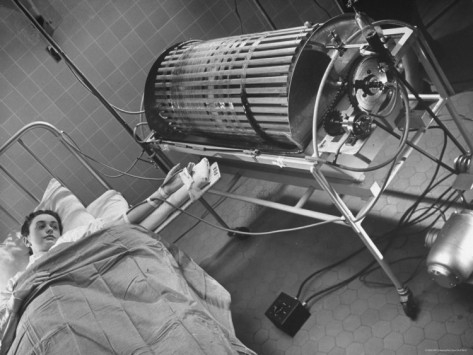
Imagine your body is a large house, and the kidneys are the cleaners who remove all the trash from your blood every day. But what if the cleaners suddenly stopped working? Until 1960 in Seattle, USA, that meant a person would simply die within a few weeks. Doctors could do nothing. Parents sat at the bedsides of sick children and just waited. But one doctor named Belding Scribner decided that this should not be the case. He created a machine that changed not only medicine but also made people think about water, justice, and who gets to decide who lives.
A strange refrigerator-sized machine
The first kidney dialysis machine at the University of Washington looked like something out of a sci-fi movie. It was the size of a large refrigerator, with tubes, pumps, and odd sounds. Water flowed through it constantly — a lot of water. In one session, which lasted several hours, the machine used about 120 liters of purified water. That's like filling a bathtub twice!
Dr. Scribner invented a special tube that could be left in a patient's arm permanently. Before that, a new incision had to be made every time, and it was very painful. His invention was called the "Scribner shunt," and it saved the first patient — Clyde Shields, who lived another 11 years afterward. Can you imagine? A man told he had two weeks to live ended up living 11 more years and saw his children grow up!
But the machine required a constant supply of very clean water. Seattle was a good place for this invention because the city had long taken care of the cleanliness of its rivers and lakes. If the water had been dirty, the machine would have poisoned people instead of saving them. Thus a medical invention became linked to ecology: to save lives, a clean environment was needed.
The room where they decided who would live
A terrible problem arose. There were only a few machines, and hundreds of sick people. Each machine was very expensive, and there wasn't enough money, space, or staff for everyone. So the hospital created a special committee — a group of ordinary people who had to decide: who would be connected to the machine and who would not. They were not doctors but regular Seattle residents: a teacher, a minister, a housewife, a lawyer.
They sat in a room and read the stories of different people. Here's a mother of three. Here's a teacher who teaches music to children. Here's a construction worker who feeds a large family. Here's an elderly artist. Who to choose? Who has a greater right to live? Journalists called this group the "God Committee" because these people literally decided who would die and who would live.
One of the women who served on that committee later said that each decision felt like a heavy stone on the heart. They tried to be fair, but how can you fairly choose between lives? Sometimes they selected people with children. Sometimes — those who were younger. Sometimes — those who could contribute more to society. But every time they chose one person, they knew another would die.
A river of clean water and messy questions
While doctors saved people, engineers counted the water. Each day the machines at the Seattle Artificial Kidney Center used thousands of liters of water. It wasn't just tap water — it had to be specially purified so there were no microbes or chemicals.
One of the hospital’s engineers, Albert Babb, once calculated: if everyone in America who needed dialysis were connected, it would require as much clean water as a small town! This forced scientists to think about two things at once: how to make machines smaller and more economical, and how to protect sources of clean water.
At the time, Seattle was beginning to pay more attention to Lake Washington and the rivers running through the city. People realized that clean water was not just a pretty landscape. It was a matter of life and death. Without clean water, dialysis would not work. Without clean water, sick people could not live. Thus the kidney-saving machine helped people understand the value of nature in a new way.
What changed since then
The story of the "God Committee" shocked America so much that the government decided ordinary people should not be the ones to decide who lives and who dies. In 1972, twelve years after the first machine was created, the state decided to pay for dialysis for everyone who needed it. It was the first time the U.S. government agreed to fund treatment for all patients with a single disease.
But the Seattle committee’s story did more. It created a new field — medical ethics. Now hospitals around the world have special committees that help doctors make difficult decisions. Not about whom to save, but about how to treat patients correctly and fairly. How to respect patients' wishes. How to tell the truth, even when it is frightening.
And the machines became completely different. Today they are about the size of a microwave, use ten times less water, and some people can do dialysis at home while they sleep. Engineers have even developed systems that clean and reuse water so less pristine water is drawn from rivers and lakes.
One machine — a thousand questions
When Dr. Scribner built his machine in a small Seattle laboratory, he simply wanted to save people from death. He did not expect his invention to force society to think about justice, the value of water, and how we make the hardest decisions in life.
The first dialysis machine was not just a medical device. It was like a mirror in which people saw difficult questions: are all lives equally valuable? Who should decide whom to save when not everyone can be saved? How do we protect nature when people’s lives depend on it?
Today hundreds of thousands of people worldwide live thanks to dialysis. Among them are children who play, study, and dream of the future. Each of them lives because one doctor in Seattle refused to accept that some diseases could not be defeated. And because society learned to ask hard questions and seek honest answers. Even if those answers force us to think about the most important things: life, justice, and what truly matters in this world.