In the early 1960s, a machine appeared at the University of Washington that could save people from a deadly kidney disease. But that machine could help only a few people at a time, and far more people needed it. Adults had to form a special committee to decide who would get a chance to live and who would not. This difficult choice sparked such a huge controversy across America that the government eventually passed a law: from then on, anyone with kidney disease could receive help for free. This is the story of how one machine in Seattle taught a whole country to care for everyone equally.
The lifesaving machine that wasn’t enough for everyone
Imagine there is only one umbrella in your classroom, and it’s pouring outside while twenty children need to walk home. Who gets the umbrella? A similar problem arose in Seattle in 1960, except instead of an umbrella there was a dialysis machine, and instead of rain there was a deadly disease.
Dialysis is a process in which a special machine does the job of diseased kidneys: it cleans the blood of harmful substances, like a filter cleans water. Dr. Belding Scribner of the University of Washington created the first machine that could do this regularly, again and again, allowing people to live for years instead of weeks. Before this invention, people with kidney failure simply died — medicine had no way to help them.
But there was a huge problem: the machine was very expensive, and the hospital had only a few units. They could treat only 10–15 people, while hundreds needed help. New patients arrived every week, and doctors faced an impossible choice. Dr. Scribner later recalled: “We had created a way to save lives, but we could not save everyone. It was horrific.”
The committee newspapers called "The God Committee"
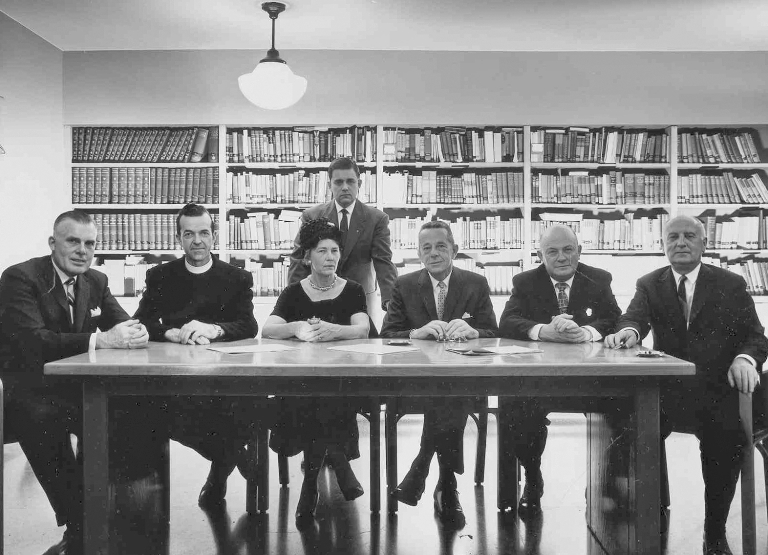
Doctors at the hospital did not want to decide who would live and who would die. It was too heavy and unfair — a doctor might choose a friend or acquaintance. So in Seattle a special committee of ordinary people was formed: a lawyer, a housewife, a clergyman, a businessman, and other city residents. They met in secret and selected patients for treatment.
The committee looked at more than just medical indicators. They asked strange questions: does the person have children? Do they attend church? Do they contribute to society? Do they have a job? One committee member later admitted: “We felt terrible. How can you decide whose life is more important?”
Journalists learned about this committee and called it the "God Committee" because these ordinary people were making life-and-death decisions as if they were gods. A Life magazine article in 1962 told the whole country about the situation, and a huge debate began.
The debate that changed the whole country
People across America began to argue: was it right for the committee to choose the "good" people? What if a person doesn’t go to church but is kind? What if someone has no children but is an artist who makes beautiful work? And what about children — should they have to prove their "usefulness"?
A mother in Seattle whose son was not accepted into the dialysis program wrote to the newspaper: “My child has not yet had a chance to be useful to society — he is still in school. But does that mean he doesn’t deserve to live?”
This debate mattered because for the first time so many people began to ask: is it fair that the wealthy can buy treatment while the poor cannot? Should medicine save everyone equally, no matter who you are?
Gradually people realized: no committee can fairly decide who is worthy of living. Every life matters. Doctors, scientists, and ordinary citizens began to demand government action: the state must help!
The law born from the debate
In 1972, ten years after the story began, something remarkable happened. The U.S. Congress passed a law stating that anyone with kidney disease could receive dialysis at no cost, regardless of age, employment, or money. The government would pay for treatment through a special Medicare program.
This was the first and only time in U.S. history that the government decided to cover treatment for one specific disease for all citizens. Normally Medicare helps only the elderly, but an exception was made for dialysis — because everyone remembered the grim story of the "God Committee" from Seattle.
Today more than 500,000 people in the United States live thanks to dialysis, and each of them can receive treatment. No one has to prove to a committee that they are “good enough” to live.
The machine that taught us to value everyone
The first dialysis machine from the University of Washington now stands in a medical history museum. It looks old-fashioned, with large tubes and knobs, nothing like modern devices. But that machine is not just a museum exhibit. It is a reminder of an important lesson.
Sometimes a new invention creates not only solutions but also hard questions. Scribner’s machine saved lives, but it also forced people to ask: who deserves to be saved? And most importantly — people found the right answer: everyone does.
Dr. Scribner, before his death in 2003, said: “I am proud not only of the machine we created. I am proud that our work helped society understand: medicine should serve all people equally.”
Today, when doctors and scientists invent new expensive drugs or treatments, they always remember the story from Seattle. They ask: how can this help everyone, not just the wealthy? That is the true gift that the first machine gave the world — not just technology, but the idea of justice in medicine.