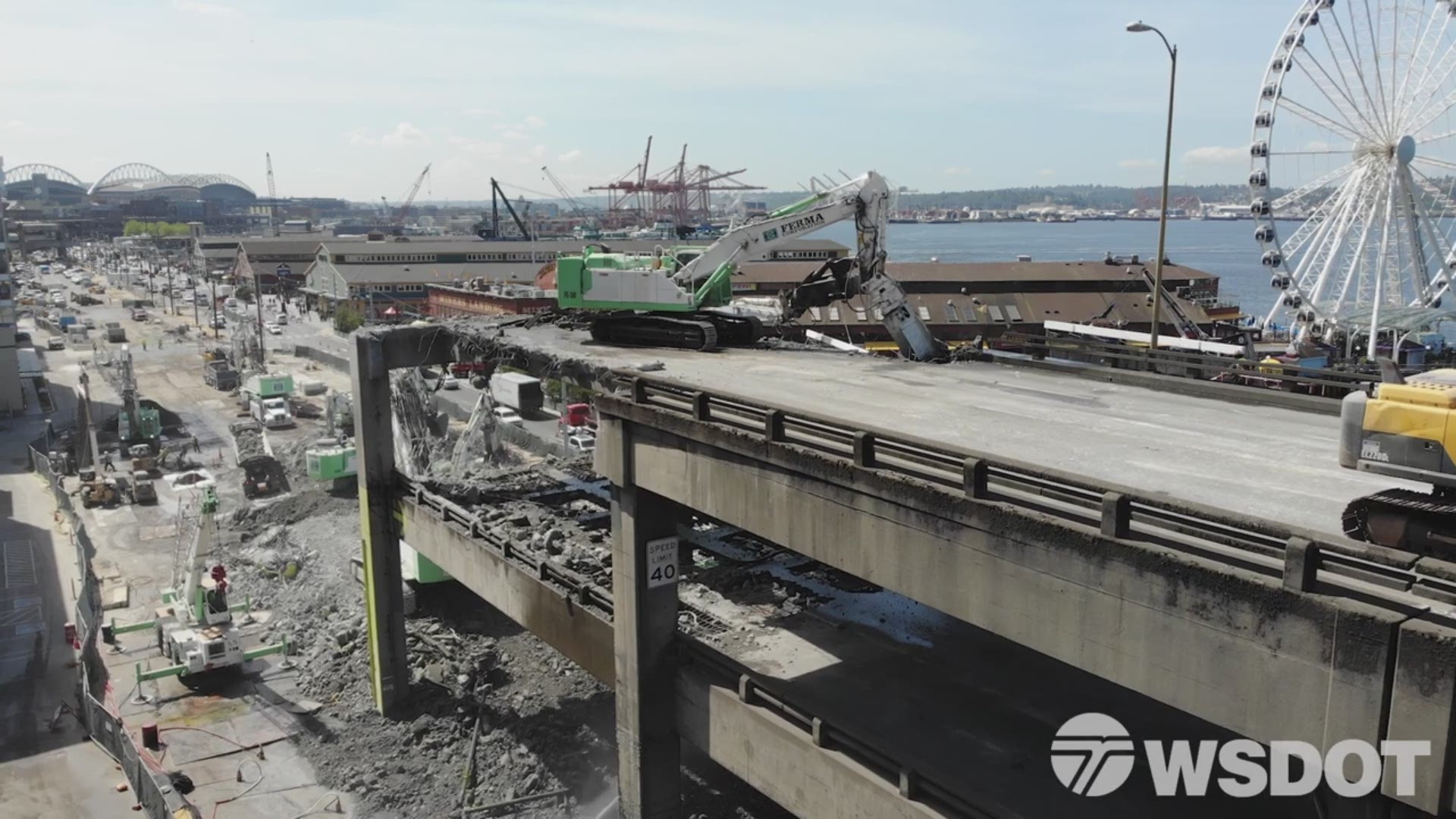
Imagine you’re trying to call a friend across the street, but trucks keep passing, buses honk, motorcycles roar. You shout at the top of your lungs, but your friend can’t hear you. Seals and sea lions in Elliott Bay in Seattle felt something similar for more than fifty years. Only the “trucks” weren’t beside them but above their heads—on a massive two-level roadway called the Alaskan Way Viaduct.
When that roadway was torn down in 2019, something surprising happened. Three months later marine biologists noticed what hadn’t been seen for decades: seals began returning to the bay. They showed up in groups, rested on buoys, hunted fish. Some researchers couldn’t believe their eyes—the animals behaved as if someone had removed an invisible fence that had kept them away. And in a way that’s exactly what happened. Only this fence was made not of boards but of noise.
Underwater noise people don’t hear
When we think of pollution, we usually picture trash in a river or smoke from a smokestack—something visible. But there’s pollution that is completely invisible: noise. For underwater animals, sound is everything. Dolphins and whales use echolocation to find food, like bats. Seals listen for where fish are splashing. Sea lions call to each other with distinctive barks.
The Alaskan Way Viaduct was built in 1953 right along the bay’s shore. About 110,000 vehicles used it every day. This wasn’t just noise over the water—the concrete supports of the road went deep into the ground, and the vibration from every truck and bus transmitted directly into the water. Scientists call this an “acoustic shadow”—a sound blot that drowns everything else out.
Dr. Jason Wood, a marine biologist at the University of Washington, explained it like this: “Imagine trying to hear your mom whisper at a stadium during a football match when everyone’s yelling. That’s roughly how seals were trying to communicate in Elliott Bay all those years.” For animals that rely on hearing, the place became uninhabitable. They couldn’t find fish, didn’t hear danger warnings, couldn’t call their pups.
What happened when the quiet came back
The viaduct was demolished in January 2019. It was a massive construction project—the road was dismantled bit by bit, tons of concrete removed. The city feared traffic collapse, residents argued about a new tunnel. But no one thought about the seals.
The seals noticed the change almost immediately. By April 2019—just three months later—researchers recorded a 35% increase in marine mammals in the bay. Harbor seals, which had been seen only rarely, became regular visitors. California sea lions, which usually stayed away from the city center, began appearing right at the shoreline.
Volunteers with the Seal Sitters program, who watch over animals on Seattle’s beaches, were astonished. One volunteer, Lynn Geo, said: “We’d watched the same beach for ten years, and suddenly in one spring we saw more seals than in the previous five years combined. They lay on the rocks, basked in the sun, behaved totally calmly. As if this had always been their place.”
But the most surprising discovery came from hydrophones—underwater microphones scientists had placed in the bay. Noise levels dropped by 4 decibels. That may sound small, but on the logarithmic decibel scale it means a reduction in loudness of nearly two and a half times. It became so much quieter underwater that researchers for the first time in many years recorded the sounds of snapping shrimp—the clicking noises these tiny creatures make with their claws. Previously they had simply been inaudible under the din of the viaduct.
Invisible pollution we’re only beginning to learn about
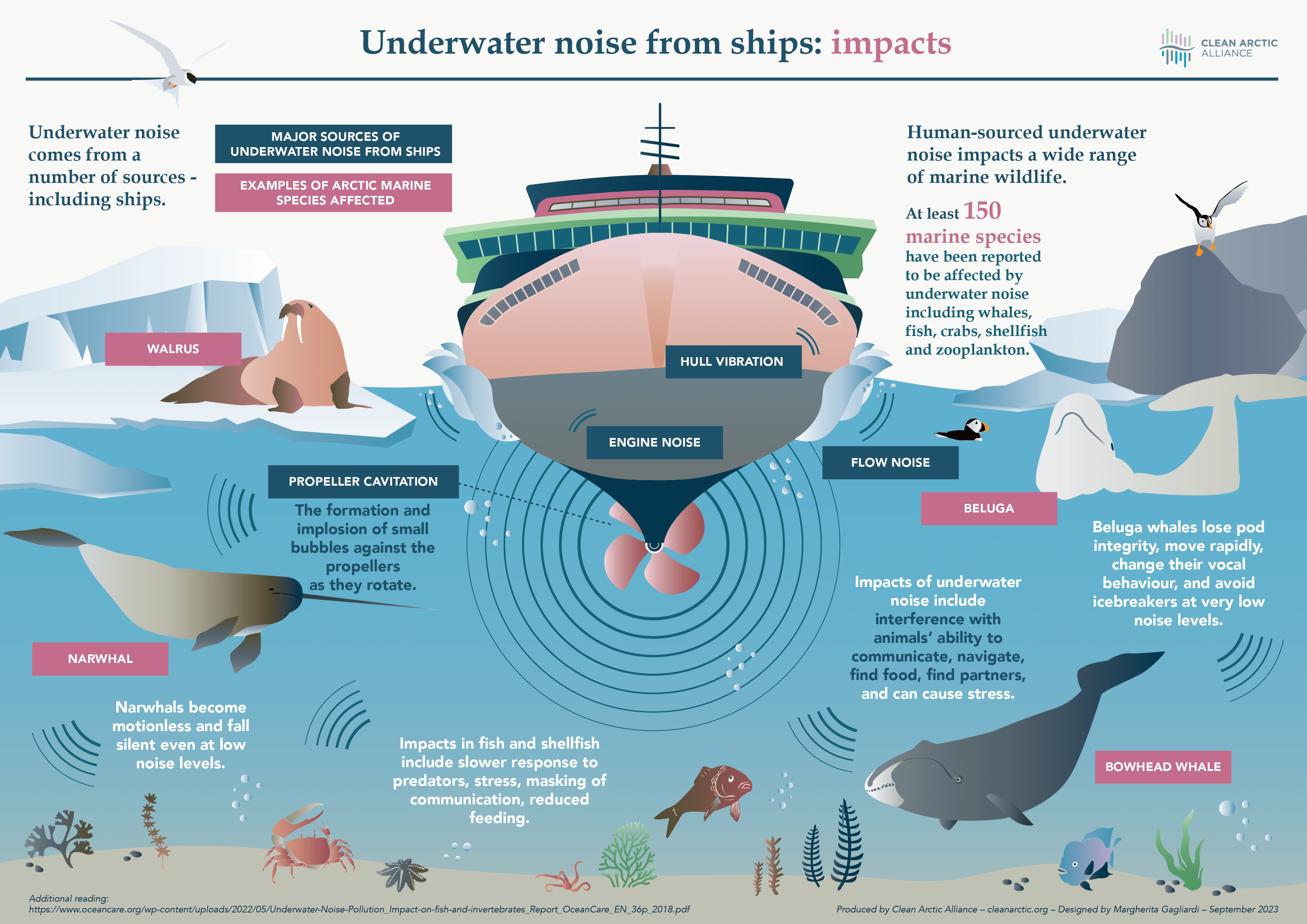
The viaduct story opened scientists’ eyes to a problem few had considered. Ocean noise pollution is a global issue. Whales in the Atlantic Ocean change the pitch of their songs, trying to out-shout ship noise. Fish near ports are worse at hearing predators. Even tiny marine snails grow more slowly in noisy places—the stress of constant racket affects their bodies.
But Seattle unintentionally ran an experiment showing that it’s reversible. Nature recovers faster than we often think if you remove the source of the problem. It’s like someone blasting loud music in your room for years so you can’t sleep, study, or talk to your family. Then the music stops—and life gets easier immediately.
Now scientists are using Seattle’s experience to persuade other cities: when you plan roads, bridges, ports—think not only about people but also about the animals that live nearby. In Vancouver, Canada, ships now slow down in certain areas to make less noise where orcas live. In San Francisco, officials are talking about how to make bridges less “loud” for underwater inhabitants.
A lesson from the seals
Dr. Scott Pegau, an oceanographer who studied the viaduct’s impact, said something thought-provoking: “We built a wall of noise and didn’t even know it. How many more such walls are we building every day?”
This is true not only of the ocean. Light pollution disrupts bird migration—birds get off course seeing city lights. Chemical substances we can’t see or smell get into rivers and alter fish behavior. Vibration from subways can disturb animals living underground.
But the story of Seattle’s seals offers hope. It shows that nature wants to return. It only needs a little quiet, a little space, a little respect. The seals waited fifty years, and when the invisible wall disappeared, they came back in three months. They didn’t hold a grudge or leave forever. They were simply waiting for us to understand.
Now, when you walk along Seattle’s new waterfront—where the ugly concrete roadway once stood—you may see seals in the bay. They swim, dive, sometimes poke curious whiskered faces out of the water. They have come home. And they remind us: sometimes the best way to help nature is simply to stop getting in its way.