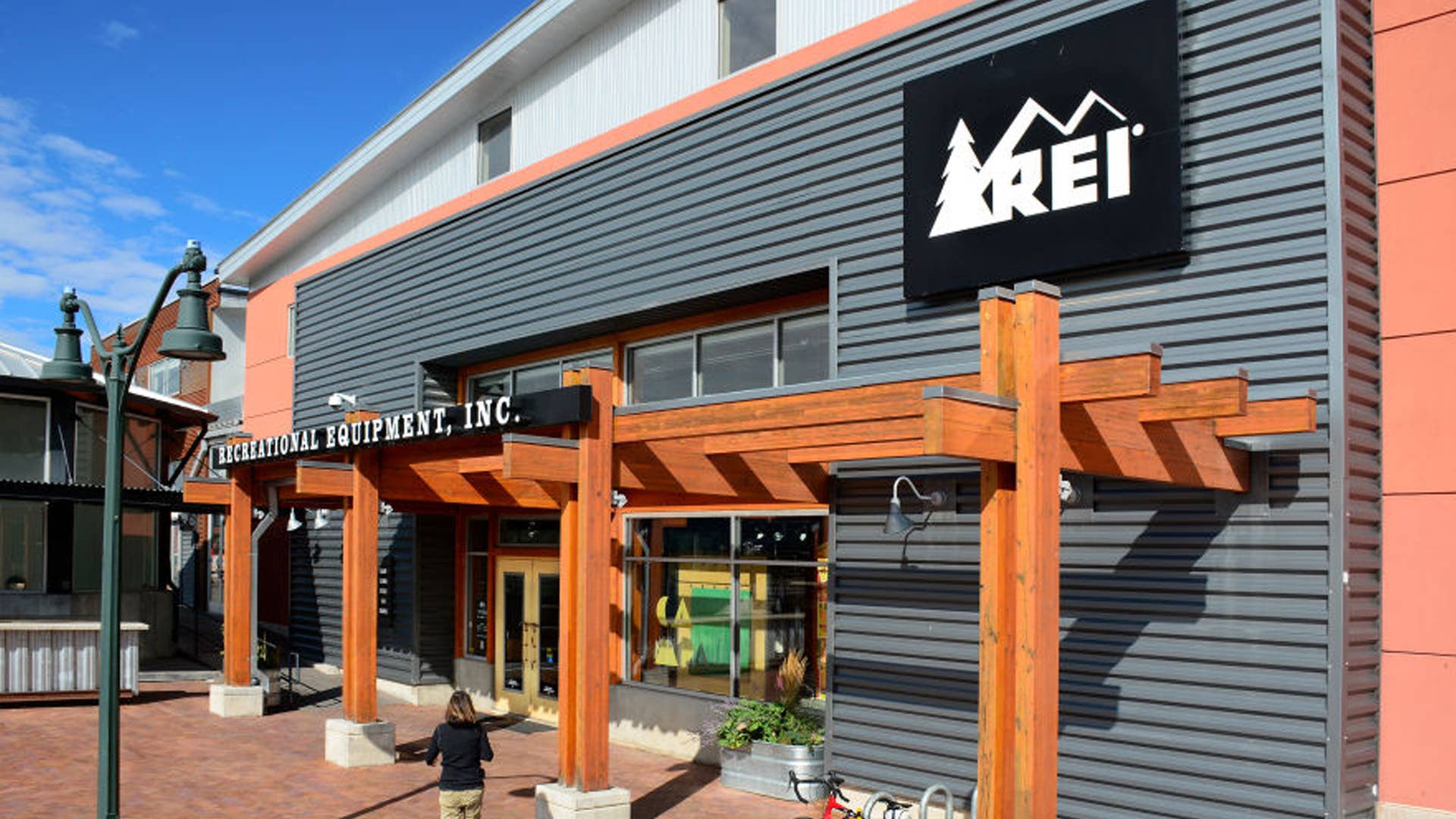
Imagine that you urgently need one particular item—say, a special backpack for a mountain expedition. You search through stores, but can’t find anything suitable, and the options that are available are too expensive. That is how the story of an unusual company that has existed for more than eighty years began. It did not start with a plan to get rich, but with an ordinary friendship and one determined mountaineer.
An Austrian Ice Axe and an Idea That Surprised Everyone
In 1938, a young man named Lloyd Anderson lived in Seattle. He loved the mountains and often went hiking with his friends. But there was a problem: good ice axes—special tools for climbing on ice—were very expensive in the United States, while high-quality models were made only in Austria.
Lloyd decided to order an ice axe directly from Europe—and discovered that it was much cheaper that way. When his friends found out, they asked him to order ice axes for them as well. It soon became clear that if they joined together and bought equipment as a group, everyone could save money. That was the idea that changed everything.
The friends created an organization called Recreational Equipment, Inc., abbreviated as REI. But it was not an ordinary store. It was a cooperative.
What Is a Cooperative—and Why Is It Like a Friends’ Savings Pool?
Imagine that you and your friends want to buy something expensive—say, a large tent for the whole class to use on camping trips. If everyone contributes a little, it is easy to buy, and the tent belongs to everyone. A cooperative works in roughly the same way, only on the scale of an entire company.
At REI, every customer could pay a small fee and become not just a customer, but a co-owner of the company—a “member.” This meant:
- you had voting rights and could participate in company decisions;
- if the company made a profit, part of the money was returned to members;
- the store belonged not to one wealthy owner, but to thousands of ordinary people.
Here is how it compares with an ordinary store:
| Ordinary Store | REI Cooperative | |
|---|---|---|
| Who owns it | One owner or shareholders | Customer-members |
| Who receives the profit | The owner | Members (part of the profit) |
| Who decides how it develops | The owner | Members can vote |
Today, REI has more than 20 million members across the United States. That is remarkable for a company that began with a handful of friends and one ice axe.
The Day the Stores Closed on Purpose
There is another story about REI that is sure to surprise you. In the United States, the day after Thanksgiving is called “Black Friday”—the biggest shopping day of the year. Stores try to make as much money as possible, while shoppers line up in enormous queues.
But in 2015, REI did something almost no one else did: it closed all of its stores that day. The company did not simply close them—it also paid all of its employees so they could take the day off and spend it outdoors, in the mountains, forests, and parks. The company called the campaign #OptOutside (“choose the outdoors instead of the store”).
One of the company’s executives said at the time:
“We believe that life outdoors is more important than one more day of shopping.”
The company gave up some of the profit it could have made that day. But it also showed that money is not everything. What matters most is people and nature—the very reason REI sells outdoor equipment in the first place.
Why This Story Still Matters Today
The story of REI is not simply about a store that sells outdoor gear. It is a story about how a business can be built differently: not only for one person to become rich, but so that everyone involved benefits—and so that caring for nature is not an empty slogan, but a real action, such as closing a store on the most profitable day of the year.
It all began with something simple: one person could not find a good ice axe and asked his friends for help. That idea grew into something that still lives on today, inspiring other companies to ask themselves: perhaps caring for people and nature is more important than making a little more profit?