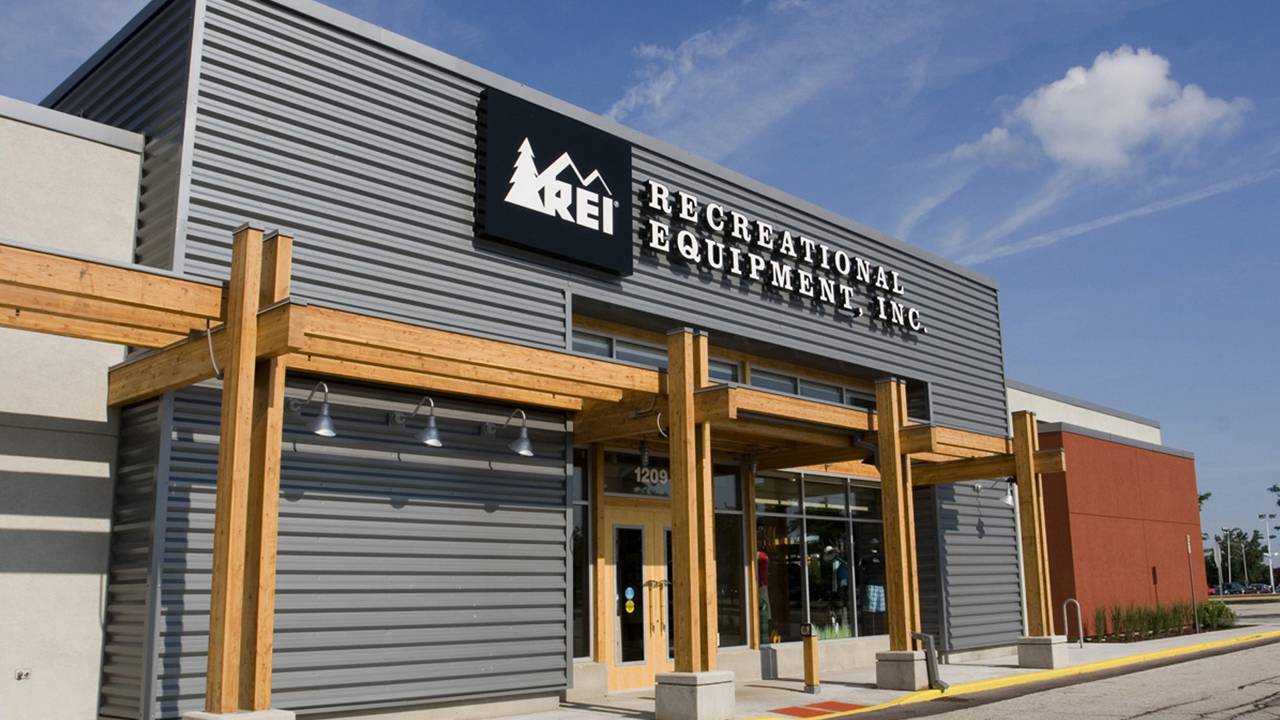
Imagine that you and your friends want to buy a really good backpack, but it costs too much at the store. What if you pooled your money and bought it together? That’s exactly how REI was founded in Seattle in 1938. It doesn’t belong to one wealthy owner, but to thousands of ordinary people who shop there. Let’s take a look at how it works and why this idea benefits not just your wallet, but nature, too.
It All Started With an Ice Axe
There was a climber in Seattle named Lawrence Whitaker. An ice axe is a sturdy tool with a sharp point that helps you keep from slipping on mountain ice. Lawrence and his wife, Mary, wanted to buy a good ice axe, but local stores had little to choose from and prices were high. So they ordered one from Austria—and it turned out to be both better and cheaper.
Their climbing friends wanted the same kind of gear. Lawrence and Mary came up with an idea: Let’s order equipment together! Everyone who wanted to join paid just one dollar—that was called a membership fee. Mary Whitaker received the first membership card, number one. That’s how the co-op began: a group of people who buy the things they need together and decide together how to run things.
How It Works: Pizza for Everyone
To understand how a co-op differs from a regular store, imagine a pizza.
At a regular store, the owner buys a pizza, sells it to you for more than they paid, and keeps the difference. Their goal is to make as much money as possible.
At a co-op, everyone chips in for the pizza. If there’s money left over after the purchase, it’s shared among those who chipped in. The person who bought more gets more back.
Here’s what the comparison looks like:
| Regular store | A co-op like REI | |
|---|---|---|
| Who owns it? | The owner or shareholders | Its member-customers |
| What happens to the profits? | They go to the owner | Some is returned to members |
| Main goal | Make more money | Offer people good products at fair prices |
At REI, part of the co-op’s profits is returned to members each year. It’s usually about 10 percent of the amount they spend, though the exact figure can change from year to year. Imagine you bought $100 worth of things and then got about $10 back. Nice, right?
Why It’s Good for Nature
REI sells gear for hiking, skiing, cycling, and boating—in other words, for people who love the outdoors. And the co-op cares about what happens to it. Its money and effort go not only toward new backpacks, but also toward looking after trails and forests.
The best-known example came in 2015. On Black Friday—the day when many stores offer huge discounts and everyone rushes out to shop—REI decided to close its stores. Employees were sent out for a walk instead of to work. The campaign was called #OptOutside, meaning “get outside.” It was surprising: the store itself was asking people to buy less and spend more time outdoors. For a regular company, that’s almost unthinkable, because Black Friday brings in huge amounts of money. But a co-op can afford to think not only about profit, but also about the reason it was created in the first place.
There’s another way to protect nature: REI offers repairs and sells used gear. If a jacket gets torn, you can mend it instead of throwing it away. If your boots get too small, someone else can buy them. The fewer things that end up in a landfill, the better for the planet.
Why It’s Good for People
When a store belongs to all its members, they feel they’re not just customers, but participants in a shared enterprise. Co-op members can vote for the people who run the company. That means everyone has a voice.
The idea of teamwork matters to REI employees, too: the company is known for trying to look after the people who work there. Of course, like any large organization, it faces disagreements and difficult questions, and that’s normal—even a close-knit team doesn’t always agree right away.
What I like most about this story is the idea that a business doesn’t have to be a race where the greediest person wins. It can be like a big group of friends who have agreed to help one another. What do you think you and your friends would buy together?
The Bottom Line
REI’s story began with one ice axe and one dollar. But behind it is an important idea: together, people can do what would be expensive and difficult on their own. The co-op shows that a store can care about its customers, the people who work there, and the natural world that inspired it all. So next time you see a backpack or a tent, remember Mary Whitaker and her membership card, number one: sometimes big changes start with a small idea shared among friends.