Imagine this: you’re walking down the street in a pretty dress because you’re headed to a fancy hotel for dinner. But when you reach the building, you discover the entrance is... at the height of a ten-story building! To get inside, you have to climb shaky wooden stairs and walkways that creak underfoot. Below, where there used to be an ordinary street, a huge pit yawns open. Sounds like a fairy tale? But that’s exactly how Seattle looked more than a hundred years ago, when the city decided its hills were too steep and began... washing them away.
A city that didn’t like going uphill
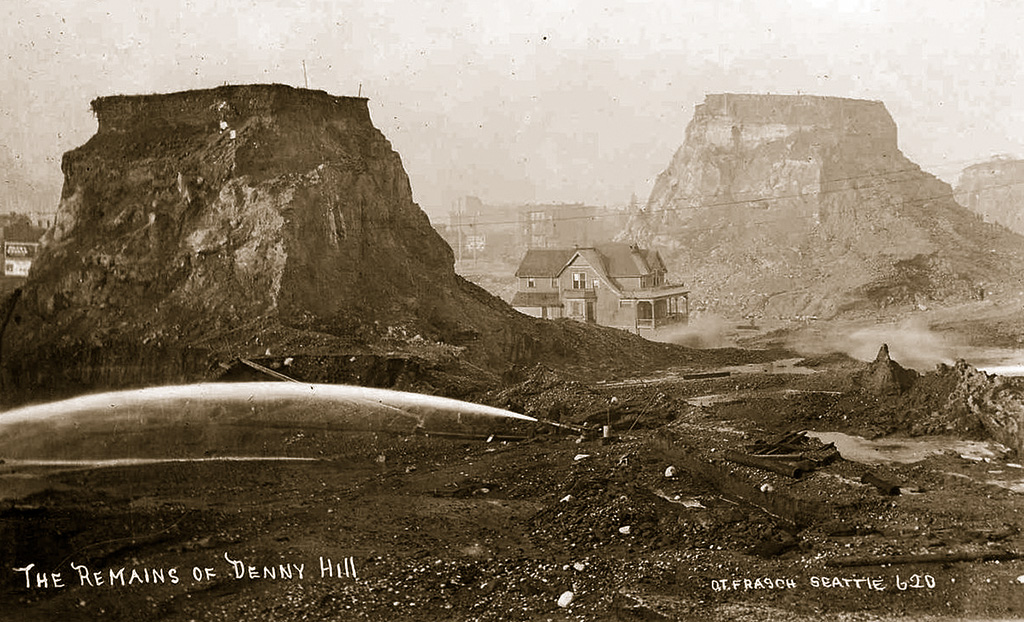
In the late 1800s Seattle faced a serious problem. The city had been built on very steep hills—so steep that horses struggled to pull wagons uphill, and in winter the streets turned into icy slides. The most troublesome was Denny Hill—a massive rise in the center of town that made it hard to build new neighborhoods and lay roads.
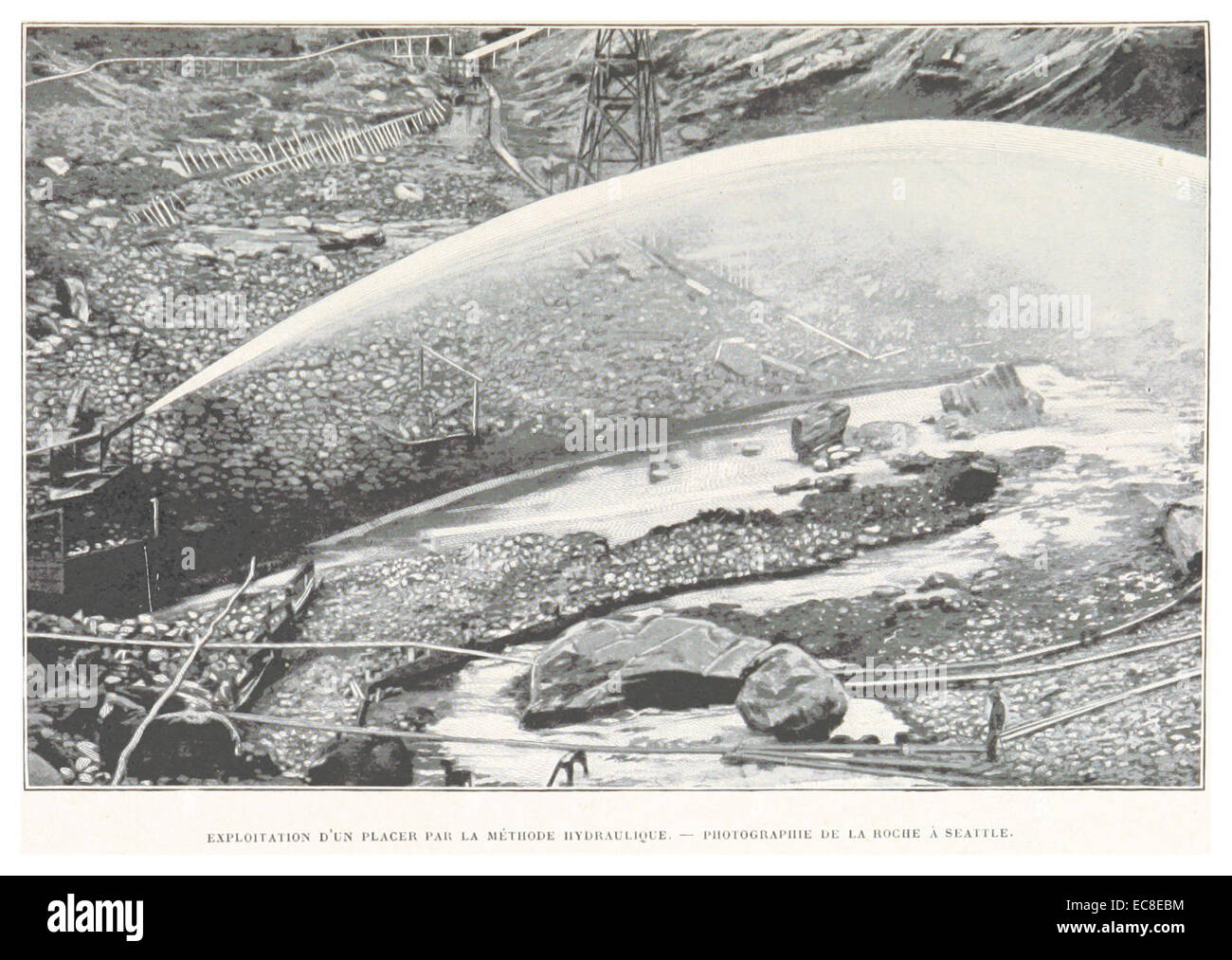
In 1897 city officials made an incredible decision: they would simply remove that hill! But how do you move millions of tons of earth without modern excavators and dump trucks? An engineer named Reginald Thomson came up with a brilliant solution: use water. Massive fire hoses under high pressure eroded the slopes of the hill, turning the earth into liquid mud that flowed into Elliott Bay. This method is called hydraulic sluicing, and it worked like a giant water gun, only thousands of times more powerful.
The hotel that became a castle on a rock
But there was a problem: the project stretched on for decades. The first wave of work began in 1898, then stopped, resumed in 1906, paused again, and finally finished only in 1930. That meant the city lived in a state of perpetual construction for more than thirty years!
The most famous victim of this chaos was the Washington Hotel (formerly the Denny Hotel)—a luxurious building constructed atop Denny Hill in 1890. When the hill-cutting work began, the streets around the hotel kept sinking lower and lower. First by a meter, then by five, then by ten... At one point the hotel’s main entrance ended up 30 meters above the new street level!
The hotel owners couldn’t simply close up shop—they had invested heavily in the building. So they built temporary wooden stairs and walkways that guests in evening attire clambered up, holding the rails and trying not to look down at the muddy pits. Local newspapers wrote that the hotel looked like "the castle of an evil wizard on an impregnable rock." One journalist joked, "Now it’s the only hotel in the world that requires good physical condition just to enter the lobby."
The city playing Jenga with itself
The hotel wasn’t the only building in that situation. Across the Denny Ridge area, shopkeepers, homeowners, and office tenants woke up each morning to find the street in front of their door a meter lower. Some buildings had to be jacked up on jacks and new foundations built underneath. Others were simply abandoned—the first floor became a basement and the entrance was moved to the second floor.
Imagine a toy store where yesterday you entered through a normal door, and today the first-floor windows are buried in the ground and you must climb a new stair to what used to be the second floor! That’s how people in Seattle lived in those years. The city turned into a giant puzzle where buildings constantly changed their height relative to the streets.
The Washington Hotel stayed suspended like that until 1906, when it was finally torn down. By then it had become a symbol of the absurdity of the whole project—a reminder that grand plans can create unexpected problems.
Hill ghosts that live on today
The Denny Ridge project did solve the problem of steep streets. Today downtown Seattle has flat roads that are easy to walk and drive on. But those old decisions still create challenges.
When new buildings are constructed or a subway is tunneled in Seattle, workers keep running into surprises: old building foundations that once sat on the hill, wooden supports of temporary walkways, remnants of water pipes that led to homes at different levels. Archaeologists call this a "layered cake of history"—under the modern city lie several versions of old Seattle, each at its own elevation.
Moreover, all that washed-away soil—millions of tons of earth—ended up in Elliott Bay. It created new land where port buildings and roads now stand. But this man-made fill is less stable than natural ground. During earthquakes (and Seattle does experience them) such fill can behave unpredictably—it can liquefy, and buildings on it risk sinking or tilting.
Modern Seattle engineers say they "are still paying for decisions made by people who died a hundred years ago." When a new tunnel under the city center was built, engineers had to account for places where bedrock lies under the asphalt and other places where old Denny Ridge fill might unexpectedly settle.
A lesson from a city in a hurry
The story of the Washington Hotel and the Denny Ridge project teaches an important lesson: major changes must be made with thought and patience. Seattle was in a hurry to become a modern city and solved the steep-hill problem in the most radical way—by simply removing the hills. But haste meant work stretched for decades, people lived in chaos for years, and the city still feels the consequences today.
On the other hand, the story also shows remarkable determination. Seattleites weren’t daunted by a monumental task—they took giant water cannons and reshaped the landscape! They climbed the stairs to hotels hanging in the air and carried on with their lives even when their city became one vast construction site.
Today, when you walk along the level streets of downtown Seattle, remember: a whole hill hides beneath your feet, and once there stood a luxurious hotel you could reach only by rickety wooden walkways. And somewhere deep in the bay lie millions of tons of earth that were once part of that hill. History doesn’t disappear—it just hides under new layers of the present.