If you look at a map of Seattle from above, you can notice something unusual. Long green strips run through the streets, homes, and roads—almost as if someone had drawn a leaf-pattern onto the city. This isn’t an accident and it isn’t just good natural luck. It’s a plan more than a hundred years old—and it still works.
The Family That Invented Parks for Cities
It all began with one man named Frederick Law Olmsted Sr. In 1858, he came up with Central Park in New York—the vast green rectangle in the middle of stone-and-glass skyscrapers that everyone knows. Olmsted believed that city people need nature close by; otherwise they get sick—not only in body, but in spirit. He said that a park isn’t decoration. It’s a remedy.
He had two sons—John Charles and Frederick Law Olmsted Jr. After their father died, they carried on his work and founded the firm “Olmsted Brothers.” It became the most famous park-design bureau in America. Over several decades, the brothers created plans for hundreds of cities—from small provincial towns to major metropolises. But one of their most surprising projects appeared right in Seattle.
Two Men, a Horse, and a Whole City
In 1903, the Olmsted brothers were invited to Seattle. At the time, the city was young and noisy—lumberjacks, gold seekers, merchants. Streets were being built quickly and chaotically, and no one really thought about where children would want to play fifty years later.
The brothers didn’t immediately sit down at drafting tables. First, for several weeks, they walked through the city on foot and rode horses. They studied the hills, descended into ravines, and walked along streams. They weren’t looking for places that were simply beautiful—they were looking for places no one wanted.
That sounds strange, doesn’t it? Why look for places nobody needs?
Here’s the trick. The brothers understood that if they proposed making a pretty, level plot of land into a park, builders would say “no”—it was more profitable to build houses there. But a swampy lowland, a steep slope, a ravine with a stream—these are the kinds of places nobody wants to develop. That means they can be turned into parks, and nobody will argue.
It wasn’t just a smart idea. It was wisdom.
A Necklace of Green
In the end, the Olmsted brothers proposed to the city not just a set of separate parks, but an entire system—green spaces connected to one another, stretching across the whole city like a string of beads. They called it a “parkway”—paths and avenues that let you move from one park to another without stepping out into the noisy streets.
The plan included more than twenty-five parks and several long parkways. Some ran along the water; others cut across the ridgelines of hills; still others went through wooded ravines. The brothers deliberately chose routes so that a person walking along the parkway would constantly see something beautiful: a bay, trees, distant mountains.
Today Seattle is sometimes called the “Emerald City”—and not only because of the evergreen forests around it. It’s also because greenery lives right inside the city that was designed by two brothers with a notebook and a horse more than a hundred years ago.
A Lesson for Any City
The Olmsted brothers’ story isn’t just a story about parks. It’s a story about what it means to think ahead.
When they laid out their plan, many of those parks didn’t exist yet. The trees were small. The children who would play there hadn’t even been born. But the brothers were already thinking about them.
Many cities around the world today regret that they didn’t do the same thing in time. In large cities across Asia, Europe, and America, people are now trying to “insert” parks into places where houses already stand—and it’s extremely expensive and difficult. Seattle was lucky: it was asked to think about nature while the city was still being built.
The lesson is simple, but important: nature in a city needs to be planned in advance—before the builders arrive. After that, it will be too late.
It seems to me there’s something very human in this story. The Olmsted brothers never saw the mature trees in the parks they designed. They simply believed that someone else—years later—would sit in the shade of those trees and not know who to thank. Maybe that’s what true care for people looks like: doing something good even if nobody ever thanks you for it.
Green Legacy
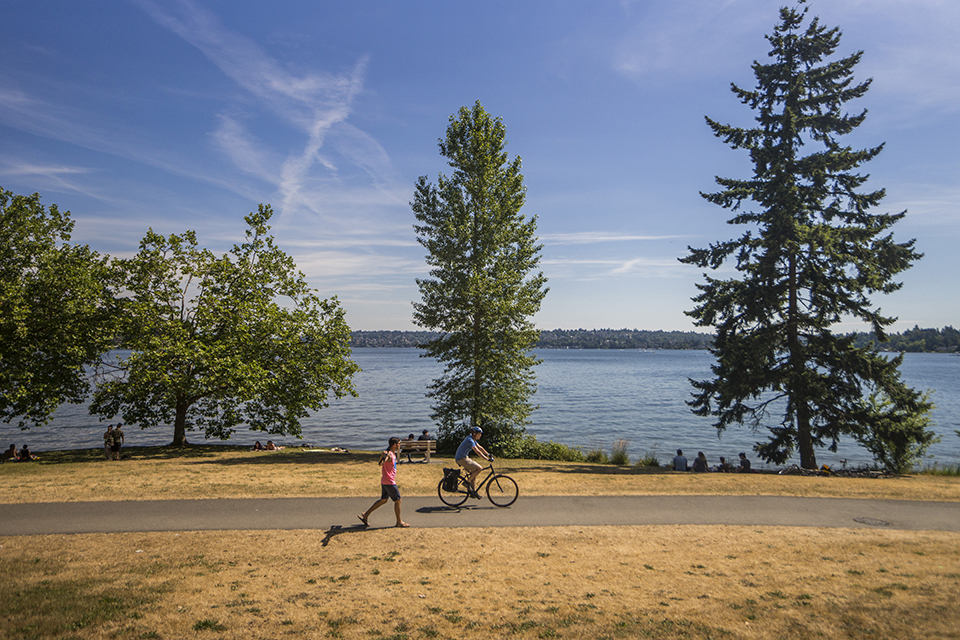
Today, Seattle’s park system is among the best of any American city. Kids ride bicycles along the very parkways the brothers designed. Squirrels leap through the trees in parks that were once swampy. Streams run through ravines that once seemed “ugly” and “useless.”
Sometimes the most valuable things are the ones that seem unnecessary. You just have to learn how to see them.