Imagine you’re walking down a sidewalk in a long dress that trails on the ground (that’s how girls and women dressed over a hundred years ago), and suddenly a huge hole opens beneath your feet leading down into an underground space. That’s how people in Seattle lived in the 1890s, when the city was rebuilt after a great fire. The adults decided to raise the streets higher so they wouldn’t flood at high tide, but the shops stayed below, at the old street level. Between the new sidewalks and the old shop entrances yawned dangerous drops as deep as a two-story house.
It was especially frightening and inconvenient for women. Their dresses were so long they touched the ground, and going down shaky staircases in those outfits was almost impossible. Many simply refused to go to downtown shops. Shop owners were losing customers and didn’t know what to do: moving was expensive, and working in the dark under the new sidewalks was impossible.
An invention that let sunlight through the sidewalk
Engineers came up with an unusual solution: they created special glass blocks with tiny prisms inside and built them right into the sidewalk. These blocks worked like magic windows turned the other way — they captured sunlight from above and scattered it downward into the underground spaces. Imagine putting a thick pane of glass in the ground that you can walk on, and it glows and lights everything beneath it!
These glass tiles were called "vault lights." Each block was about the size of your notebook, but very thick and sturdy. Inside the glass were specially cut facets — like in a crystal vase — that broke a sunbeam into many little rays and directed them downward. Because of that, the light spread through the entire underground room instead of just falling in one spot.
Engineers installed hundreds of these blocks in the sidewalks above the shops. Now shopkeepers could work in daylight without spending money on kerosene lamps (electricity was still rare). And shoppers could see merchandise in the shops almost as well as they would on an ordinary street.
Why people were afraid of the glass sidewalk
But when these glass tiles first appeared, many Seattle residents opposed them. People feared the glass would crack under their weight and they would fall through. Women were embarrassed to walk on a transparent floor — after all, people below in the shops might be able to look up under their skirts! (Remember, in those days everyone wore very long dresses, and showing even an ankle was considered indecent.)
Some shop owners complained too. They said they didn’t want passersby above to peek in on what was happening in their stores. A shoe merchant even wrote an angry letter to the newspaper: "Now anyone can stand on the sidewalk and see how many customers I have and what my prices are!"
City officials ran special tests. They loaded the glass blocks with heavy sacks of sand, checked whether they could bear the weight of a horse and wagon (there were no cars then; horses hauled all the goods). The glass proved incredibly strong — it could hold the weight of several adults at once.
To reassure modest women, manufacturers came up with a trick: they made the glass not completely transparent but slightly cloudy and purple-tinted. Light passed through such glass perfectly well, but you couldn’t make out specific details — everything looked like blurred shadows. That solved the problem!
How the purple tiles became beloved
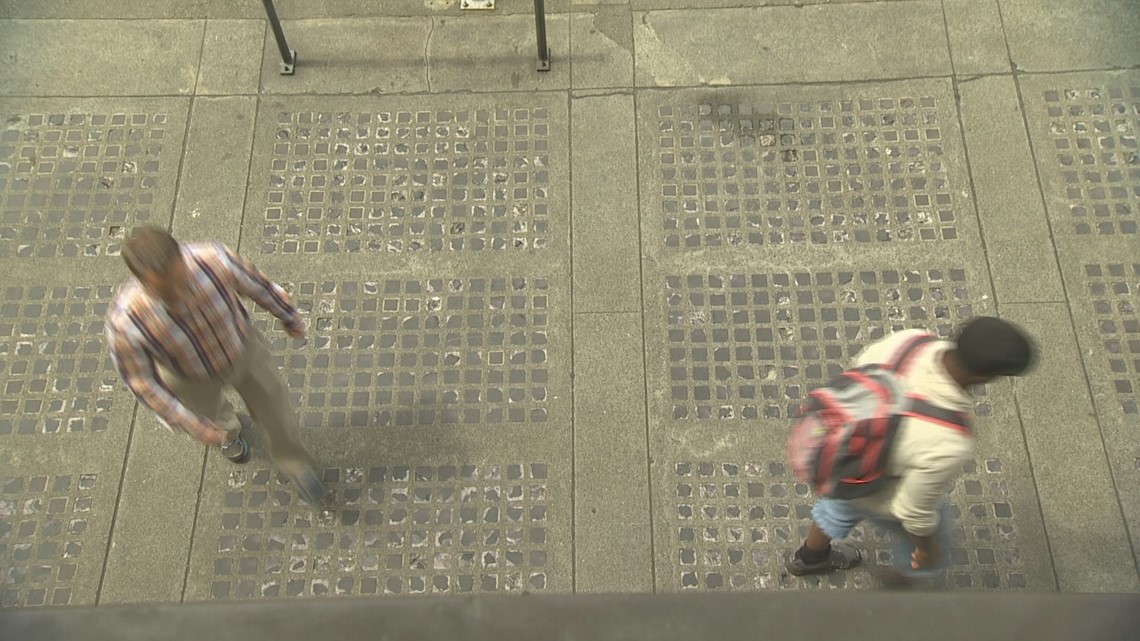
Gradually people got used to the glass sidewalks and even grew to love them. Children would hunt for the purple squares in the pavement and jump on them, imagining they were walking on a magical floor. Lovers liked to stroll along streets with lots of those tiles — at dusk they glowed from within when lamps were lit in the underground rooms.
Shop owners found that their goods looked more attractive thanks to the glass tiles. A fabric seller noticed that in the daylight coming from above, the colors of cloths seemed brighter and richer than by kerosene light. Customers began to return.
But the most surprising thing happened over time. Because of the particular glass used for these blocks and the sunlight passing through them for more than a century, many blocks changed color. They took on beautiful purple, lilac, or even pink hues. Scientists discovered this happened because of trace amounts of manganese in the glass — that chemical element reacts to the sun’s ultraviolet rays and gradually dyes the glass purple.
Walkable treasures
Today these glass tiles are real Seattle treasures. Many still lie in the sidewalks of the old downtown, and you can walk on them! On tours of Seattle’s underground (yes, it’s now a museum), guides always point out those purple squares and tell their story.
Some tiles have become so rare and beautiful they get stolen! The city had to come up with special protections: the most valuable blocks are set in extra-strong cement, and some are even replaced with sturdy replicas while the originals are kept in a museum.
Collectors around the world dream of owning such a tile from Seattle. One block can sell for several hundred dollars! Interestingly, similar glass sidewalks existed in other American cities, but nowhere did they survive as well as in Seattle. In New York most were replaced, in San Francisco many shattered in earthquakes. In Seattle they endured for more than a century and became a symbol of the city.
The story of these glass tiles teaches an important lesson: what at first seems strange and frightening can, over time, become beloved and valuable. Engineers weren’t afraid to try a new technology even when people protested. They patiently explained, tested, and improved their invention. The result was something that helped the city and became one of its distinguishing features.
The next time you see something new and unfamiliar — a new technology, a new way to solve a problem — remember Seattle’s purple tiles. What seems odd today might tomorrow become a treasure people will cherish for a hundred years.