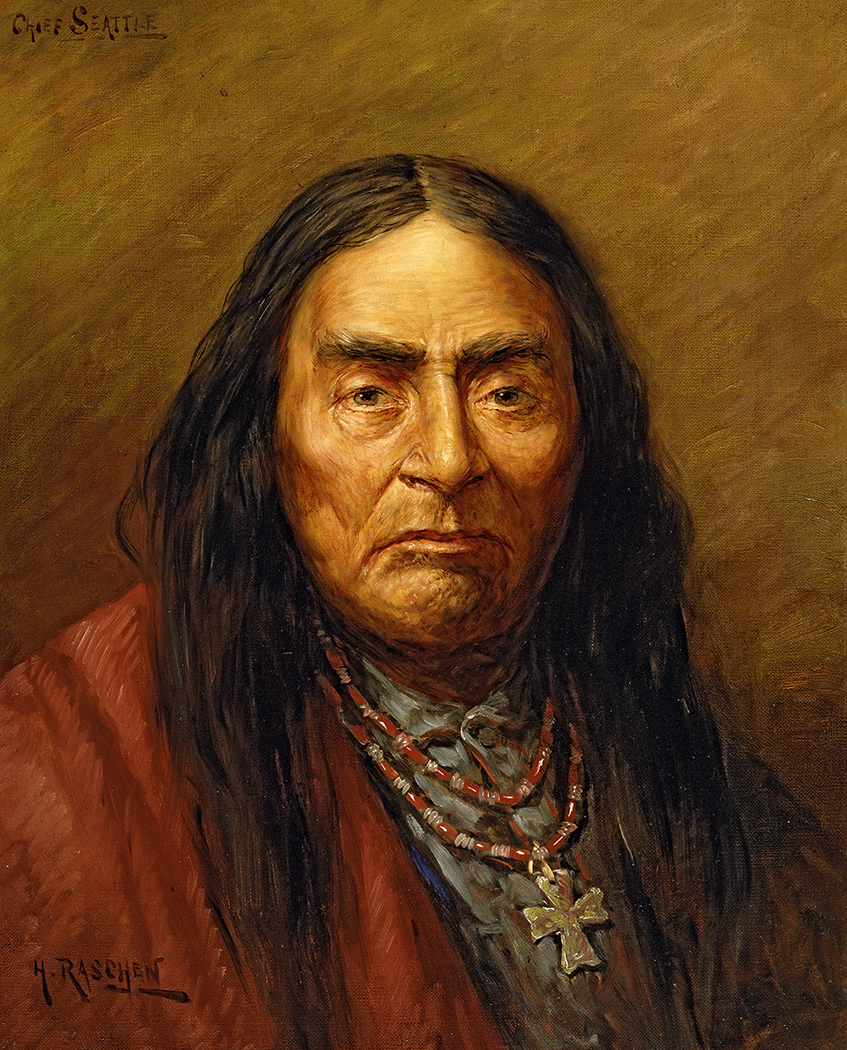
In Seattle there is an extraordinary story about a girl who grew up to be so brave that not even powerful city officials could force her to leave her home. Her name was Kikisoblu, but most people knew her as Princess Angeline. She was the daughter of Chief Seattle — the man the city is named after. And although more than 150 years have passed since those events, her story helps us hear the voices of people whom history textbooks almost forgot.
The little cabin that wouldn’t be moved
Imagine: the late 1800s, the city of Seattle is growing quickly, new buildings are rising, broad streets are being laid out. City officials want everything to look modern and attractive. And suddenly on the waterfront, right in the middle of all this bustle, stands a small wooden cabin. An elderly woman of the Duwamish tribe lives in it.
Officials came to her many times. They told her she had to move. They offered her other places to live. But Princess Angeline refused each time. This was her land, the land of her people, and she had the right to remain. Remarkably — she won. The authorities eventually left her alone.
Why does this matter? Because in 1856, when Angeline was about 20 years old, the Battle of Seattle took place. It was a conflict between Native tribes and new settlers. After that battle many Native people were forced to leave their homes and move to reservations — special territories often far from their ancestral lands. But Angeline stayed. She became a living reminder that this land had belonged to her people long before the city ever appeared.
A story that wasn’t fully told
For a long time the story of the 1856 battle was told from only one side. Textbooks wrote about brave settlers who defended the new town. But what did the Duwamish people think and feel? Why did they fight? What did they lose?
These questions often went unanswered. The voices of Native people — their fears, their hopes, their version of events — were not recorded in official documents. Their stories were passed down orally, from grandmothers to grandchildren, but they didn’t make it into museums and books.
Princess Angeline was one of those forgotten voices. She was born around 1820 and was the eldest daughter of Chief Seattle. When her father signed treaties with the new settlers, she watched her people’s way of life change. When the battle began, she saw suffering on both sides. And after the battle she made a decision that many found strange: she stayed in the city that bore her father’s name, even though it had been built on the ruins of her former life.
A photograph that says more than words
Late in her life Princess Angeline was often photographed. In those old black-and-white images we see an elderly woman with a wrinkled face, wearing the traditional clothing of her people. She earned a living by digging shellfish on the shore and selling them, and by washing clothes for city residents.
Some people looked at her with pity. Others looked with curiosity, as if at a living museum exhibit. But Angeline herself faced the world with dignity. She knew who she was: the daughter of a great chief, the last representative of her people who refused to be driven from her land.
One photographer of the time wrote that when he asked her to pose for a picture she agreed but demanded payment. That may seem like a small detail, but it was important: she wouldn’t let people use her image for free. She insisted on respect.
How modern researchers recover forgotten stories
Today, more than 160 years after the Battle of Seattle, historians and activists do important work: they search for and preserve stories that were lost. They study old letters, diaries, photographs. They speak with descendants of the Duwamish tribe. They try to understand what really happened in 1856 and to hear all the voices, not just one.
For example, researchers have discovered that many Duwamish women, like Angeline, played crucial roles in maintaining connections between two worlds — the world of Native people and the world of new settlers. They worked as interpreters, cared for the sick, taught settler children how to survive in a new environment. Yet their names were almost never mentioned in official records.
Today in Seattle there are streets and parks named after Princess Angeline. Her grave at Lake View Cemetery has become a place of remembrance. Museums create exhibits that tell her story and the stories of other Native residents. This is called "preserving memory" — intentionally doing the work needed so important stories are not forgotten.
Why it’s important to hear all voices
When we study history, it’s very easy to hear only the loud voices — the voices of winners, the voices of those who wrote official records, the voices of people deemed important. But true history is the story of all the people who lived there.
Princess Angeline did not write books. She was not a politician. But her life teaches us an important lesson about what it means to hold on to your home, your identity, and your right to be heard. Her refusal to leave was a quiet but powerful protest.
The Duwamish tribe still exists. Descendants of this people live in the Seattle area and continue to fight for official recognition by the U.S. government. They say: "We are still here. Our stories matter. Our voices should be heard."
When we preserve the stories of people like Princess Angeline, we make history fuller and more honest. We learn to see events from different perspectives. We understand that every conflict has many sides, and each side deserves to be listened to.
The story of the little cabin on the shore that couldn’t be moved teaches us an important lesson: sometimes the bravest thing you can do is simply to stay where you are and insist that your voice matters. And centuries later people will remember your courage.
![Chief Seattle (Seattle, Chief Noah [born Si?al 178?-1866]) - HistoryLink.org](https://www.historylink.org/Content/Media/Photos/Large/princess-angeline-kikisoblu-1820-1896-daughter-of-chief-seattle-ca1895.jpg)