Imagine having to make the hardest choice of your life: to warn people of danger, even if it means going against your own family. That was the choice a girl about your age faced in 1856, when Seattle was a tiny settlement surrounded by forests where Indigenous peoples lived. Her name was Klickitat Suzie, and her story shows that sometimes the most important decisions in history are made not by generals or politicians, but by ordinary children who simply don't want people to suffer.
Two worlds on the shore of one sound
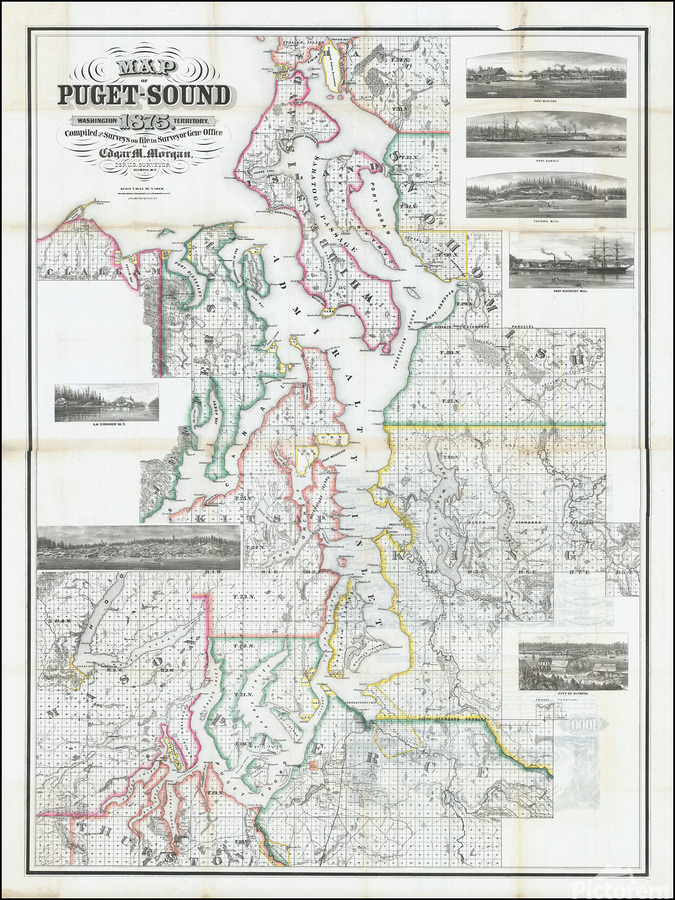
In the mid-1850s, two very different communities lived on the shores of Puget Sound. On one side were the Duwamish, Snoqualmie and other tribes who had called these lands home for thousands of years. They knew every tree, every path, every place to catch salmon. On the other side were new settlers—families from the eastern states who came to build sawmills and new homes.
The problem was that these two worlds understood each other poorly. Settlers built fences and said "this is my land," while Indigenous people couldn't grasp how someone could own land—to them that was like saying "I own the wind" or "this is my river." When misunderstanding grows too great and justice is lacking, conflicts start. That's exactly what happened in the cold winter of 1856.
Klickitat Suzie lived between those two worlds. She was from the Klickitat tribe but worked in the household of a settler family. She saw both sides: she knew many in her tribe were angry because their lands were taken without permission, but she also saw ordinary people among the settlers—women baking bread, children playing by the river, elders who just wanted a quiet life.
The night she had to choose
One evening Suzie learned terrible news: several tribes were planning to attack the settlement at dawn. Warriors were ready, the plan was set. They intended to drive out the settlers once and for all. The girl faced an impossible choice.
If she stayed silent, a battle would start in the morning and people she knew—on both sides—would die. If she warned the settlers, she would betray her people and might be called a traitor. She was only about ten years old, but she had to make a decision on which lives depended.
Suzie chose life. In the dark of night she snuck to the blockhouse—the wooden fort where the settlers lived—and warned them. "They will come at dawn," she said. "You must be ready."
Thanks to her warning, the settlers were able to prepare. When the attack began at dawn, they managed to defend themselves. The battle still took place—it was the real Battle of Seattle, one of the few fights on the territory that is now the city. Guns from the USS Decatur fired into the trees, warriors attacked from different sides, homes burned. But because of Suzie's warning, far fewer people died than might have.
The cost of courage and questions without easy answers
Klickitat Suzie's story doesn't have a simple happy ending, because real history rarely is simple. After the battle many of her people did indeed see her as a traitor. She lost contact with her community, the place where she was born. Some settlers were grateful, but that couldn't replace what she had lost.
But here's what matters: Suzie didn't choose a side in the conflict. She chose against violence. She knew that if the battle broke out suddenly, not only settlers but many warriors of her people would die. The warship in the sound had powerful guns. A surprise attack would mean bloodshed on both sides.
Today, when we look at this story, we can ask ourselves: was she right? Historians still debate it. Some say she saved lives. Others say she helped occupiers remain on lands that were not theirs. Both viewpoints have merit.
When the past speaks to the present
Surprisingly, Klickitat Suzie's story closely resembles what happens in the world today. In many places there are conflicts between groups who don't understand each other. And often it is ordinary people—not politicians, not generals, but children, teachers, neighbors—who try to stop the violence.
In modern Seattle there are programs where Indigenous people and descendants of settlers study this complex history together. They try to understand both sides. This is called "restorative justice"—where instead of simply saying "who is right and who is wrong," people try to hear all stories and find a path to healing.
For example, in some Seattle schools, children from Native American families and children from settler families study the city's history together. They visit sites where important events happened, listen to elders' stories, and learn to see the past from different perspectives. That doesn't mean everyone agrees on everything—but it does mean they're trying to understand one another.
A lesson from a girl of the past
Klickitat Suzie's story teaches us several important things. First, bravery doesn't always mean fighting—sometimes the bravest thing is trying to stop a battle. Second, the right choice doesn't always make you popular. Suzie lost a lot because of her decision, but she saved lives.
Third, and perhaps most importantly: history is never simple. When we study the past we often want to find heroes and villains, good and bad. But real history shows us that almost always there are people on both sides who simply want to live in peace, and there are complex circumstances that make them clash.
Today modern buildings stand where that battle took place. Few passersby know that cannons once roared and arrows flew here. But if you look closely you'll find small memorial markers that tell this story. They remind us that beneath our feet are layers of history, and each layer is full of complicated, difficult, important stories about people who made impossible choices.
Klickitat Suzie was an ordinary girl who found herself at the center of a big conflict. She couldn't stop the war—the war still happened. But she did what she could: she tried to save lives. And that is perhaps the most important thing any person, even a child, can do when the world around them falls apart.
Her story is almost forgotten, but it deserves to be remembered. Not because it offers a simple lesson or a happy ending, but because it shows us the true cost of peace and the real courage of choosing life over death, even when that choice costs you everything.