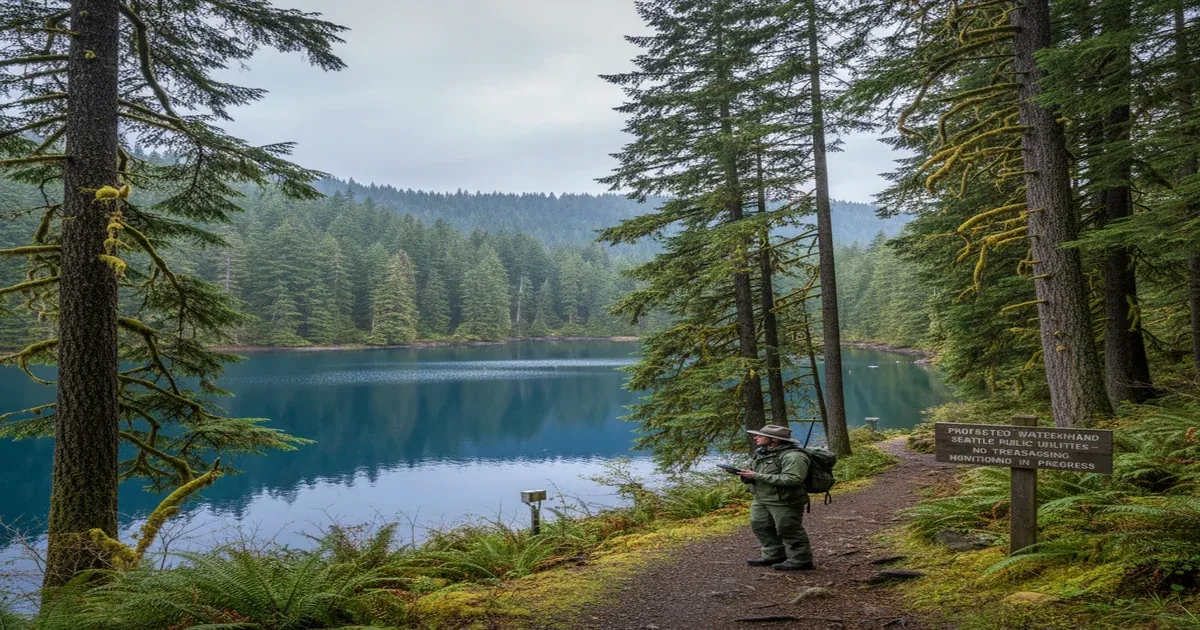
Imagine this: there’s a vast forest that almost no one is allowed to enter. No shops, no roads, no houses. Even just taking a stroll—can’t. Sounds like a fairy tale about a bewitched place, doesn’t it? But it’s not a fairy tale. This is a real forest near the city of Seattle in the United States—and it fills your cup with tea every morning. Well, if you live in Seattle, of course.
Where does the water in the tap come from?
Most people don’t think about it. You turn on the tap, and water flows. But where does that water come from?
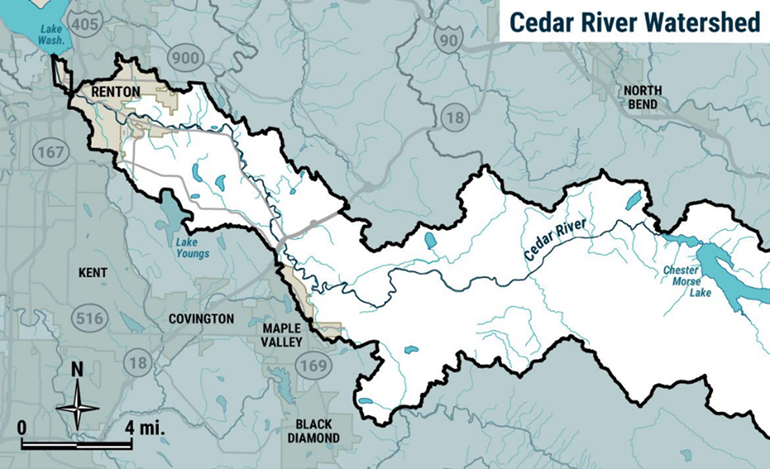
In Seattle, the journey starts high in the mountains, where snow melts and rain falls. All that water runs down the slopes and collects into a river called the Cedar River. In Russian, that means “cedar river.”
Around this river is a huge area of forests and mountains. It’s called a watershed. Picture a big bowl: everything that falls into it from above—rain, snow—runs into one place. The Cedar River watershed is exactly like that bowl, only almost the size of the entire city of Moscow. And eventually, all the water from this “bowl” reaches Seattle residents’ homes.
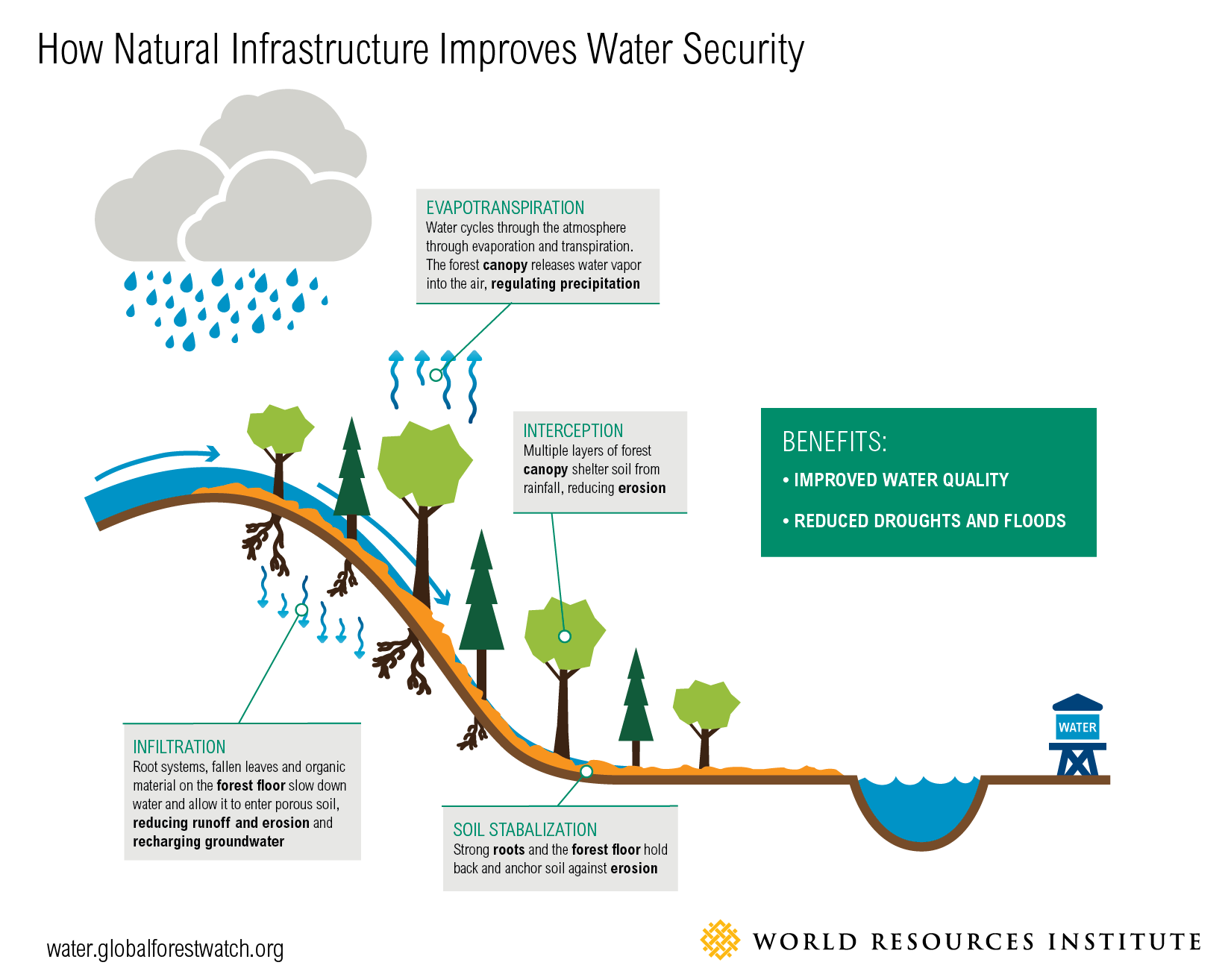
Here’s the secret, though: for the water to stay clean, the forest around it must be untouched. Trees hold the soil and prevent dirt from sliding into the river. Moss and grass filter the water like a sponge. Animals follow their natural rules and don’t pollute the sources. The forest is a living filter. And it works free of charge, every day, year-round.
Why can’t people go in there?
About a hundred years ago, smart people in Seattle asked themselves a question: what would happen if someone started cutting down trees in this forest? Or building a farm there? Or simply going there every day in crowds to take walks?
The answer was unpleasant: the water would become dirty.
And so the city made a very bold decision. It started buying up all the land around the Cedar River—farms, plots, parcels of land. People were paid money, and they moved to other places. It cost a fortune. But the city said: we’ll pay now so we don’t have to pay later.
“Later” means building huge water-treatment plants. You can find such plants in many cities around the world. They use chemicals, large machines, complex pipes. It’s unbelievably expensive. And even then, traces of those same chemicals may still end up in the water.
Seattle chose a different path: simply preserve the forest. And it worked. To this day, water from the Cedar River is among the cleanest of city water supplies in the world. It barely needs chemical treatment. They just pass it through ultraviolet light—as if “washing” it with invisible rays—and that’s it.
An underground stone fortress of rock and pipes
But the forest is only the beginning of the story. Because the water has to be delivered to the city somehow. And that’s where the most interesting part begins from a construction perspective.
At the beginning of the 20th century, engineers built an entire system of tunnels, pipes, and reservoirs. The water flows by gravity—that is, simply due to the force of gravity, like a water slide in an water park, only for water. No pumps are needed, because the mountains are higher than the city, and the water just “slides” down on its own.
And the buildings where the water is received and distributed are built like real small castles. Dark stone, arches, thick walls. Architects of that time believed that even a waterworks station should look beautiful and serious—because it does an important job. Some of these buildings still stand today and are protected as historic landmarks.
Imagine this: under the streets of Seattle, pure mountain water flows through tunnels that are more than a hundred years old. It’s like an underground river running inside the city.
What’s more important: money or the forest?
Here’s the most interesting question. Adults often argue: what matters more—earning money or protecting nature? But the story of the Cedar River watershed shows that sometimes it’s the same thing.
The city spent money on buying the forest—and saved huge sums on building filtration plants. The forest has been working as a free filter for a hundred years now. Scientists calculated that if Seattle hadn’t preserved this forest, it would have had to build a plant costing hundreds of millions of dollars. And to operate it would mean paying every year.
It’s like being offered a choice: buy a good jacket once—or buy a cheap one every winter that tears. In the end, the good jacket is cheaper.
Nature is a kind of architecture too. Only it wasn’t designed by humans, but by millions of years of evolution. And sometimes the smartest thing a person can do is simply not interfere with it.
A forbidden forest is a gift
To me, there’s something very beautiful in this story. Somewhere in the mountains there’s a forest that almost no one visits. Deer, bears, and birds live there. It’s quiet there. Nobody builds there or cuts down trees. And every day, this forest does its quiet work—cleaning water for more than a million people.
None of those people has ever seen this forest. But it works for them. Like an invisible friend.
Adults sometimes say that protecting nature is expensive and inconvenient. But the Cedar River proves the opposite: protecting nature is the smartest investment of money you could possibly make. And it’s the most beautiful decision the city could have made.
So the next time you open the tap and pour yourself a glass of water, remember the forbidden forest. It was working for you.