If you look at a map of Seattle, the Lake Washington canal makes a strange bend. Instead of going straight, it curves, like a river that can’t decide where to flow. But this isn’t an engineering mistake. It’s the trace of a great battle — a battle between rich people who wanted to get richer and ordinary fishing families who simply wanted justice.
In the early 1900s Seattle was growing so fast it felt like an explosion. People needed a canal to connect Lake Washington to the sea — so boats could go back and forth, so factories could operate, so the city could trade. But there was one big question: where exactly to cut the canal? And that question turned into a real war — without weapons — a war of maps, petitions, and loud public meetings.
Two routes for the water — and two very different dreams
Wealthy landowners in the University area (where the University of Washington now stands) wanted the canal to run through their property. Why? Because if a canal runs near your land, that land becomes gold. Factories would want to build nearby. Shops would open. Prices would skyrocket. These owners already pictured mountains of money.
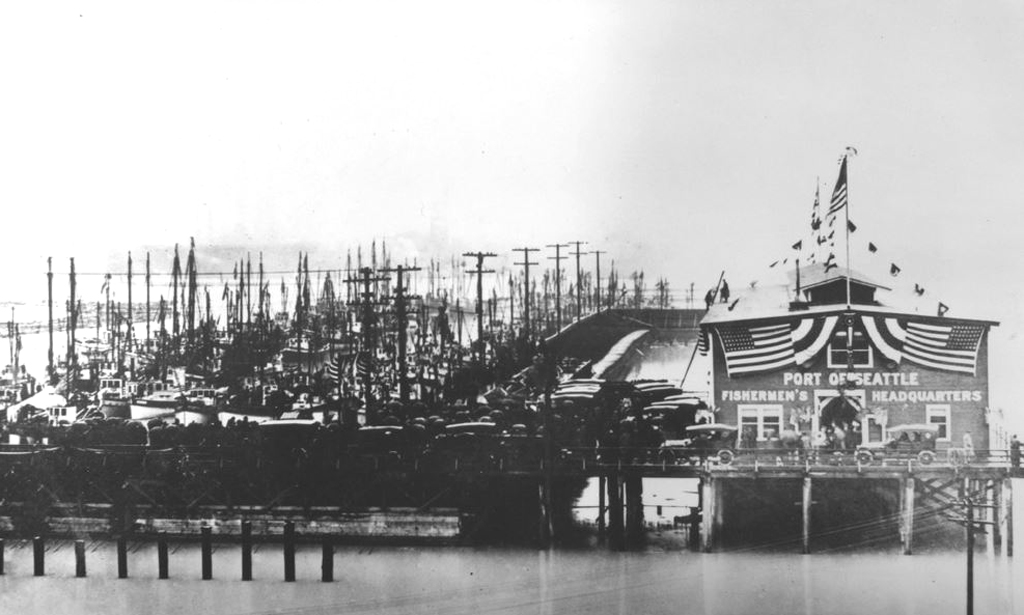
But there was another route — through Ballard. Ballard was a neighborhood of Scandinavian immigrants: Norwegians, Swedes, Finns. They were fishermen, sawmill workers, boatbuilders. They didn’t own huge plots of land. They had small houses, small boats, and big families. And they understood: if the canal went through the University district, they would be left out. Their port would be sidelined. Their jobs would be at risk.
Imagine a schoolyard deciding where to put a new playground. The wealthy kids say, “Build it next to our houses, because we can afford new equipment.” The other kids say, “No — build it where everyone can use it, because it’s fair.” That’s roughly how it played out in Seattle.
When fishermen took up petitions instead of nets
The families of Ballard weren’t going to give up. They organized the way fishing crews organize — all together, shoulder to shoulder. They held meetings in church halls that smelled of coffee and fresh bread. Mothers came with children in their arms. Fathers came after twelve-hour shifts in the sawmills.
They collected signatures — thousands of them. Each signature was like a voice saying, “We matter too. The rich shouldn’t be the only ones deciding how our city looks.” They wrote letters to newspapers. They went to city council meetings and spoke so loudly they couldn’t be ignored.
An old fisherman, Ole Hansen (a very common Scandinavian name), is said to have told one of these meetings: “My children were born here. My boats are here. If you think we’ll let rich men steal our water, you don’t know Norwegians.” The room erupted in applause.
Engineers trapped between a hammer and an anvil
Engineers found themselves in a difficult spot. On one hand, the University route was easier. The ground there was flatter. Digging would be simpler. Cheaper. Faster.
On the other hand, the Ballard route was harder. There was a large elevation difference between the salty water of Puget Sound and the fresh water of Lake Washington — about seven meters! It’s like a two-story house. You couldn’t just cut a canal and let the waters mix. That would kill all the fish in the lake. Something had to be invented.
But Ballard residents didn’t back down. They kept up the pressure. They found allies — other workers, unions, even some politicians who understood the city couldn’t be just for the wealthy. Gradually the balance began to shift.
In 1911 a decision was made: the canal would go through Ballard. The wealthy landowners lost. Ordinary families won. But now engineers had to solve the elevation puzzle.
A stairway for boats — when complexity becomes a marvel
An engineer named Hiram Chittenden (whose name now graces the locks) came up with a solution: build a system of locks. It works like a staircase for boats.
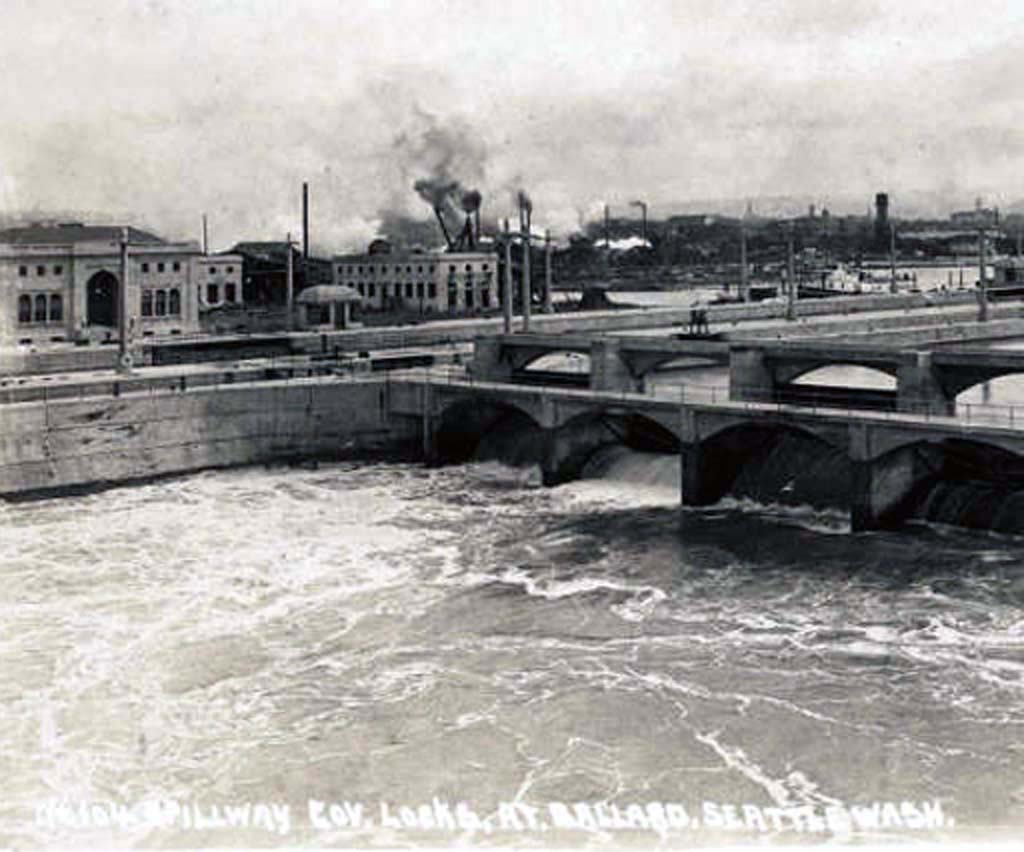
Imagine a boat entering a large concrete box — a lock chamber. Huge gates shut behind it. Then water either fills the chamber (if the boat is going up) or drains out of it (if the boat is going down). When the water level in the chamber matches the level on the other side, the front gates open and the boat sails on. It’s as if the boat is lifted or lowered in a water elevator!
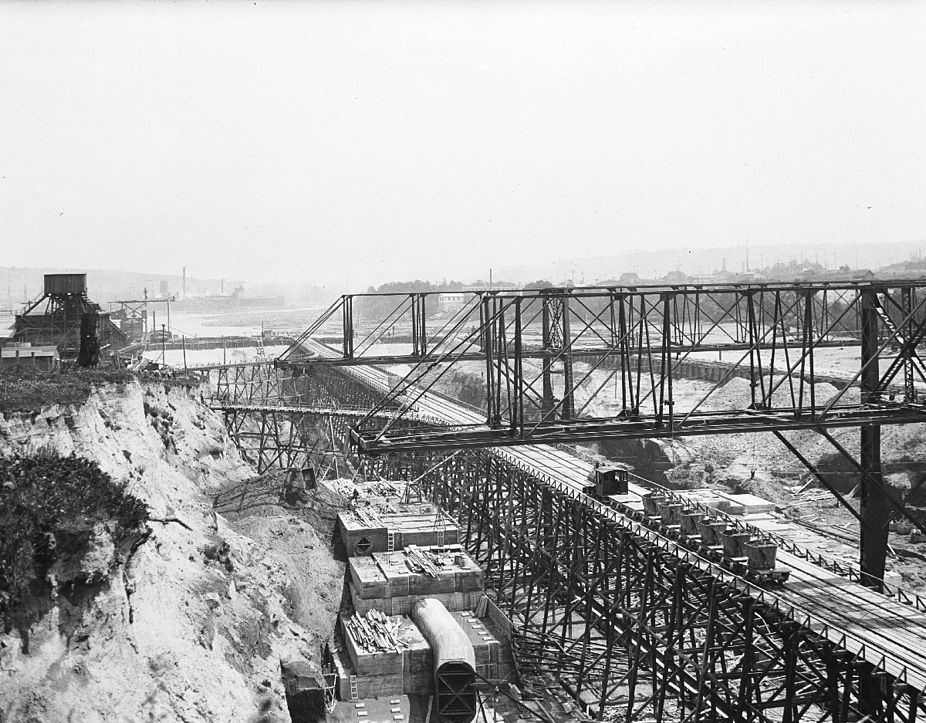
Construction took years. Workers dug earth, poured concrete, installed massive steel gates. It was one of the most complex engineering works of its time on the West Coast of the United States. And it was all because Ballard’s fishermen refused to give up.
When the locks opened in 1917, thousands turned out to watch. Children ran along the canals. Women in long skirts held parasols against the sun. Men in caps smoked pipes and nodded with pride. The first boat through the locks was a small fishing vessel from Ballard. That was no coincidence.
What remained after the fight
Today the Ballard Locks (officially the Hiram M. Chittenden Locks) are one of the most visited sites in Seattle. About 100,000 boats pass through them each year — from huge yachts to tiny kayaks. Millions of people come to watch boats rise and fall as if by magic.
But the locks are more than an attraction. They are a monument to what happened. Each time the gates open and close, it’s a reminder: ordinary people can reshape a city. They can make the water flow where they want. They can beat the rich and powerful if they organize and don’t give up.
Ballard still takes pride in its story. The neighborhood has a museum of Scandinavian heritage. There are statues of fishermen. There are restaurants serving Norwegian fish prepared the way it was a century ago. And when old-timers tell the tales to their grandchildren, they always tell this one — the story of how their great-grandparents fought for the canal and won.
The lesson that flows with the water
The story of the Lake Washington canal teaches something important: cities are built not only by engineers and architects. They are built by choices. And the most important choices are choices about fairness.
The canal could have been built cheaper and faster. It could have made the rich even richer. But instead Seattle chose the harder path — a path that took into account the voices of fishermen, lumber workers, immigrants. And as a result the city didn’t get just a canal, but locks — an engineering marvel that became a symbol.
Next time you see a river or canal that bends oddly, ask yourself: maybe there was a battle here too? Maybe that shape of water tells the story of people who fought to be heard?
Water remembers. Cities remember. And we should remember those who taught us: justice sometimes flows not the easiest way, and that’s why it’s so beautiful.