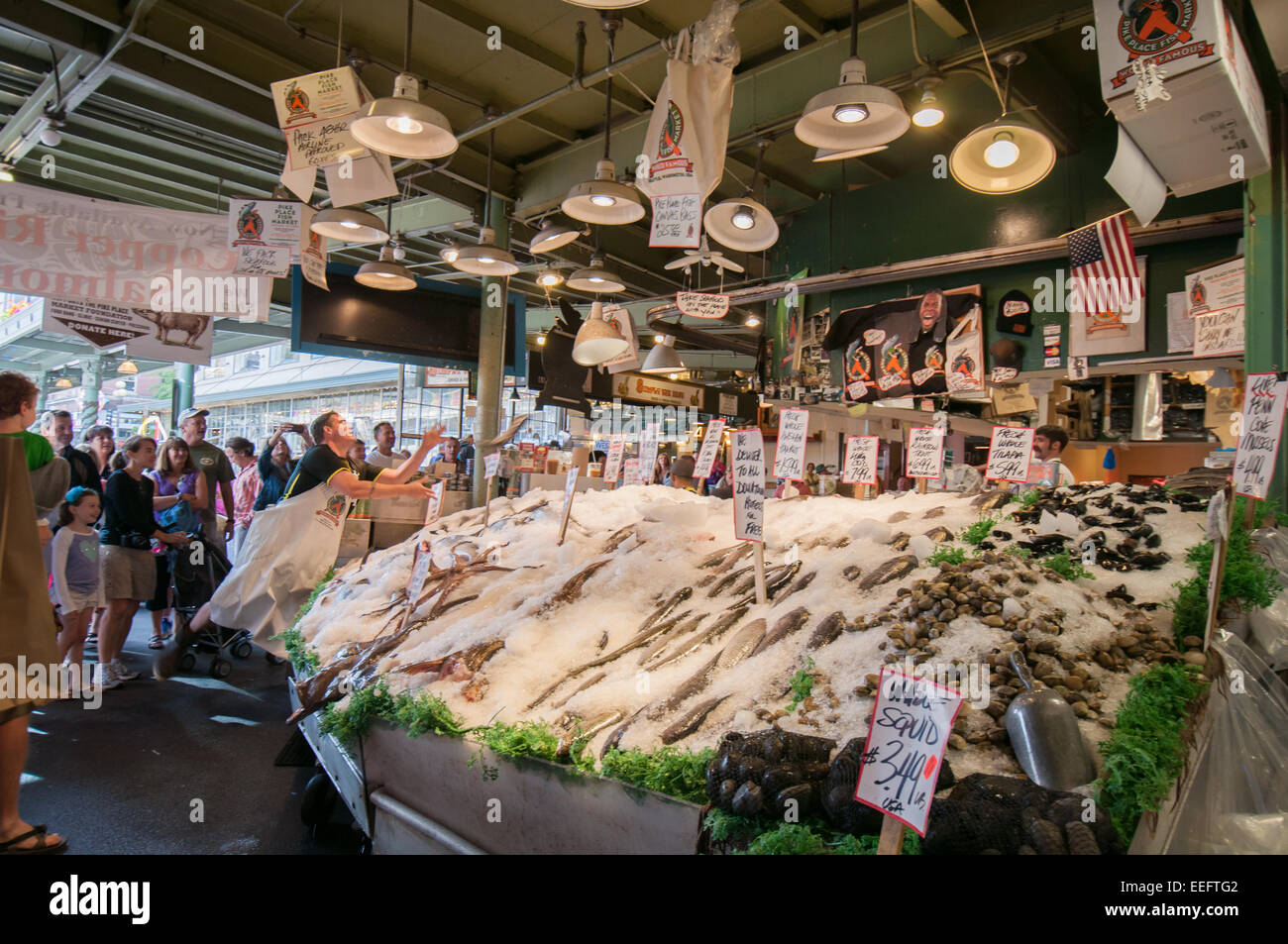
Imagine you came up with a way to do homework faster and more fun, and the teacher said, "This is frivolous, you can't do that!" Then it turned out your method helped the whole class fall in love with learning. A similar story unfolded in Seattle at Pike Place Market when fishmongers began tossing fish across the counter to one another. At first they were criticized, but those flying fish unexpectedly saved not only one fish stall but dozens of other shops across the market.
A market that was feeling blue
In the early 1980s, Pike Place Market was going through hard times. It was an old market that had operated since 1907, but fewer and fewer people were coming. Large supermarkets with parking lots and low prices opened, and it became easier for Seattle residents to buy groceries there. Many small stalls in the market closed one after another. Flower vendors, produce sellers, and cheese shops looked at empty aisles and wondered, "Maybe it's time for us to close too?"
Pike Place Fish was also on the verge of shutting down. Its owner, John Yokoyama, worked from early morning until late at night, but customers kept dwindling. On some days he sold so little fish that he could barely pay his employees. Yokoyama recalled that the shop’s atmosphere was gloomy—everyone was tired, everyone worried about the future.
A throw born of fatigue
In 1986, one of the shop’s workers, tired of walking the length of the long counter with heavy fish, simply tossed one to a colleague. It wasn't meant as a show—just ordinary laziness and a desire to save a few steps. The counter at Pike Place Fish was long and narrow, and the fish were slippery and heavy. When a customer at the far end asked for a salmon, the seller had to go to the ice boxes, pick up the fish, carry it back, wrap it, then go to the register. It took time, and impatient people piled up in line.
Someone thought: what if we just throw the fish to the colleague who is closer to the customer? Faster. The first toss was clumsy—the fish nearly fell to the floor. But gradually the sellers learned to catch slippery salmons and halibuts weighing several kilograms. They started shouting the fish’s name so the colleague would know what was flying their way: "One king salmon coming through!" This helped avoid mixing up orders.
A scandal over flying cod
Initial reactions were far from enthusiastic. Some customers complained that it was disrespectful—playing with food like a ball. One elderly woman told Yokoyama: "You're making fun of the fish and of us. This isn’t a serious business." There were worries that tossing would damage the fish or make it less fresh. Yokoyama himself wondered—maybe it really did look silly?
But then something strange began to happen. People stopped to watch the flying fish. First one person, then two, then a whole crowd. They laughed, applauded, took photos. And—most importantly—they bought fish. Lots of fish. Because when you stand and watch a show for five minutes, it becomes awkward to leave with nothing. And when a smiling seller asks, "Want me to throw a salmon for you?" it’s hard to refuse.
Yokoyama noticed sales starting to rise. Not by 10% or 20%—by multiples. The shop that had been barely surviving suddenly became one of the most profitable on the entire market. But the most surprising part was something else.
The wave that lifted all boats
The crowds who came to see the flying fish didn’t leave right after buying. They wandered the market. They bought flowers. They visited the cheese shop. They drank coffee at small cafes. Pike Place Fish became a magnet that drew people to the whole Pike Place Market.
Vendors from neighboring stalls recalled that in the late 1980s and early 1990s the market seemed to come alive. Aisles filled with people again. Shops that had been ready to close found new customers. New stalls opened—selling honey, handmade goods, and exotic spices. They all existed thanks to the flow of tourists and locals attracted by the fame of the flying fish.
Economists later calculated that one successful, attraction-like shop can increase foot traffic in an entire area by 30–40%. Pike Place Fish became what experts call an "anchor tenant"—a business that attracts people and helps others survive. In this case it wasn’t a huge supermarket with a multimillion-dollar ad budget, but a few people throwing fish and shouting at the top of their lungs.
By the mid-1990s Pike Place Fish had become so famous that newspapers across America wrote about it. The shop even appeared in business books as an example of how to create a unique customer experience. Companies sent their managers to learn from the fishmongers how to make work fun and attract customers.
A lesson from a fish with character
The story of Pike Place Fish teaches an important lesson: sometimes what seems "frivolous" or "wrong" can solve serious problems. Yokoyama and his team didn’t plan to save the entire market—they simply wanted to make their work faster and more interesting. They didn’t hire consultants or run studies. They just started tossing fish.
Today Pike Place Market is one of Seattle’s main attractions, visited by millions of people each year. Hundreds of small businesses operate there, providing livelihoods for thousands. And much of that is thanks to someone who once grew tired of walking around the counter and decided to throw a fish.
So if someone tells you your idea is "too fun" or "not serious," remember the flying fish of Seattle. Sometimes joy and novelty make something truly valuable—not just for you, but for everyone around you.