In 1962 a custodian named Frank noticed something strange. Every morning, when he took out the trash from the University of Washington hospital, he walked past a small stream that led to Lake Washington. And every morning he saw more and more dead little fish floating on the surface. Frank was not a scientist. He was not a doctor. But he was an observant person who loved nature. And he decided he had to tell someone about it.
What began with one person noticing dead fish turned into a story that changed not only Seattle but hundreds of cities around the world. It’s a story about how saving human lives nearly destroyed a lake, and how people learned to fix their mistakes.
The lifesaving machine that caused the problem
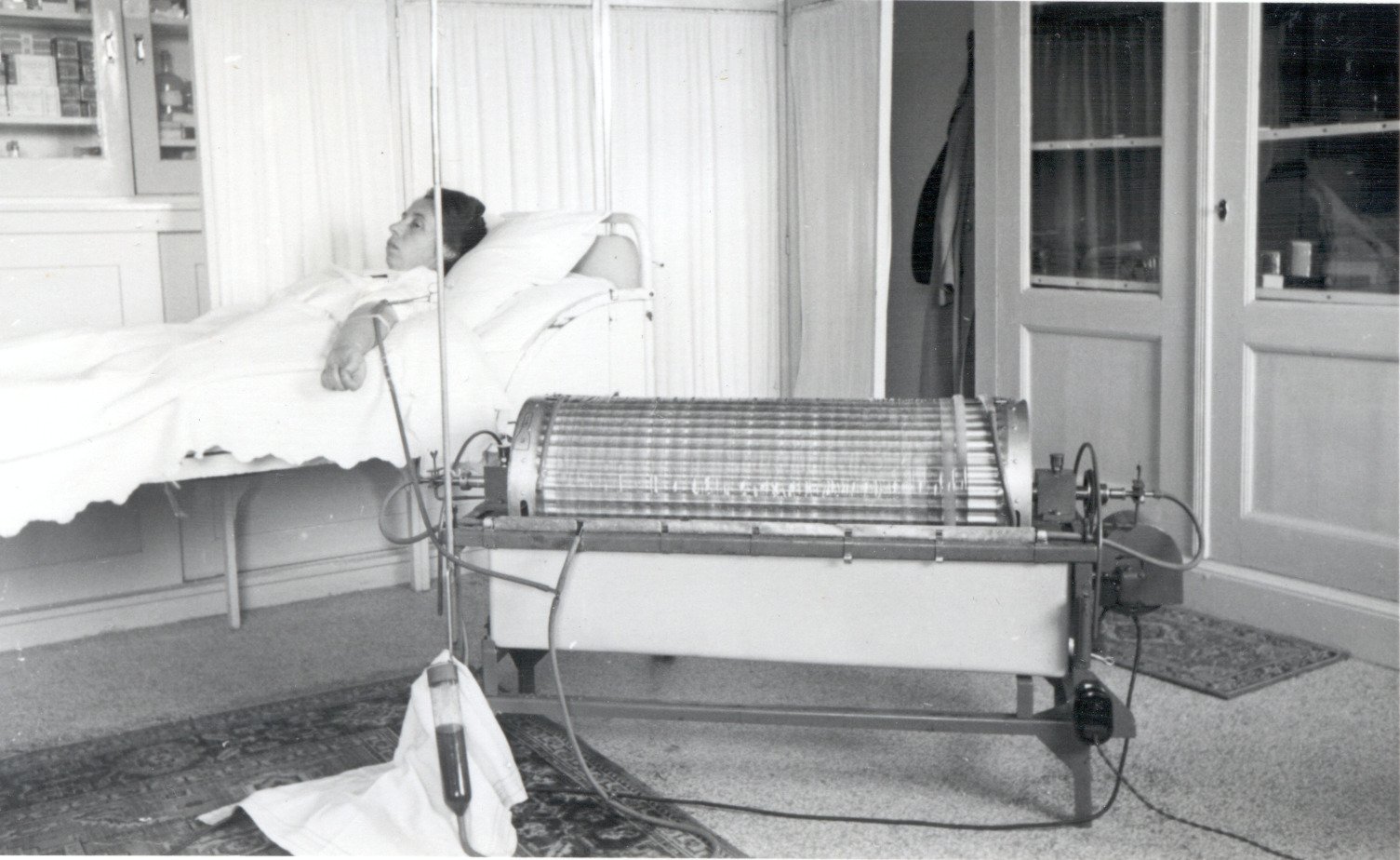
At the same time, a medical miracle was happening at the University of Washington hospital. Dr. Belding Scribner and his team created the world’s first dialysis machine that could be used repeatedly for the same person. Imagine your kidneys are two little filters inside you that day and night clean your blood of everything harmful, like a mother washing dishes after lunch. But for some people those filters break and stop working.
Before Dr. Scribner’s invention, such people simply died. Their blood filled with toxins and there was nothing to be done. But the new machine worked like a magical washing machine for blood: it took blood from a person’s body, ran it through special filters, cleaned it, and returned it. The procedure took several hours and had to be done three times a week. But it saved lives!
News of this miracle spread quickly. People came to Seattle from all over America hoping for treatment. Within two years the hospital had five dialysis machines. Then ten. Then twenty. Each machine saved a life, but each machine also created a problem that nobody had thought about at first.
What happens to the dirty water from the magic machine
Each dialysis treatment used about 120 liters of water — like filling a bathtub twice! That water mixed with blood, chemicals, and all the harmful stuff the machine removed from the patient’s body. After the procedure, that water had to go somewhere. And do you know where they put it? They simply poured it down the sink. From the sink it went through pipes straight into Lake Washington.
One machine is 120 liters of dirty water three times a week. Twenty machines is already 7,200 liters every week! Imagine a pool filled with water mixed with blood, chemicals, and dangerous bacteria. That’s how much was being poured into the lake every week. And that’s why the fish began to die.
But here’s the surprising part: nobody meant to harm the lake. The doctors were so busy saving people they didn’t think about what would happen next. In the 1960s people generally didn’t think much about ecology. Factories dumped waste into rivers, cars emitted black smoke, trash was thrown anywhere. Everyone thought nature was so big and strong it could handle anything.
The detective team that solved the lake’s mystery
When Frank told his boss about the dead fish, at first his boss didn’t believe it had anything to do with the hospital. “It’s probably from a factory on the other shore,” he said. But Frank was persistent. He kept watching and noticed a pattern: most fish died on Mondays, Wednesdays, and Fridays — the same days when the most dialysis machines were running!
Frank’s boss told the hospital engineer, a woman named Margaret Hollis. Margaret was one of the few female engineers at the time and constantly had to prove she was as capable as the men. She took water samples from the stream and sent them to the lab. The results were frightening: the water contained so many bacteria and chemicals it could not even be touched by hand!
Margaret went to Dr. Scribner with the bad news. She thought he would be angry or not believe her. But Dr. Scribner turned out to be wise. “We save people inside the hospital,” he said, “but we are killing life outside. That’s wrong. We must find a way to do both correctly.”
Thus began the work of an unusual team: the doctor who saved kidneys; the engineer who knew all about pipes and water; a biology professor from the university who studied fish; and the custodian who first noticed the problem. Together they became detectives investigating the mystery: how to clean people’s blood without polluting the lake.
The solution that changed the world
The team worked for more than a year. They tried different approaches. At first they thought simply diluting the dirty water with clean water before discharge would help, but they realized that doesn’t solve the problem — a poison remains a poison even when diluted. They considered collecting all the water in large tanks and hauling it away by truck, but that was too expensive and risky.
Finally, Margaret devised a three-stage system, like three magical filters:
First stage: all water from the dialysis machines was collected in a special underground reservoir instead of being discharged directly into the lake.
Second stage: in that reservoir lived special bacteria (yes, helpful bacteria!) that “ate” the harmful substances and turned them into something safe.
Third stage: the water passed through special activated carbon filters that absorbed remaining chemicals like a sponge soaks up spilled juice.
Only after all three stages did the water go into the lake. And you know what? It was cleaner than ordinary rainwater!
The system was installed in 1965. Within a month Frank noticed there were no more dead fish. Within three months the biologist found tadpoles back in the stream — they are very sensitive to pollution and live only in clean water. Within a year a pair of ducks nested by the stream and raised ducklings. The lake began to heal.
Lessons for cities around the world
The story of the dialysis machine from Seattle spread around the world. But now doctors in other cities cared not only about how to save people with failing kidneys but also about how to do so safely for the environment. The team at the University of Washington received hundreds of letters from Japan, Germany, Australia, Brazil. Everyone wanted to learn about Margaret’s system.
Today more than 2 million dialysis machines operate worldwide. They save lives every day. And nearly all of them use water-treatment systems based on the Seattle invention. Imagine: an idea born from a custodian’s observation of dead fish now protects rivers, lakes, and oceans across the planet!
But the most important lesson of this story is not technical but human. Here’s what Seattle taught other cities:
Lesson one: When we invent something new, we must think not only about its benefits but also about consequences. You can’t solve one problem by creating another.
Lesson two: Listen to everyone, even if they are not scientists or doctors. Frank was a custodian, but he saved the lake because he paid attention.
Lesson three: Admitting mistakes is not shameful; it’s wise. Dr. Scribner could have been offended when Margaret told him about the problem. Instead he said, “Let’s fix this together.”
Lesson four: The best solutions come when people with different knowledge and skills work together. One doctor couldn’t have solved this. But a doctor, an engineer, a biologist, and an observant custodian together could!
What we can do today
More than 50 years have passed since Frank noticed the dead fish. Today Lake Washington is one of the cleanest urban lakes in America. Salmon swim in it, beavers live along its shores, eagles nest nearby. And the University of Washington hospital still uses dialysis machines that save lives. But now they do it without harming nature.
This story teaches us that any of us can be like Frank — noticing what others miss and not being afraid to speak up. Maybe you’ll notice trash in a park hurting birds. Or see strange water flowing from a pipe. Or learn that your school throws away too much food. Your observation can be the start of a big change!
The dialysis machine saved millions of human lives. But the little dead fish taught us how to save lives the right way — with respect for all living things around us. And that may be an even greater invention than the machine itself.
So next time you see something strange or wrong — a fish in dirty water, a sick tree, a bird with a plastic bag — remember Frank’s story. Your attention and your voice can change the world. Sometimes the biggest changes begin with the smallest observations.