Walk through Discovery Park in Seattle and you’ll see meadows, cliffs above the sea, and an old lighthouse. Today, people walk their dogs and fly kites here. But half a century ago, you couldn’t simply walk in: this was a military fort, complete with a fence and guards. The story of how this closed-off area became a public space began with a group of people who refused to accept the idea that “nobody needs this land anymore.”
A Fort on the Edge of the City
Fort Lawton was established around 1900 on Magnolia Bluff, high above Puget Sound. The military favored places like this: you could see a long way from there, making it possible to spot an enemy ship. They built barracks, officers’ homes, and a broad, level parade ground. Everything was laid out in strict order: neat rows of buildings, straight paths, and spaces for drills.
But another world grew up around these buildings. For decades, no one planted parks or cut down trees for construction on the cliffs and in the ravines. Forests remained on the slopes, while meadows grew in the open areas. When the army gradually began leaving the fort, it became clear that the military had inadvertently preserved a huge stretch of nature for the city. Today, the park covers about 534 acres (roughly 216 hectares). It is Seattle’s largest park.
March 1970: “We Live Here Too”
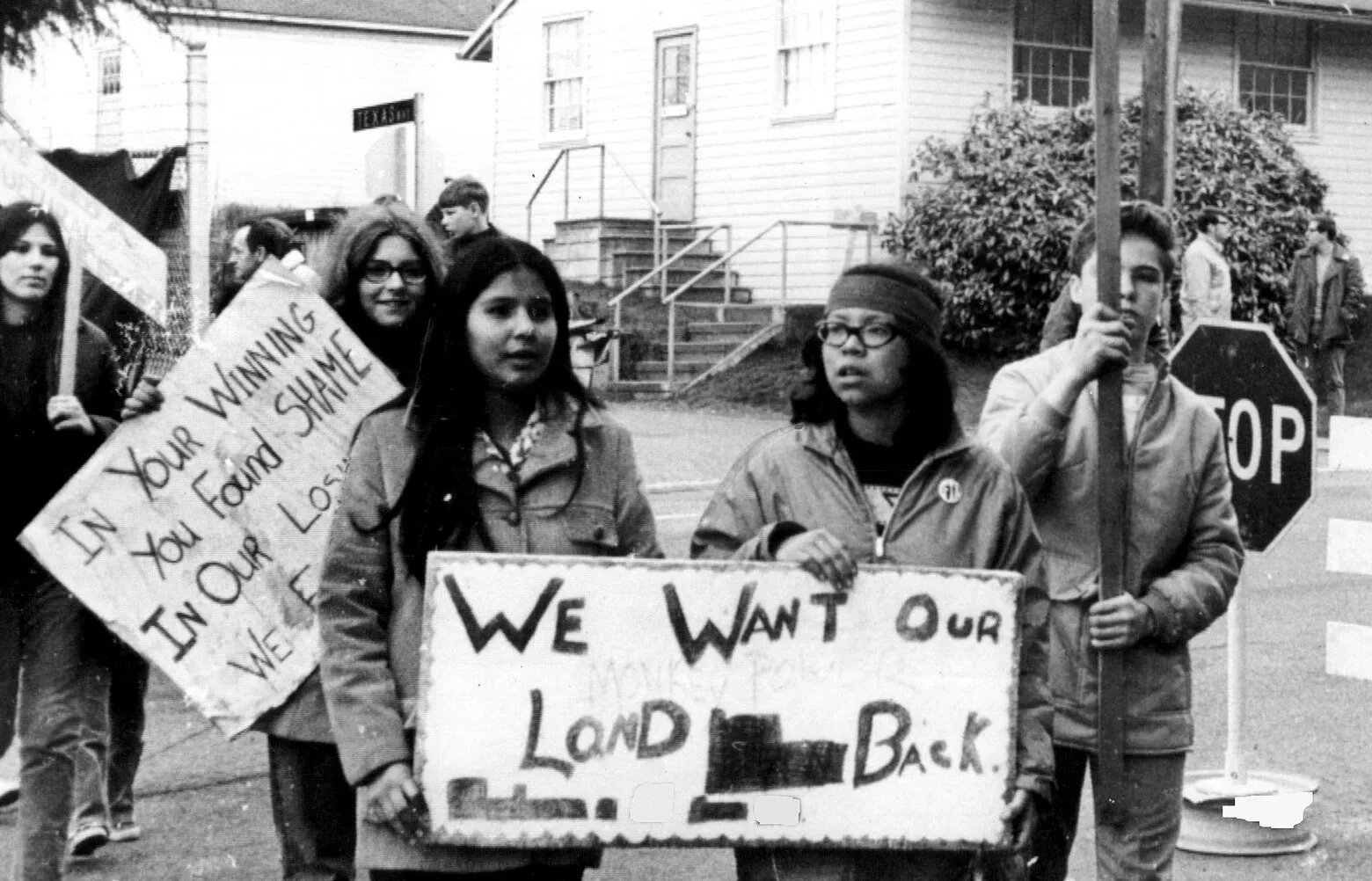
When officials began discussing what to do with the fort’s land, Native Americans joined the debate. Many lived in Seattle, but came from different tribes and belonged to different communities. They were united by the organization United Indians of All Tribes, led by Bernie Whitebear, a member of the Colville Tribe. They pointed out that the 1855 Treaty of Point Elliott linked the lands around Puget Sound to promises made to Native peoples. In their view, if the army was leaving, some of the land should be returned to the people with historical rights to it.
On March 8, 1970, about a hundred people entered the fort. They announced that they were claiming the land “by right of discovery.” They borrowed the phrase from European explorers, who had once used it when arriving on shores that were already inhabited. In this way, a joke and a serious question came together in a single declaration. The protesters were arrested, and for a while it looked as if they had lost. But the whole city heard about it, and soon the entire country did too. Negotiations continued, and the dispute moved from the street encampment into the offices where decisions were made about how to divide the land.
A Home by the Water: Daybreak Star Center
The outcome was unusual. The city got a park, which opened in 1973, while the Native organization gained the right to lease a plot of land for 99 years. A building was constructed there and opened in 1977. It was named the Daybreak Star Indian Cultural Center.
What makes this story interesting from the perspective of architects and urban planners? Usually, a city is built from the top down: first the plan, then the people. Here, it happened the other way around: first came the people and their demands, then the building and the park plan. According to descriptions, the center was conceived as a home open to everyone. It hosts exhibitions, children’s activities, celebrations, and meetings. Set among the trees, its windows and terraces look out over the water and mountains. The building doesn’t dominate nature; it becomes part of it.
The park has also preserved traces of its military past. The old buildings, parade ground, and paths remain, while trails through the forest have grown up alongside them. The result is a layered landscape from different eras: the military, nature, and the people who fought for the right to be heard.
What I Think About This Story
I think the main lesson is simple. You can make a park out of any land: all you have to do is take down the fence and plant grass. But it only truly becomes public when everyone with a right to be heard is included in the conversation about it. If you ever find yourself in Discovery Park, stop by the Daybreak Star Center and look out at the water. You’ll see the same place that people once struggled to reach, people who were told, “You don’t belong here.”
In Summary
Discovery Park shows that a former military site doesn’t have to remain closed off. Thanks to the persistence of the people who came to the fort’s gates in 1970, part of the land remained accessible to everyone, and a home was built there to preserve memories and tell stories. The fence is gone, but the trails remain, and today everyone walks them: children, tourists, birds, and the wind off the bay.