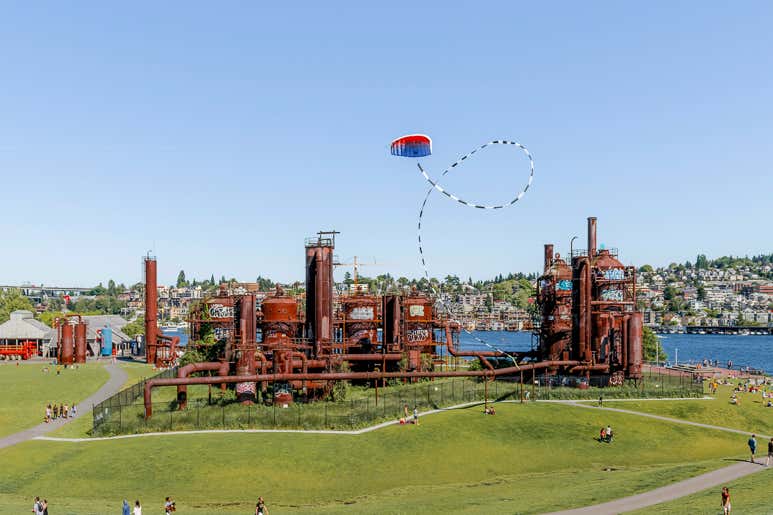
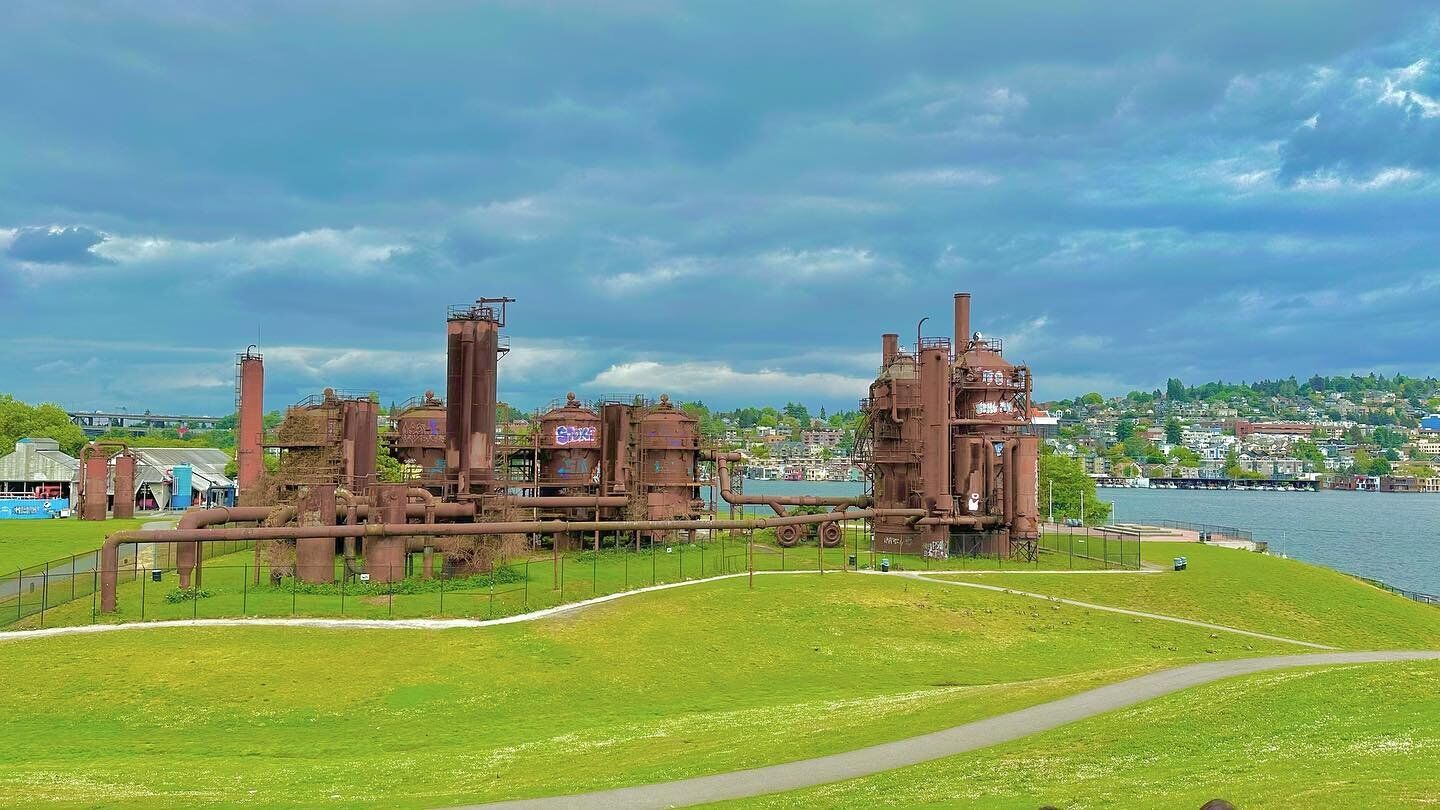
Imagine a big green hill beside a lake. Children fly kites on it, while enormous rusty towers stand nearby, like sculptures made by giants. This is Gas Works Park in Seattle. A hundred years ago, a noisy, smoky factory stood here, and the ground beneath it was soaked with tar and oil. How did it become a safe place for picnics again? With help from microbes invisible to the naked eye.
What was here before
In 1906, a gas plant was built on the shore of Lake Union. It made fuel gas from coal, and later from oil. The gas traveled through pipes to homes, powering streetlights and stoves. The work was hard and dirty. Workers spent their days dealing with heat, soot, and tar. Their names have mostly been lost, but the park’s towers and pipes are more than just iron—they are a reminder of the people who worked here.
The plant was a nuisance to its neighbors: the smell was sharp, and the air was dark with smoke. But it also provided jobs and brought light to thousands of homes. In 1956, natural gas came to the city, and the plant closed. The land was left “sick”: tarry substances and oils had become trapped in the soil, and couldn’t simply be brushed away.
The debate: tear it down or leave it standing?
The city bought the site in 1962 and began to consider what to do with it. Many people said, “Let’s tear everything down, haul away the contaminated soil, and plant grass.” It’s like cleaning a room: the easiest thing is to throw everything out and start over.
Landscape architect Richard Haag thought differently. He saw beauty and history in the towers. He believed these structures told the story of the city and the people who had worked here. Tear them down, and that history would disappear too. So those who wanted to demolish the site found themselves debating with people who wanted to preserve the past. The park opened in 1975, and it was unusual: some of the factory’s machinery was painted in bright colors and sheltered under a roof, where visitors can now have a picnic. But the contaminated soil remained a problem.
Tiny cleaners
Haag didn’t haul away all the soil: it would have been expensive, and it wasn’t clear where to put it. Instead, he proposed a plan involving “invisible helpers.” Soil is home to many microbes. Some can “feed” on oil and tar, just as we eat sandwiches. As they consume the pollutants, they gradually turn them into harmless substances. To give the microbes food and a place to live, compost and sewage sludge were added to the soil. It was like opening a café for tiny cleaners.
Kite Hill was built from soil and rubble. At its top stands a sundial decorated with pieces of stone and glass. The wind blows nicely here, and kites soar high.
The cleanup wasn’t perfect
Here the story gets honest rather than fairytale-like. A few years later, scientists found that harmful substances were still present in the soil at levels that were too high. Parts of the park were closed, and engineers added new cleanup methods. For example, they pumped air into the ground to help the microbes “breathe” and do their work. They also monitored the water in the lake. The work continued for many years, and monitoring is still ongoing. Sometimes the first attempt doesn’t solve everything right away—but people don’t give up; they learn from their mistakes and make improvements.
My takeaway
What I like about this story is that the park came about through conversations among different people: those who wanted to tear everything down, those who wanted to preserve the past, and scientists who honestly said, “We’re not finished yet.” I also like that even a damaged place can be returned to the public if people take their time, listen to different opinions, and ask the world’s tiniest workers for help.
Next time you see an old, abandoned place, remember Gas Works Park. Maybe all it needs is patience, a good idea, and a couple of billion tiny cleaners.