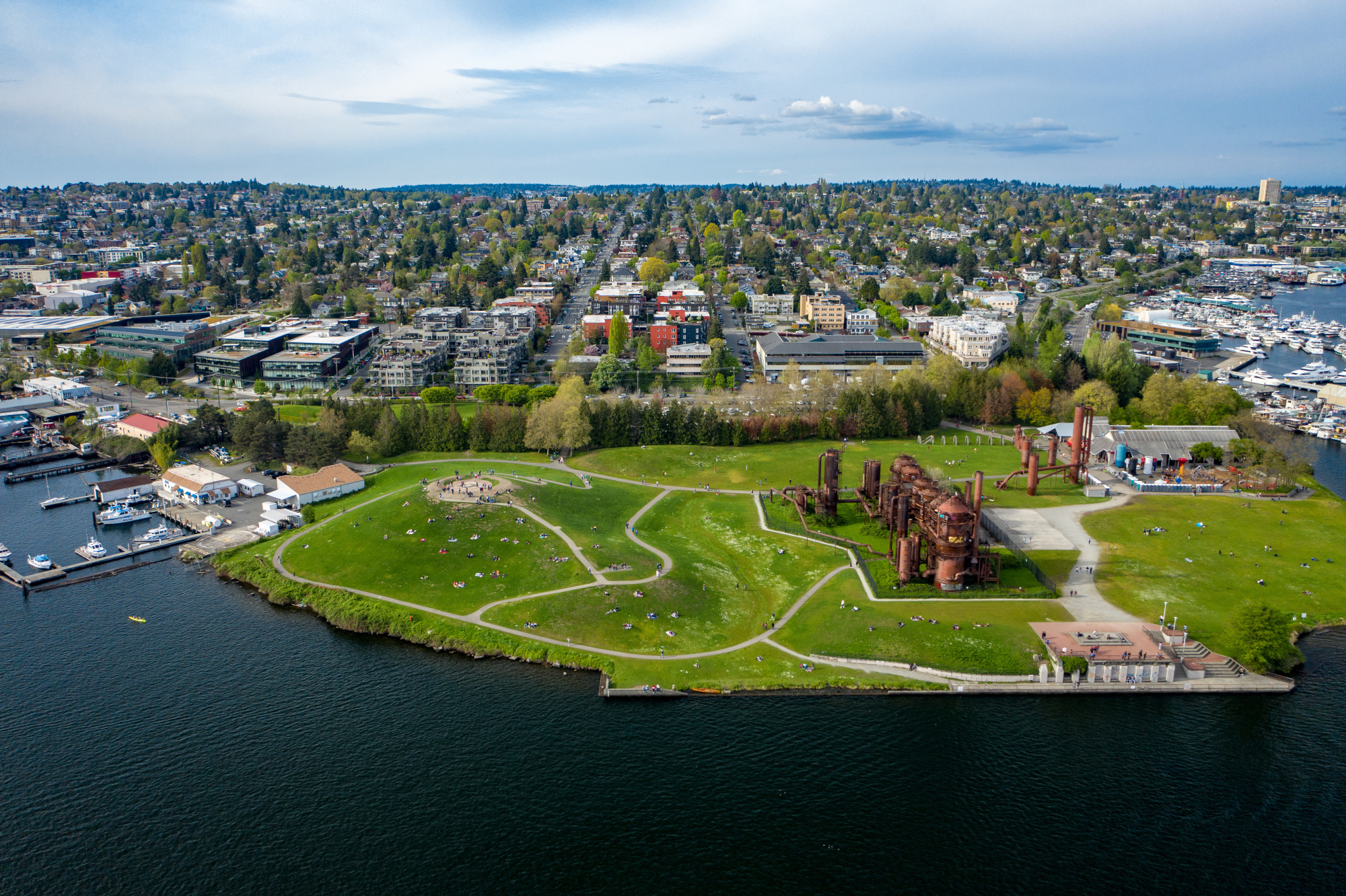
Imagine your room was very messy and your mother said, "Let's throw everything away and start over!" And you replied, "No, let's keep some things so I remember how I learned to be tidy." That's roughly what one brave designer in Seattle did in the 1970s. His name was Richard Haag, and he did what everyone thought was madness: he turned the city's most polluted site into a park but refused to remove the giant rusting towers and pipes. Today his idea changed how cities around the world treat their industrial mistakes.
The gas plant that poisoned the ground for fifty years
On the north shore of Lake Union in Seattle, a huge plant operated from 1906 to 1956. It produced gas for lighting homes and cooking — not natural gas piped in, but manufactured gas made from coal. The process was very dirty. Coal was heated in massive ovens to thousands of degrees, releasing gas. Along with the gas came terrible waste: black tar resembling liquid asphalt, poisonous chemicals, and heavy metals.
For fifty years those wastes were simply dumped into the ground. Nobody then thought about the environment — people assumed the earth was vast and everything would "just disappear." By 1956, when the plant closed (because cheaper natural gas became available), the soil was saturated with toxins to depths of several meters. Benzene, cyanides, arsenic and lead were found in the ground. Scientists said nothing would grow on that site for another hundred years.
The city bought the land in 1962 and didn't know what to do with it. Most people said, "Demolish everything! Remove those awful towers, clean the soil and build a normal park with grass and swings." That seemed logical — who wants to stroll among rusting pipes that remind you of pollution?
The strange idea everyone thought was a mistake
In 1970 the city hired landscape architect Richard Haag to design a park for the site. Haag visited the abandoned plant and saw what others did not. He saw history. He saw honesty. He saw an opportunity to teach people something important.
"These towers are part of Seattle's history," Haag told the city council. "If we remove them, we will pretend the pollution never happened. But it did. Let's keep the structures as a monument to our mistakes so people remember and don't repeat them."
The city council thought he had gone mad. Newspapers called it "the ugliest idea in the history of parks." Parents worried children would be injured on the rusty structures. Environmentalists said it glorified pollution. Haag received threatening letters. But he did not give up.
He explained his idea this way: "We can pretend the industrial era didn't harm nature. Or we can show the truth and turn it into a lesson." Haag proposed a compromise: remediate the most dangerous parts of the soil, but retain the main towers and pipes, paint them in bright colors and turn them into playgrounds and viewing platforms. The largest structure — the gas holder as tall as a ten‑story building — he wanted to make the park's centerpiece, a place offering views over the city.
After three years of debate the city agreed to try. The park opened in 1975, and something remarkable happened.
How the rusty towers became the city's favorite place
People came to love Gasworks Park for the very reasons it had been criticized. Children climbed over the brightly painted pipes like a giant set of building blocks. Artists came to paint industrial silhouettes against the sunset. Families picnicked on the hill where both the plant towers and the downtown skyscrapers were visible — past and present together.
Most importantly, the park became an outdoor textbook. Schoolteachers brought children on field trips and explained, "Do you see those towers? Once people thought they could do anything to nature. Now we know that's not true. These towers help us remember." Informational plaques explained how the plant worked, what toxic wastes were, and why protecting the environment is important.
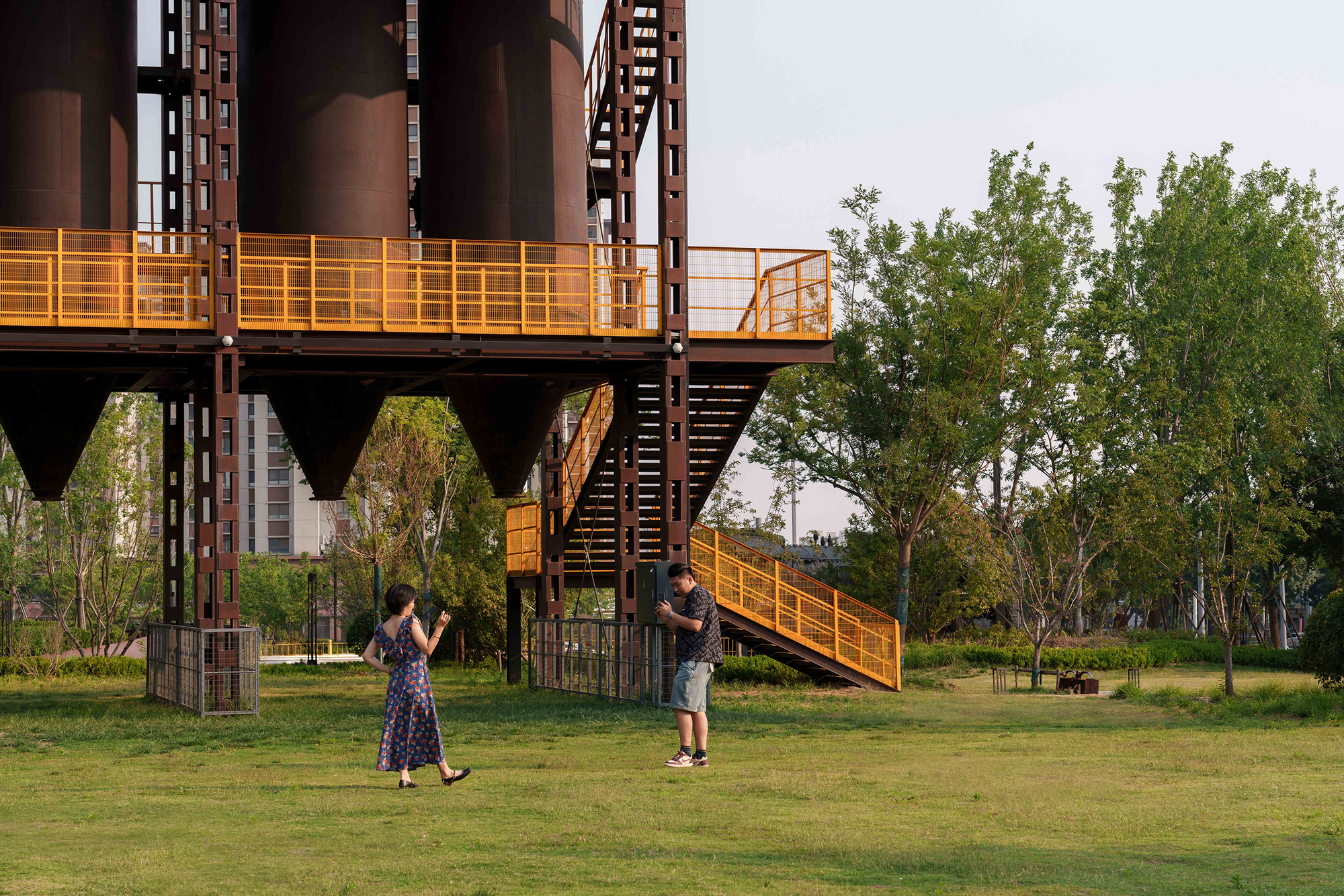
Haag's idea proved revolutionary worldwide. Before Gasworks Park, cities usually hid their industrial mistakes — tearing down plants, burying waste, and building something new and pretty on top. After Gasworks Park a new concept spread: brownfield redevelopment — restoring contaminated sites while preserving history. Cities began to realize you could turn old factories and mines into parks, museums, and education centers while keeping parts of the structures as reminders.
Today there are hundreds of parks worldwide modeled on Gasworks: Landschaftspark Duisburg-Nord in Germany (where blast furnaces of a steel plant were preserved), the High Line in New York (an old railway turned into a park), and expansions of the Tuileries in Paris that incorporated industrial zones. They all follow Haag's principle: "History, even the unpleasant kind, deserves to be remembered."
Lessons from the rusty towers for today
Gasworks Park teaches us three important things. First, mistakes can be turned into teachers. Instead of hiding what we did wrong, we can keep it as a lesson for future generations. Second, beauty can be unexpected. Rusting towers against a sunset proved more beautiful than ordinary swings and flowerbeds. Third, honesty is more important than a perfect image. A city that acknowledges its mistakes and learns from them is stronger than one that pretends there were none.
Richard Haag lived until 2018 and saw how his "crazy" idea changed the world. Shortly before his death he said in an interview, "I didn't want to create a pretty park. I wanted to create an honest park. It turned out honesty is true beauty."
Today Gasworks Park is visited by over a million people a year. Children play where a toxic wasteland once lay. The soil has been remediated (though the process took decades and continues). And the rusting towers stand as a reminder: nature forgives our mistakes if we acknowledge and fix them. Sometimes the bravest act is not to hide a problem but to leave it in plain sight so everyone can learn from it.