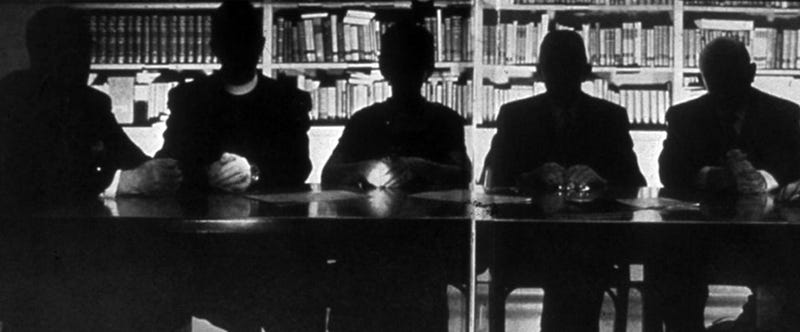
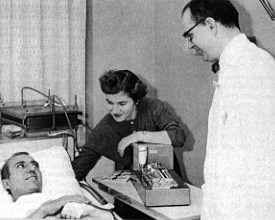
In 1962, a machine that could save lives appeared in Seattle. But there was one huge problem: there was only one machine, and many people needed it to survive. So seven ordinary people gathered in a room and began to decide the most terrible question in the world: who should live and who should die. This group was later called the "God Committee," and their decisions ultimately changed medicine across America.
The machine that does the kidneys' work
Imagine your kidneys are two smart filters the size of fists. Every day they cleanse all your blood of harmful substances that build up as your body functions. If the kidneys stop working, a person can live only a few days — toxins accumulate in the blood and the body poisons itself.
Until 1960, if someone's kidneys failed, doctors could do nothing. But Dr. Belding Scribner of the University of Washington invented a special machine — the dialysis apparatus. It connected to a patient's arm through a special tube (called the "Scribner shunt") and cleaned the blood for several hours in place of the kidneys. The patient had to come for the procedure two to three times a week, but they could live!
The problem was that the machine was very expensive — about $15,000 (a huge sum at the time, roughly the price of several houses). The Seattle Medical Center at the University of Washington had only one such machine, and it could serve only a few patients. But the number of people in need was many times greater.
Seven people around a table
Doctors did not want to decide themselves who would get a spot at the machine and who would not. It was too painful. So in 1962 they created a special committee of seven ordinary people, not doctors: a clergyman, a housewife, a lawyer, a union representative, a surgeon, a banker, and a state government official.
These people met in a small room and reviewed folders with information about patients. There were no names — only facts: age, marital status, job, how many children the person had, whether they attended church, whether they had debts. The committee had to choose who "deserved" to live more.
Their criteria now seem strange and unfair. They often chose people who had children, who went to work, who were "useful to society." Young people were preferred over the elderly. The married over the single. Churchgoers over non-churchgoers. One committee member later admitted: "We played God, and it was awful."
The story that changed everything
In 1962 journalist Shana Alexander wrote an article in Life (one of the most popular magazines in America) titled "They Decide Who Lives, Who Dies." The piece told the story of the Seattle "God Committee," and the whole country was shocked.
People began asking: "Why can the wealthy afford treatment while the poor cannot? Why is one person's life considered more valuable than another's? Should committees like this exist in a wealthy country like America?"
This story sparked a huge national debate. The U.S. Congress began holding hearings. Doctors, philosophers, and ordinary citizens argued about justice and who has the right to life.
The law that changed the rules
In 1972, ten years after the creation of the "God Committee," something incredible happened. The U.S. Congress passed a law stating that every American with kidney failure has the right to dialysis, and the government would pay for it through Medicare (the federal health insurance program).
This was a revolutionary moment. For the first time in U.S. history, the government declared that saving lives is a right for every person, regardless of whether they are rich or poor, "useful to society" or not.
The economic effect was huge. Here is how the numbers changed:
| Year | Number of dialysis patients in the U.S. | Annual program cost |
|---|---|---|
| 1972 | about 10,000 | $229 million |
| 1980 | about 60,000 | $2 billion |
| 1990 | about 170,000 | $6 billion |
| 2000 | about 340,000 | $15 billion |
| 2020 | more than 550,000 | more than $50 billion |
What it means today
Today there are thousands of dialysis centers in America. Machines are smaller, safer, and more efficient. Some patients can even do dialysis at home while they sleep! Every year the program saves hundreds of thousands of lives.
But the story began with one machine in Seattle and seven people who sat in a room making impossible decisions. Their work was imperfect and often unjust, but it revealed an important truth to the whole country: you cannot decide who deserves to live based on how much money someone has or how "useful" they are.
Dr. Scribner, the inventor of that first machine, lived long enough to see how his invention changed the world. He died in 2003, but by then his machine and the law it inspired had saved millions of lives. And the "God Committee" that everyone hated actually did important work: it showed that such committees should not exist, and that every life is equally valuable.