Imagine you're going to the shop for bread, and you have to go down a staircase right in the middle of the street. Then you climb up another staircase to enter the bakery. If you're small and the stairs are too high, your mother ties you to a rope and carefully lowers you down like a bucket into a well. Sounds like a fairy tale? But that's exactly how Seattle residents moved around their city for ten years — from 1889 to 1907. And it all happened because the grown-ups couldn't agree on who was right.
The fire that changed everything
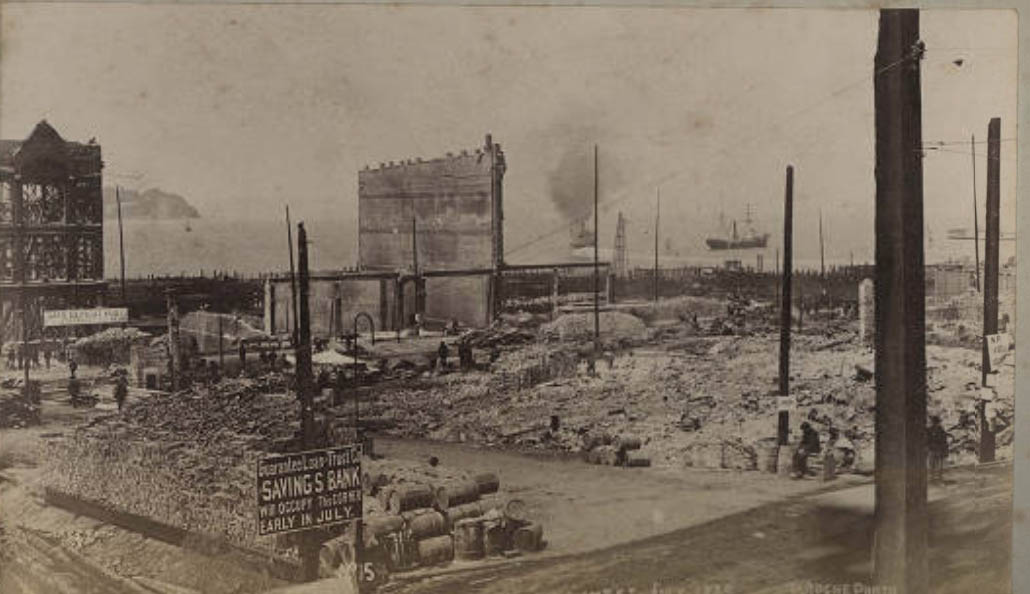
On June 6, 1889, a pot of glue overturned in a carpentry shop on the corner of Madison and Front streets. Glue back then was boiled from animal bones, and it was extremely hot. The fire started small, but the city was built almost entirely of wood. Within a few hours 25 city blocks burned — the entire downtown Seattle turned to ash.
But people weren't as devastated as you might expect. Do you know why? Because old Seattle already had a big problem that hadn't been solved. The city was built on the shore of Puget Sound, right at sea level. Twice a day at high tide, water would rise and flood the streets and basements. Toilets in houses worked backward — instead of flushing, they would splash dirty water back out! Shops were constantly flooded. Walking the streets was unpleasant and dangerous.
A brilliant idea and a big problem
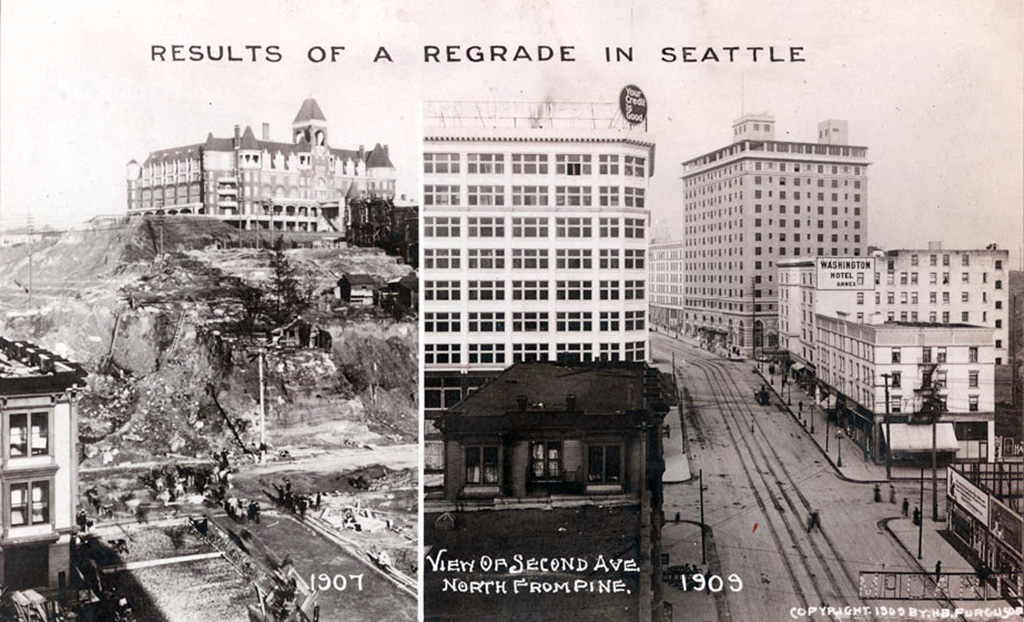
After the fire, city engineer Reginald Thomson proposed a bold plan: "Let's raise the entire downtown by two stories! We'll build new streets directly above the old ones, and the water will never flood us again!"
The idea was truly brilliant. But there was one problem: to raise the streets, thousands of tons of fill were needed, high stone walls had to be built, and the space between them filled in. That would take years.
And shop and restaurant owners couldn't wait years. They needed to feed their families now. So they said, "We won't wait! We'll build our buildings at the old, lower level, like before!"
City officials said, "Fine, build. But we will raise the streets anyway!"
Thus began the strangest chapter in Seattle's history.
The city of stairs and ropes
Picture the scene: new brick buildings standing at the old, low level. But the streets between them rise higher and higher — a meter, two meters, even three meters above the sidewalks in places! To cross the street you had to go down a high staircase, walk across the roadway, and climb up another staircase.
There were so many stairs that Seattle was nicknamed "the City of Stairs." Some stairways were so tall and steep that women in long skirts were afraid to use them. Mothers really did tie small children to ropes and lower them from the high sidewalks because the staircases were too dangerous.
At night it was even scarier. There were few street lamps, and people often didn't notice where the sidewalk ended. Newspapers of the time wrote about people falling off high sidewalks and breaking arms and legs. One journalist joked, "In Seattle now you need the head of an eagle to see where you're going and the feet of a mountain goat to avoid falling!"
The birth of an underground city
But the city kept growing. Gradually building owners realized life couldn't continue that way. They began adding second floors and creating entrances at the level of the new, higher streets. The first floors, which had formerly been shops, became basements.
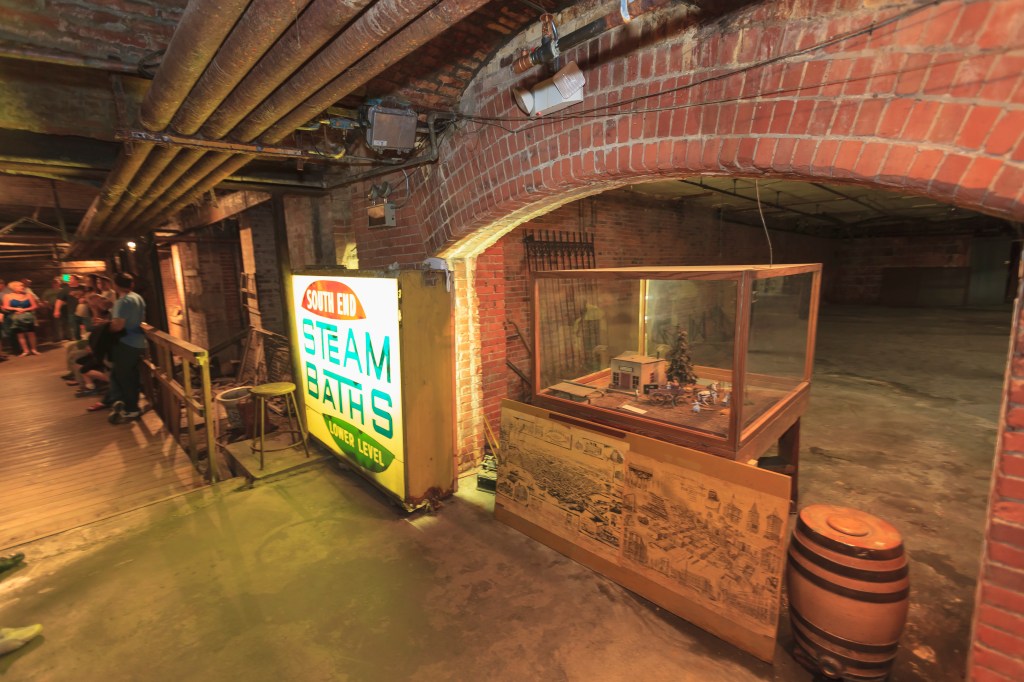
And the old sidewalks? They were simply covered with glass slabs (to let light through) and new sidewalks built above them. The old sidewalks turned into tunnels under the ground!
For a while people used these underground passages. There were shops, barbershops, even lodging houses for poor people. But gradually everything moved upstairs, and the underground city was forgotten. The glass slabs cracked and became dirty. The tunnels lost their light. No one went down there for almost 50 years.
A treasure beneath your feet
In the 1960s a journalist named Bill Spiedel researched Seattle's history and remembered the underground tunnels. He went down with a flashlight — and couldn't believe his eyes! There, beneath the modern city, an entire old town had been preserved: shop windows, old signs, wooden sidewalks, even the old toilets that had worked backwards!
Spiedel began leading tours down there. At first a few people came, then dozens, then hundreds. People were thrilled! They could see with their own eyes what Seattle looked like 100 years earlier, touch the walls of old buildings, walk the same sidewalks where mothers once lowered children on ropes.
Today Underground Seattle is one of the city's most popular attractions. More than 100,000 tourists from around the world descend there each year. They take pictures by the old storefronts and listen to stories about the City of Stairs, laughing about the fountain-like toilets.
When a mistake becomes a treasure
The story of underground Seattle teaches an important lesson: sometimes what seems like a big mistake or a foolish quarrel can turn into a real treasure. If store owners had obeyed city authorities and waited for the streets to be raised, there would be no underground city. If the authorities had forced everyone to wait, people might have been left without work and money.
Instead, they couldn't agree — and by accident created something unique. For ten years residents suffered with stairs and ropes, argued and complained. But because of that a ghost city was preserved beneath modern Seattle, a window into the past, an open-air museum.
Now, when tourists descend into the underground tunnels, guides tell them not only about the fire and floods. They tell them about mothers with ropes, about dangerous staircases, about stubborn shop owners and stubborn officials. About how an entire city lived on two levels at the same time for ten years — and survived, and even learned to laugh about it.
Underground Seattle reminds us: history is not only great victories and right decisions. Sometimes the most interesting stories are born from quarrels, mistakes, and awkward compromises. The main thing is not to forget these stories and to learn from them with a smile.