Imagine you're going to a shop for a new dress. You walk in, pick something pretty, but then the saleswoman says, "The shoes for that dress are on another floor. Go down the stairs over there." You go to the stairs and realize that it's not really a stairway but a tall wooden ladder, almost like the one your dad uses to change a ceiling light! And you need to climb down it in a long dress that trails on the floor. That's how Seattle residents shopped more than a century ago. And it all happened because the city accidentally built itself twice — one on top of the other.
A Problem Solved Too Well
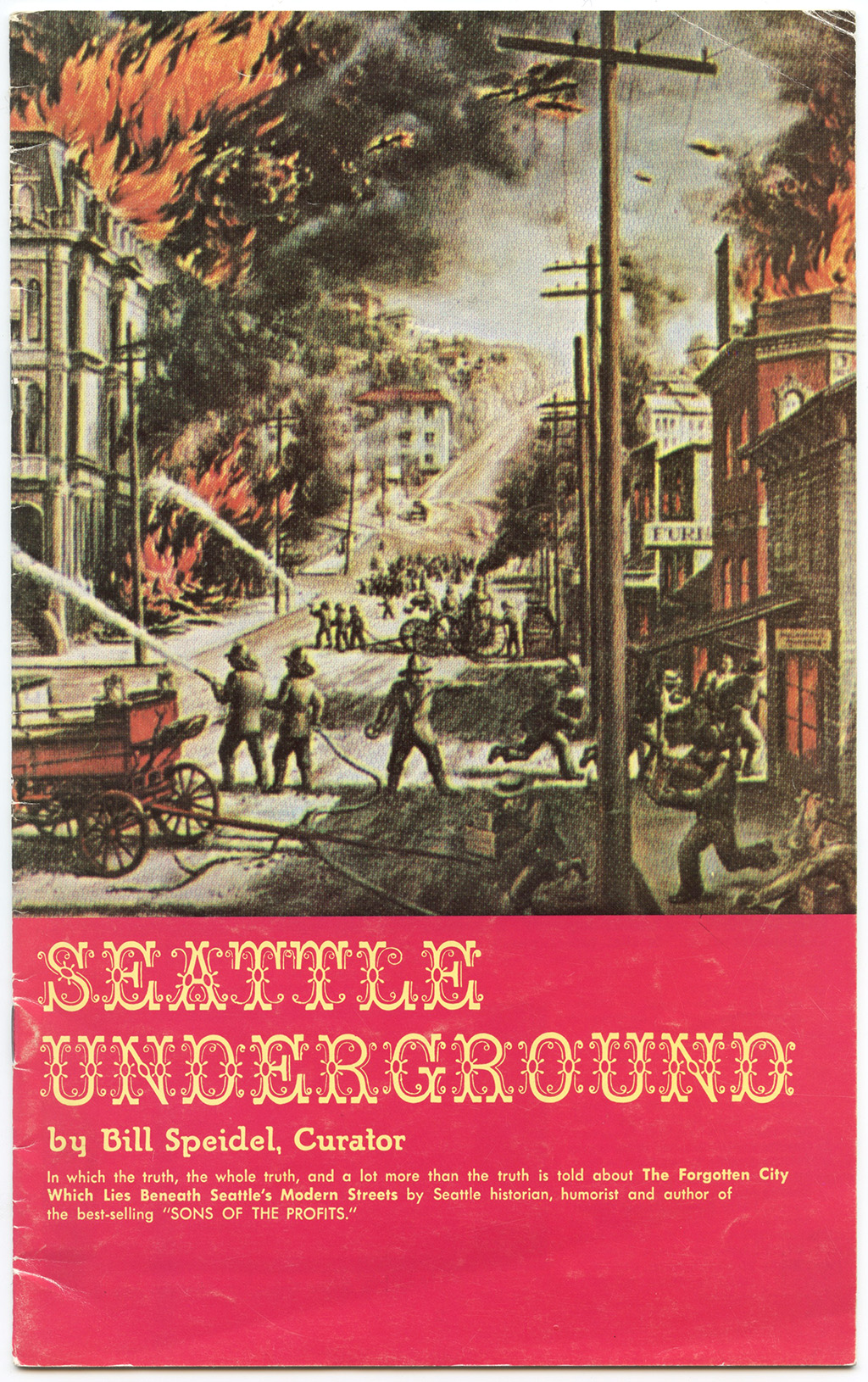
In 1889 Seattle suffered a great disaster: almost the entire downtown burned to the ground. But the townspeople decided this was a chance to fix everything. The old Seattle had a very unpleasant feature: it sat too low, right at the level of Puget Sound. Twice a day, when the tide came in, water rose and flooded the streets. The worst part was the toilets — back then their waste drained out through pipes, and when the tide returned, everything came back in! Imagine what a nightmare that was.
Engineers came up with a solution: they raised the entire downtown 10–20 feet (3–6 meters). They built tall walls along the streets, filled the space between them with earth, and laid new streets on top. The tide problem disappeared! But another problem appeared: shops and houses remained at the old level, while the streets were now high above them, at what used to be second-floor level.
It turned out that a shop's front door, which used to open onto the street, now led into a basement. What had been the second floor became the first. The whole city was upside down!
Years of Two Levels and Stairs Everywhere
But Seattleites are practical people. They didn't wait for everything to be rebuilt properly. For several years (and in some places more than a decade!) the city existed on two levels simultaneously. Shops had two entrances: one from the new, elevated street, the other from the old street now down below. Stairs and even simple ladders connected the levels.
Merchants adapted quickly: they sold some goods on the upper level and others below. Shoppers went up and down the stairs, moving from shop to shop along the underground sidewalks, then returned upstairs. Women in the long Victorian dresses everyone wore then climbed these stairs daily with purchases in hand. It was inconvenient and even dangerous, especially in the dark — there was almost no electric lighting then.
Gradually the city decided to close the lower level. The official reason was that it was dark, dirty, and people could fall. But it also began to attract people who didn't want to be seen: the underground became a place the police preferred not to inspect. By 1907 almost all the underground sidewalks were closed, filled with earth, or simply boarded up. The city seemed ashamed of its subterranean past.
The Man Who Taught the City to Be Proud of Its Mistakes
More than fifty years passed. Underground Seattle turned into a dump and a place for rats. Everyone forgot about it, and nobody wanted to remember. But in 1965 one person looked at those abandoned tunnels and sidewalks with completely different eyes.
Bill Speidel was a journalist who loved his city. He studied Seattle's history and realized that the underground sidewalks were not a disgrace but an amazing testament to how people solved difficult problems. They proved the ingenuity of the townspeople, their stubbornness, and their ability to adapt. Speidel began leading small tours of the underground, telling stories about how the city lived on two floors.
At first officials objected. They thought showing tourists these dirty basements was embarrassing. But Speidel didn't give up. He wrote a book, organized a company for tours, and gradually convinced the city that the underground was not something to hide but something to be proud of. He said, "Other cities hide their mistakes. We show ours and learn from them."
The Treasure They Almost Threw Away
Today tours of Underground Seattle are one of the city's most popular tourist attractions. Every year hundreds of thousands of people go down to walk the very sidewalks shoppers walked more than a century ago on two levels. They see old shop windows, purple glass (which has changed color over time), remnants of wooden sidewalks, and even old toilets that once worked in reverse.
But the most important thing is the story of how the city learned to take pride in its imperfections. Seattle could have filled everything in and forgotten it. Instead it preserved its strange, inconvenient history and turned it into a lesson for everyone: sometimes the most interesting things come from our mistakes and unexpected solutions.
Seattle's underground sidewalks remind us that not everything has to be perfect the first time. Sometimes you have to build the city twice, make people climb stairs in long dresses, and only later find the right solution. And even what first seems like a failure can, many years later, become something the city is most proud of.

![Aftermath of the Great Seattle Fire of 1889 [2157x1287] : HistoryPorn](https://external-preview.redd.it/2qRUhl4ywBqR7iheEyxgtZRefnQ1ZqcUqTsi5aQ8c2E.jpg?width=960&crop=smart&auto=webp&s=28b35db973016070ac6bc31857f19e2ae4e52233)