Imagine someone deciding to name an entire city after you. Sounds like a fairy tale, doesn’t it? But what if you didn’t want it at all—and were even a little afraid? That’s exactly what happened to a chief named Si’ahl, whom settlers anglicized as Seattle. And it’s his name that one of America’s best-known cities carries today.
Who was Chief Seattle, really?
Si’ahl was born around 1786 and was a chief of the Duwamish people—people who lived along rivers and inlets in the places where skyscrapers, coffee shops, and Amazon offices stand today. The Duwamish knew how to fish, build large wooden houses, read the weather from the stars and the waves. They had lived on this land for thousands of years—long before the first European settlers arrived.
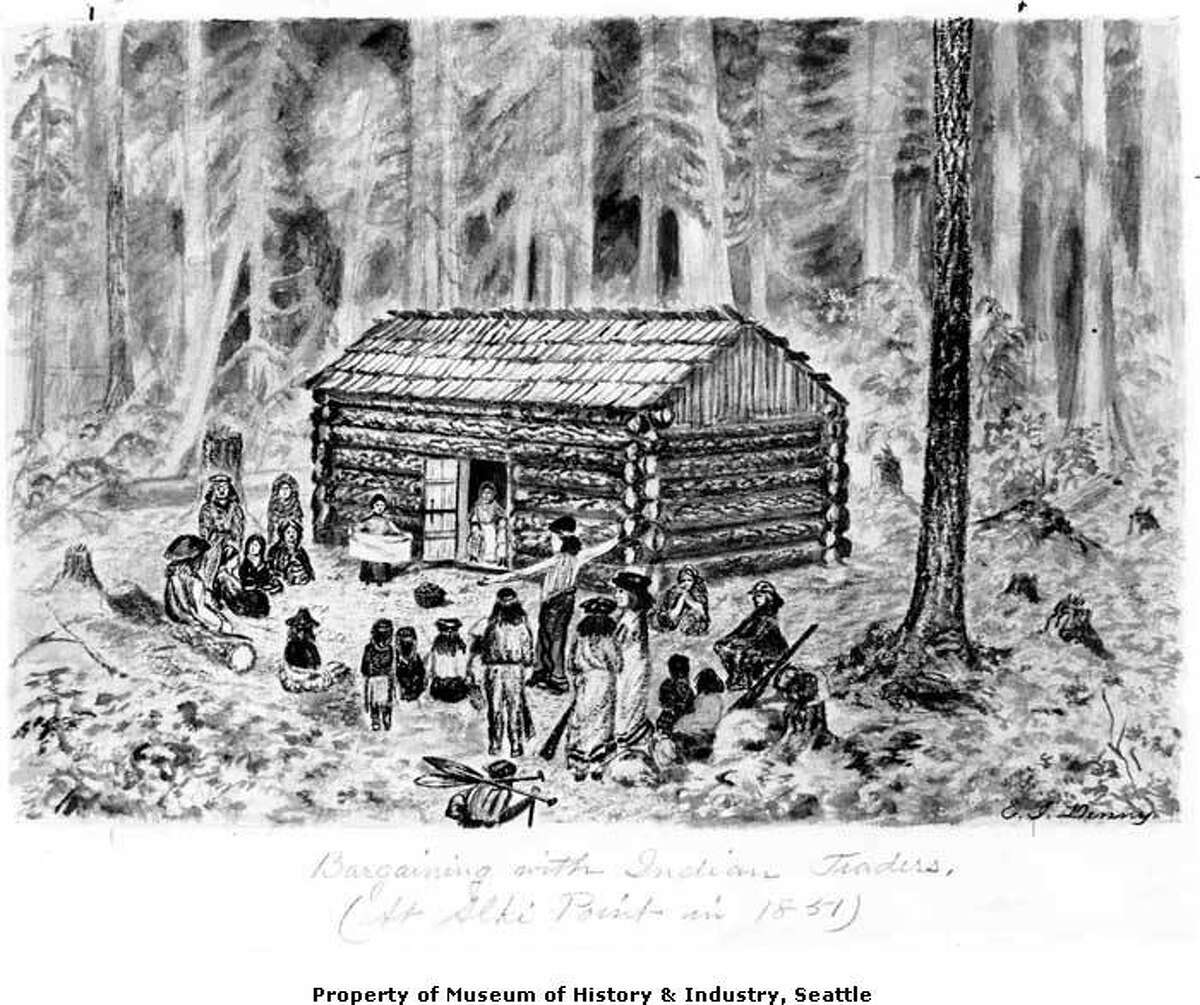
When, in the early 1850s, American settlers began building their settlement on the shore of Puget Sound, Chief Si’ahl met them peacefully. He traded with them, offered advice, and protected them from conflicts. One of the first settlers, David Denny, remembered him as a wise, calm, and deeply respected man. The settlers decided that there was no better way to show gratitude than to name the new city after him. So in 1853 the word “Seattle” appeared on maps.
But, they say, the chief was not at all pleased.
The name’s secret: why this was a strange “gift”
The Duwamish people held an important belief: when a person dies, their spirit continues to exist in another world. And every time the living speak the dead person’s name out loud, that spirit becomes restless—as if it’s being woken up in the middle of the night. That’s why names of the deceased were not supposed to be used unnecessarily, so that the dead could rest in peace.
Now imagine you find out: a whole city has been named in your honor. And in that city, your name will be spoken, written, shouted, and sung—every day, millions of times, forever. Even after you die. For Si’ahl, that didn’t sound like an honor, but almost like a punishment.
Some historians say the settlers knew about this belief. And to ease the awkwardness, they agreed to pay the chief a small amount of money every year—as a symbolic fee for the disturbance. It wasn’t a fortune. It was more of a gesture, an acknowledgment that the “gift” turned out to be somewhat uncomfortable.
Of course, Si’ahl couldn’t forbid people from using his name. He accepted it with dignity. But the story of this “gift” is one of the most unusual in the biography of any city in the world.
A wealthy city—and a people without land
This is where the story becomes especially sad and surprising at the same time.
Years passed. Seattle grew. Then it grew even faster. It later became one of the richest cities in the world. Boeing—making huge airplanes—grew here. Amazon appeared—an enormous online retail giant known in countries around the globe. Nearby, in Redmond, Microsoft set up shop. The name “Seattle” became known to every schoolchild on the planet.
And what happened to the Duwamish people—the chief’s people?
In 1855, the U.S. government signed a treaty with local tribes. Under that treaty, many peoples received special lands—reservations—where they could live by their own laws. But in the end, the Duwamish were left without a reservation. It was as if they were simply not noticed on the long list. They didn’t go anywhere—they stayed living near the city that bore their chief’s name. But they had no land.
Many years later, the Duwamish asked the government to officially recognize their people as a tribe. In 2001, that finally happened—but a year later, the decision was reversed. The fight continues to this day.
So you end up with a strange picture: a city worth hundreds of billions of dollars carries the name of a person whose people never received what they were promised.
The Duwamish today—and why it’s important to know
The Duwamish people exist today. They have their own Longhouse—a cultural center right in Seattle—where they preserve traditions, teach children the language of their ancestors, and tell their story. They hold celebrations, workshops, and gatherings. They live in the same city that grew on their land.
Chief Si’ahl’s name is on maps, on airport signage, on coffee packaging, and on souvenir mugs. And his descendants continue working to have their people recognized—officially, by law.
This story teaches us something important: even the most beautiful gesture can turn out to be more complicated than it seems. And that behind every name on a map—whether it’s a street, a neighborhood, or an entire city—there is someone’s living history. Sometimes joyful. Sometimes unfair. But always real.
Chief Si’ahl didn’t ask for his name to live forever. But it does. And maybe the most honest thing we can do is to remember not only the name, but the person it belonged to.