Imagine you wake up one morning and your street has turned into a huge pit as deep as a two-story house. To cross the road and get to school you must descend a tall staircase, walk along a muddy path, then climb another staircase up. And this goes on — for several years! That’s what happened to the residents of Seattle in the United States at the end of the 19th century, when the grown-ups decided to rebuild their city... without demolishing the old one.
Toilets that worked backwards, and shops underwater
Before 1889 Seattle was an ordinary port city built right on the bay. But it had a big problem: the city had been built too low. Every day, twice, ocean tides rose and flooded the ground floors of buildings. The worst part was the toilets: instead of flushing everything away, they worked like fountains in reverse! At high tide seawater rose through the pipes and pushed everything back out. Can you imagine how awful that was?
Shops suffered too: owners bailed water out of their stores every morning, and goods had to be kept on the top shelves. One fishmonger joked that his shop was the only place where customers could catch goods right out of the floor. The townspeople dreamed of solving the problem, but nobody knew how — until a disaster changed everything.
The fire that forced the city to rise
On June 6, 1889, a glue pot overturned in a carpentry shop and a huge fire started. In one day the blaze destroyed 25 city blocks — almost the entire downtown! But the city engineers (the people who figure out how to build houses and roads) decided: since we have to rebuild anyway, let’s raise the entire city 3–6 meters higher! That way the water will never flood the houses again.
The idea was brilliant, but its implementation was very strange. Shop and building owners didn’t want to wait for the city to build new higher streets. They began rebuilding their buildings right away — at the old low level! The result: new buildings stood below while the city built new sidewalks and roads high above them, at the level of the second floors.
Life on the stairs: how people lived in two cities at once for years
Picture this: you enter a toy shop from the street on the second floor, then exit through another door and find yourself in a basement! That’s exactly how Seattle looked from 1889 to 1907 — almost 18 years.
Shop owners worked in incredibly complicated conditions. They had two doors: one at the old level (now below) and another at the new high sidewalk. Merchants stood on stairways and served customers on both levels at once! One shoe-store owner recalled customers shouting orders down from above while he passed shoeboxes on a long pole, like a flag.
Crossing the street became a real adventure — and very dangerous. “Canyons” up to 10 meters deep formed between the old sidewalks and the new ones. People climbed down and up wooden staircases dozens of times a day. At night, when there were no electric lamps, several people fell into these pits and were seriously injured. The city even hired special men to stand with lanterns and warn passersby of the danger.
The underground city that became a museum of mistakes and ingenuity
By 1907 the city had finally finished building the new high sidewalks and closed off the old lower passages. The official reason was odd: city authorities said the underground spaces had too little light and fresh air and could harbor dangerous bacteria. But many historians think the real reason was different: criminals were hiding in the underground corridors, and it was hard for the police to catch them.
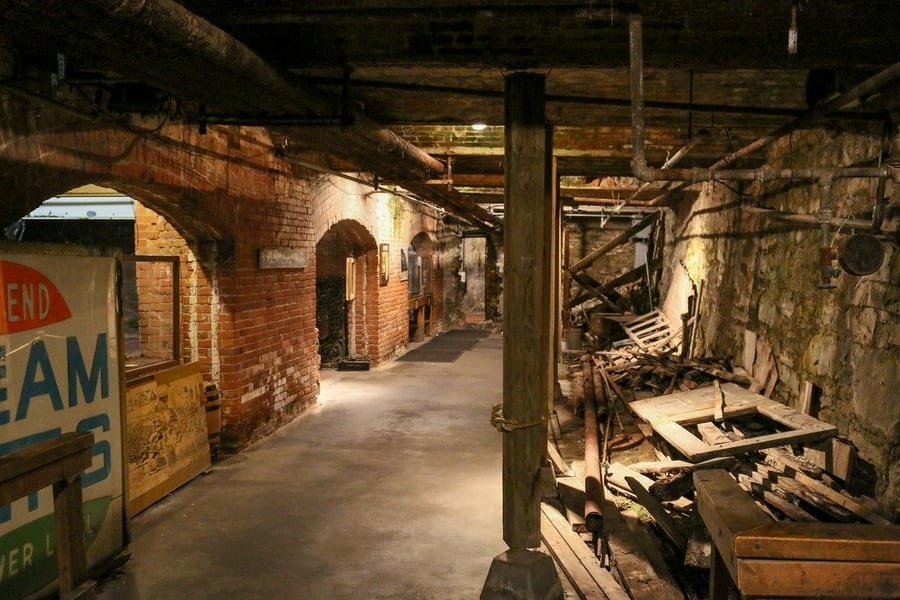
Old underground Seattle was almost forgotten for 50 years. Rats moved in, everything grew moldy, and entrances were filled with debris. But in 1965 a journalist named Bill Speidel decided to explore the underground and was amazed: beneath the modern city lay an entire ghost town! Old shop windows, wooden sidewalks, even antique toilets — everything remained in place, like an open-air museum.
Today anyone can descend into underground Seattle on a tour. There you can see what shops looked like 130 years ago, touch old walls, and imagine people climbing stairs to buy bread or shoes. Guides tell funny stories from that time: for example, how a lady in a long dress caught her skirt on a stair nail and tore the whole dress right on the street!
What the city built twice teaches us
The story of underground Seattle shows that sometimes grown-ups make decisions that seem right but create new problems. City engineers wanted to save the town from floods — and they succeeded. But they didn’t consider how hard life would be for people during the reconstruction. For almost 20 years residents climbed stairs, risked falling into pits, and shops lost customers because they were hard to reach.
But the story also shows how inventive people can be. Rather than close their shops and wait for construction to finish, owners figured out how to operate on two levels at once. They turned the problem into an adventure — and their city survived.
Today underground Seattle reminds us: mistakes and hardships don’t disappear if you bury or forget them. They remain beneath the surface, waiting for someone to find them and tell their story. And sometimes the strangest decisions of adults become the most interesting lessons for children: about the importance of thinking not only about the big goal, but also about the people who must live with the consequences of our decisions every day.