Imagine you're sitting at a school desk and your teacher says, "Today we will write letters to children in Japan." It's 1957, just twelve years after World War II, when America and Japan had been enemies. Many adults are still angry and afraid of one another. But one teacher named Helen Suzuki decided that children could do what adults could not — build a bridge of friendship across an ocean.
This is how one of the most unusual stories began: ordinary schoolchildren in Seattle helped their city gain a friend on the other side of the world — the Japanese city of Kobe. This story is almost forgotten, but it shows that sometimes the most important deeds are done not by presidents and diplomats, but by children with pencils and paper.
A teacher with two hearts
Helen Suzuki was an unusual teacher. She was born in America, but her parents came from Japan. During the war her family, like thousands of other Japanese Americans, was forced to live in an internment camp simply because they looked Japanese. It was unjust and painful. But instead of becoming bitter, Helen decided: she would teach children that people matter more than politics, and that friendship is stronger than fear.
In 1957 she was teaching at a regular Seattle school and saw how her students were hearing frightening stories about Japan from adults. The children were afraid of Japanese people, even though they had never seen them. So Helen devised a plan: "What if my students met Japanese children themselves? What if they learned that across the ocean there are boys and girls who love to play, dream, and laugh just like them?"
She reached out to schools in the city of Kobe — a large port city, very similar to Seattle. Both cities sit by the water; both have mountains and fishermen. Helen wrote to Japanese teachers: "Let's make our children friends." And the Japanese teachers, who were also tired of war and anger, agreed.
Thousands of letters across the Pacific
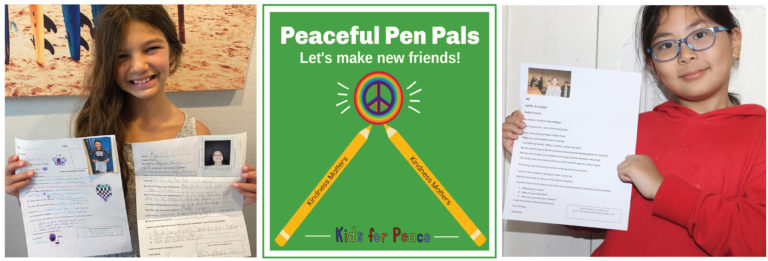
What followed felt like a miracle. Seattle children began writing letters. At first it was a few classes, then dozens, then hundreds of children. They wrote about their homes, what they liked to eat for breakfast, their dogs and cats, and their favorite games. They drew pictures: their streets, the mountains around Seattle, boats in the bay.
Ten-year-old Mary wrote: "I have a goldfish named Sparky. Do you have a fish? I love reading adventure books. What books do you like?" Her classmate John drew Mount Rainier and wrote: "This is our mountain. It's very tall, and in winter it has snow. What mountains do you have?"
The letters were packed into large sacks and sent by ship across the Pacific. The journey took weeks. The children waited for replies as eagerly as they waited for birthday presents. And when the answers arrived, something remarkable happened: the Japanese children wrote about almost the same things! They also loved fish and books and games. They also drew their mountains and the sea. They were not frightening enemies — they were simply children.
One Japanese girl wrote to Mary: "Thank you for your letter! I don't have a fish, but I have a parrot. It can say 'good morning' in Japanese. I also love to read. Let's be friends forever?" And they really corresponded for many years.
How children's friendship became official
Adults in Seattle noticed what was happening. Mayors, businesspeople, and teachers saw children receiving letters from Japan and felt joy. They saw that fear fades when there is real acquaintance. And they thought: "If children can be friends, why can't whole cities?"
In 1957, largely thanks to the teacher Helen and the children who followed her lead, Seattle and Kobe officially became sister cities — the first such pairing after the war between America and Japan. That meant they would exchange not only letters, but teachers, artists, athletes, and ideas.
But the most important change had already happened in those classrooms where children wrote letters. They learned the essential truth: the person on the other side of the ocean, speaking another language and with a different skin color, is simply a human being. Just like you. With the same dreams and fears, joys and sorrows.
Bridges built by children
Today Seattle and Kobe have been friends for more than 65 years. Seattle has a park named for Kobe. Students travel to study from city to city. When a terrible earthquake struck Kobe in 1995, Seattle residents raised money and sent aid to their friends. And when Seattle faces troubles, people in Kobe help in return.
But few remember that it all began with an ordinary teacher who believed in children and with thousands of letters written by children's hands. Helen Suzuki showed that you don't have to be a president or a famous person to change the world. Sometimes it's enough to be a teacher with a good idea. And children only need to be honest and open — they know how to make friends better than many adults.
This story teaches an important lesson: friendship between peoples begins not in government buildings, but in ordinary school classrooms. It starts when one child writes to another: "Hi! Let's be friends?" And when the second child replies: "Let's!" a bridge is built stronger than any bridge of stone and steel. A bridge of trust, curiosity, and kindness.
Maybe someday you will also write a letter to a child in a distant country. And who knows — your letter might also become the start of a great friendship.