
Imagine a place where, instead of swings, there are rusty towers as tall as a ten-story building, instead of a sandbox — huge pipes, and instead of green lawns — concrete platforms. Sounds like a park from a nightmare? Yet Seattle residents consider Gasworks Park one of the city's most beloved spots. And the most surprising part — this park was created because children had the courage to tell adults: "Don't remove the scary metal! Leave it for us!"
This story began in the 1970s, when Seattle city officials faced a big problem. On the shore of Lake Union stood an old gas plant — a place where gas for lighting homes had been produced from coal for decades. The plant closed, leaving behind rusty towers, miles of pipes, and soil soaked with toxic chemicals. Usually places like this would simply be demolished, the land cleaned up, and something new built. But architect Richard Haag decided to do something completely different — he asked children from the neighboring districts what they wanted to see there.
When children became the chief architects
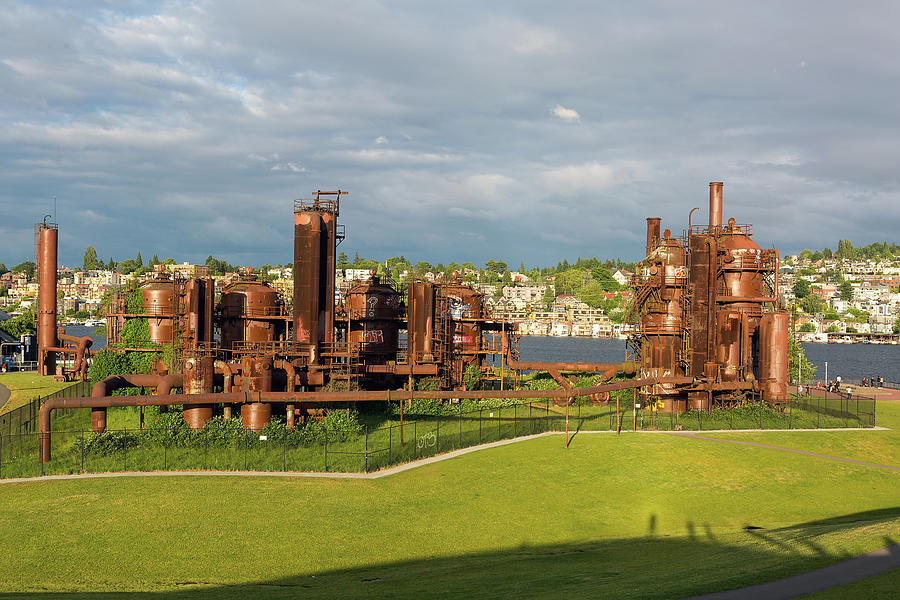
Richard Haag organized several meetings with local schoolchildren. He showed them photos of the plant — enormous rusty structures that looked like the skeletons of giant mechanical monsters, pipes that once belched smoke, concrete platforms stained with oil. Adults looked at those photos and saw danger, filth, a place that needed to be removed immediately. But the children saw something entirely different.
"It's like a dragon's castle!" said one boy, looking at the tallest tower. "Can we climb those pipes?" asked a girl. "Don't take it away! It's so interesting!" shouted several kids at once. Haag was amazed. He expected the children to ask for ordinary swings and slides, but they wanted to keep precisely what all the adults wanted to get rid of.
The architect made a bold decision — he listened to the children. Instead of tearing down all the industrial structures, he left the most impressive of them: a huge generator tower, a system of pipes, concrete platforms. Of course, all of this had to be thoroughly cleaned of toxic substances and made safe. But the main idea remained — to transform the industrial plant into a park without hiding its past, and instead showing it in all its glory.
What happened when the park opened
When Gasworks Park opened in 1975, many adults were shocked. "How can you let children play among rusty metal?" some protested. "It's dangerous and ugly!" others said. But children and their parents thought differently. The park instantly became popular.
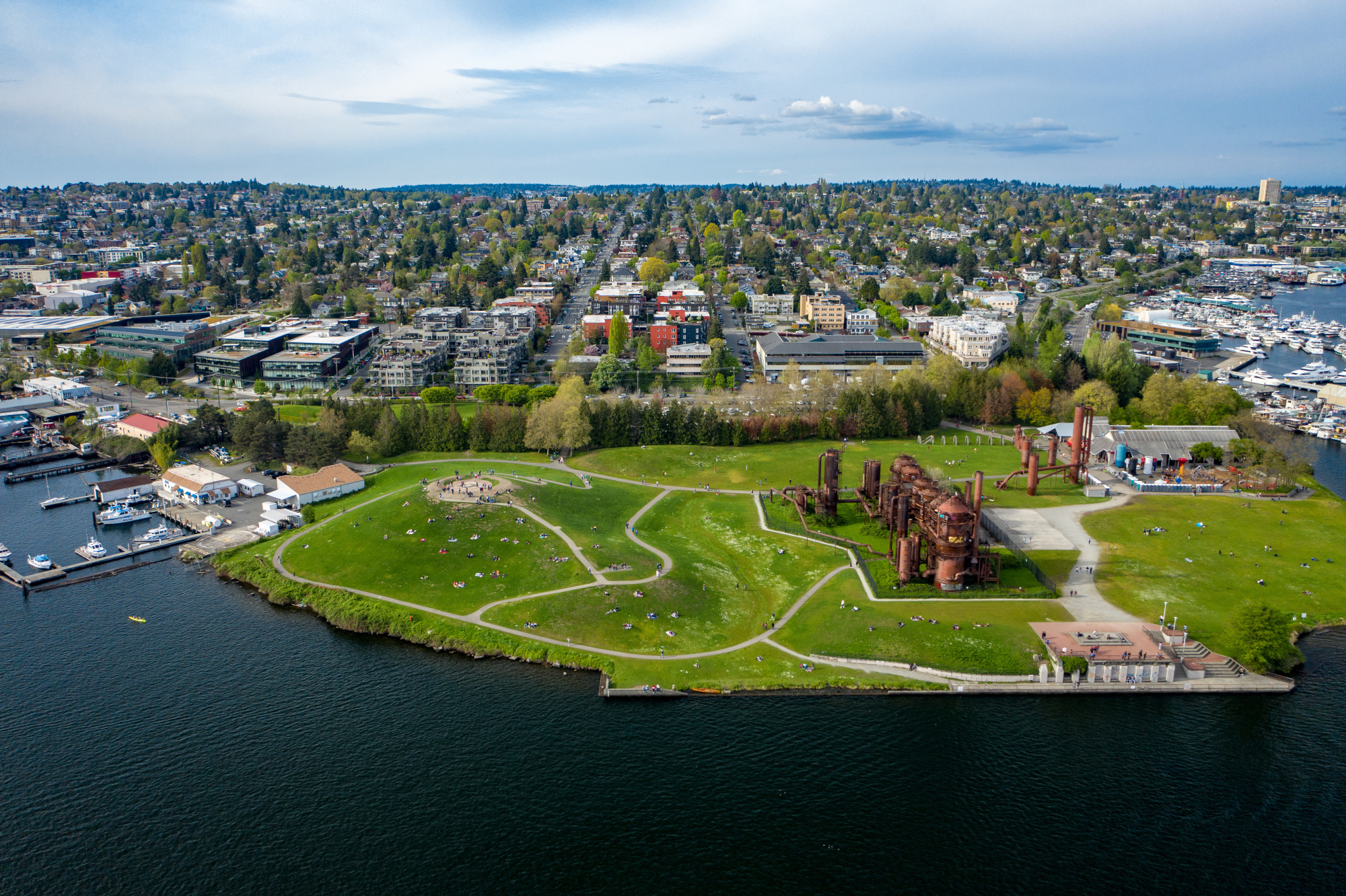
It turned out the rusty towers were not just decoration. Children climbed the safe parts of the structures, played hide-and-seek among the pipes, held contests to see who could reach the top of a specially equipped viewing platform first. Artists came to paint unusual industrial landscapes. Photographers took pictures against the contrast of rusted metal and the green grass planted around it. And on weekends families picnicked on the hill that offered a view of the lake and the whole city, with the plant's huge towers looming above like sentinels of time.
But the most interesting change came later. The neighborhood around the park, once considered undesirable (who would want to live next to an old plant?), suddenly became one of the most sought-after areas in Seattle. People wanted to live near this unusual park. Houses that had been inexpensive began to rise in value. New cafes, shops, and art galleries opened. The neighborhood came alive.
How one park changed the world
The story of Gasworks Park spread around the world. Other cities began to wonder: what if we also don't tear down old factories and plants? What if we transform them into something new while preserving the memory of the past?
In Germany an old coal mine was turned into a park with pools and gardens, keeping the mine towers. In England abandoned docks became museums and concert halls. In New York an old elevated railway that had long stopped carrying trains was turned into the High Line — one of the city's main attractions. All of these projects were inspired by Gasworks Park — the park created by Seattle's children.
Economists calculated that Gasworks Park brought the city far more revenue than if an ordinary park or residential buildings had been built there. Tourists come specifically to see this unusual place. Photos of the park appear in magazines and textbooks worldwide. Architecture students study it as an example of how to respectfully treat a site's history, even when that history is tied to industry and pollution.
A lesson from the children who weren't afraid of rust
Today, nearly 50 years later, Gasworks Park remains one of Seattle's most cherished places. The children who helped Richard Haag choose what to keep in the park are now grandparents. They bring their grandchildren to the park and say, "You know, when I was your age, the adults asked me what this park should be like. And we said — leave those towers! And they listened!"
This story teaches an important lesson: sometimes children see beauty and opportunity where adults see only problems. Adults looked at the old plant and thought: "It's dangerous, it's ugly, it must be removed." Children looked and thought: "It's interesting, it's unusual, it could become an adventure!"
Gasworks Park showed that you can honor a place's past without hiding it, even if that past wasn't always beautiful. The rusty towers remind us of the times when people worked at the plant, of how the city grew and changed. And instead of erasing that memory, the park preserved it — and made it part of something new and wonderful.
So the next time adults tell you something is "too old" or "too odd" to be useful, remember the children of Seattle who saved the rusty towers. Sometimes the most unusual ideas turn out to be the best. And sometimes, to see the future, you just need to look at the world through a child's eyes.


:max_bytes(150000):strip_icc()/stormy-sky--space-needle--seattle--washington--america-610712690-d8a9073cc92a43a4955dfbe7a822f6ce.jpg)