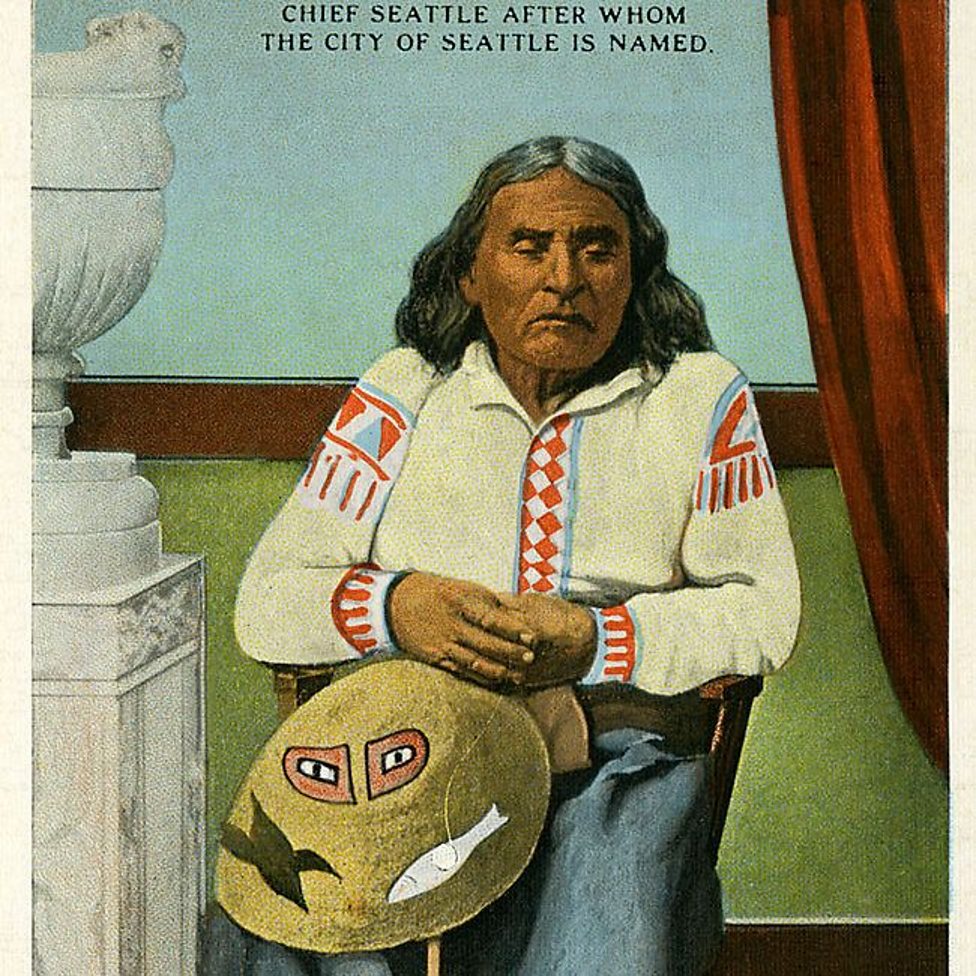
Imagine your name became so famous that an entire city wanted to be named after you. Sounds like an honor, right? But for Chief Si'ahl (whom white settlers called Seattle) it was a real problem. And he solved it so cleverly that he turned a cultural catastrophe into one of the earliest economic agreements between Indigenous people and new settlers. This story shows that the name of the city Seattle is not just a tribute, but the result of a genuine business deal that lasted for years.
A name that could not be spoken
In the culture of the Duwamish people, to which Chief Si'ahl belonged, there was a strict rule: after a person died, their name could not be spoken aloud. People believed that every time someone said the name of the deceased, their spirit could not find rest and was forced to return to the world of the living. This caused suffering for the spirit. So within the tribe the dead were referred to descriptively: "the one who lived by the great river" or "the mother of three sons."
When in 1853 white settlers decided to name their new town after Chief Si'ahl, they thought they were paying him a compliment. But for the chief himself it was terrible! Imagine: thousands of people would speak your name every day, and when you die your spirit would never find peace. It's like someone using your favorite song to advertise something objectionable, and you couldn't stop it. Chief Si'ahl faced a difficult choice: offend the new neighbors by refusing, or violate his people's sacred traditions.
A business solution to a spiritual problem
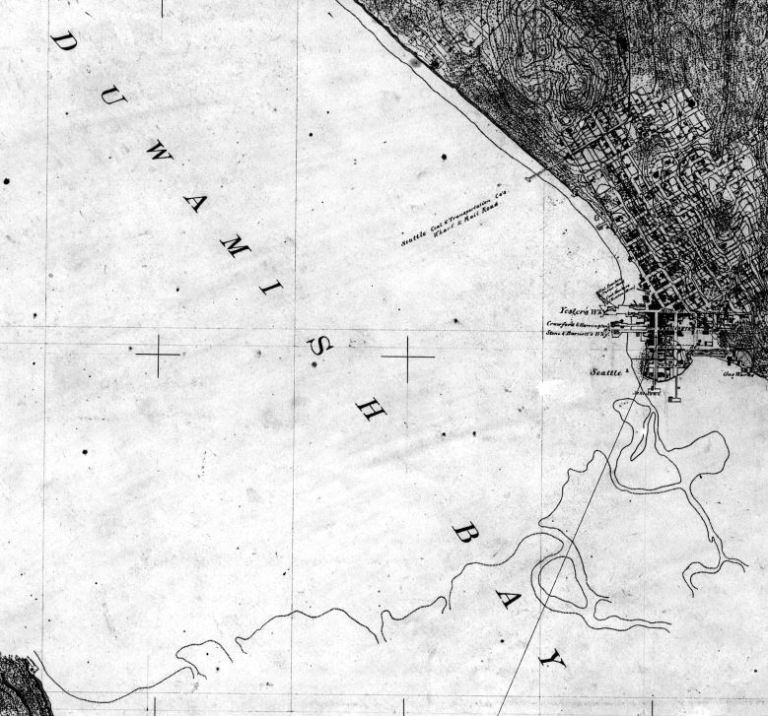
Chief Si'ahl was not only a spiritual leader but also a shrewd diplomat who understood the new economic reality. He could not stop the settlers from using his name — they were already printing maps and signs. But he could turn the situation into an economic agreement. According to Duwamish oral history and some historical accounts, the chief agreed to the use of his name on one condition: the town must pay him for it.
The exact amount is disputed by historians, but many sources point to regular payments. Some researchers mention $20–$50 a year — which may sound trivial now, but in the 1850s that money could buy a cow, several sacks of flour, and cloth for a family's clothing. For comparison: the average laborer earned about a dollar a day, so the annual "name rent" equaled a month's wages.
It was a brilliant solution. The chief could not stop the use of his name, but he could obtain compensation that helped his people survive in a rapidly changing world. The money was used to buy necessities for the tribe: blankets, tools, food. In effect, Chief Si'ahl created Seattle's first intellectual-property-style arrangement — he sold the rights to use his name the way modern musicians sell rights to their songs.
A city built on broken promises
The story of payments for Chief Si'ahl's name reveals a broader picture of economic relations between Indigenous peoples and settlers. The town grew wealthy, built ports and railways, while the Duwamish tribe became increasingly impoverished. The lands they had lived on for thousands of years were taken for new neighborhoods. Fishing sites where they caught salmon were turned into industrial docks.
Payments to the chief continued for some time, but exactly how long is unclear. Some accounts say they stopped after the chief's death in 1866. Other sources claim payments were irregular and often forgotten. This became symbolic of a wider problem: settlers took what they wanted — land, resources, even names — and rarely fulfilled promises to give something back.
Today the Duwamish tribe is still not officially recognized by the U.S. federal government, even though the city bears their chief's name. That means they do not receive the rights and support that other tribes have. Imagine: your name on the sign of a huge, successful store, but you are not allowed inside and are told you don't even exist. That's how the descendants of Chief Si'ahl feel.
The legacy of a deal that changed the rules
The story of the chief's "name rent" matters because it shows that Indigenous peoples were not passive observers of their history. They actively engaged in economic negotiations, tried to protect their interests, and found creative solutions in impossible situations. Chief Si'ahl did not simply resign himself to the inevitable — he turned a cultural violation into an economic opportunity for his people.
The deal also set a strange precedent for modern Seattle. The city built its identity on the name of a man with whom it had a financial arrangement, then stopped honoring it. Every time someone says "Seattle," they speak a name for which rent was once paid. That reminds us that economic relations between the city and Indigenous peoples did not begin with casinos or modern land claims — they began with the city's very name.
Today, when you see the word "Seattle" on T-shirts, coffee cups, or a map, remember: it's not just a name. It's the name of a real person who tried to protect his culture and his people in the only way available to him — by turning a spiritual problem into a business agreement. Chief Si'ahl taught early Seattle an important lesson: everything has a price, and justice requires that the price be paid. It's a pity the city doesn't always remember that lesson.