Imagine a huge house of glass and steel, like a giant sparkling diamond in the middle of the city. You would expect such a building to consume enormous amounts of energy — cold in winter, hot in summer, and light pouring through the glass walls day and night. But the Seattle Central Library, opened in 2004, turned out to be the complete opposite: this glass building uses 30% less energy than building codes require. That's like constructing a home that saves as much electricity as 50 ordinary apartments in a year. How did the architects and engineers manage to create such a marvel?
A glass skin that can think
When Dutch architect Rem Koolhaas and his team began designing the new library, they faced an incredibly complex challenge. Librarians dreamed of a building full of light where readers could see the city and the sky. But Seattle is a city of rain and changeable weather. In summer the sun can heat a glass building like a greenhouse, in winter heat escapes through the glass, and on overcast days (which are more than half the year in Seattle) the interior would be dark.
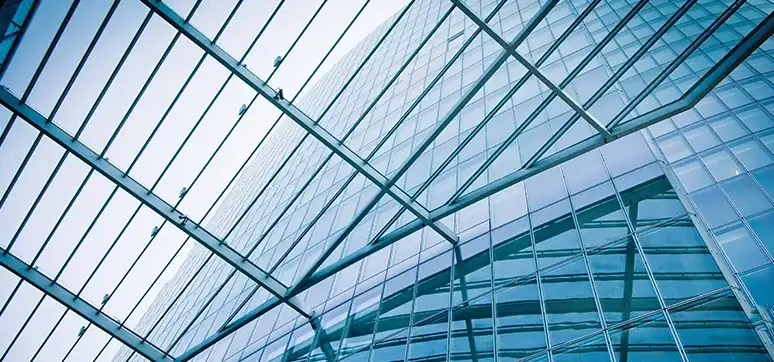
Engineers devised a solution they called the "breathing skin." Imagine the building has skin like a person’s, only made of special glass and a steel mesh. This skin consists of several layers, with an air cavity between them. When it’s hot outside, the air between the glass layers heats up and rises, carrying away excess heat through special openings at the top of the building. When it’s cold, this air layer acts like a warm jacket, preventing heat from escaping the library.
But the most remarkable thing is the special metal slats on the glass, like tiny blinds. They are arranged to allow soft, diffused light (perfect for reading) while reflecting direct sunlight that would heat the interior. Engineers had to calculate the tilt angle of each slat, taking into account how the sun moves across the Seattle sky at different times of the year. It was a giant mathematical puzzle!
The spiral that changed everything
Inside the library is another ingenious invention — the "book spiral." In ordinary libraries books are shelved across different floors: some topics on the first floor, others on the second, others on the third. When the library acquires new books they must be squeezed in between older ones, and sometimes thousands of books must be moved from floor to floor. That requires huge amounts of labor, special lifts and carts, and electricity.
Koolhaas and his team came up with something revolutionary: they created a continuous spiral shelf nearly two kilometers long that gently rises from one level to another, like a skateboard ramp. All the library’s nonfiction books sit on this spiral in a single sequence — from 000 to 999 according to the library classification system. When new books arrive, they are simply added to the correct spot by slightly shifting neighboring volumes. No relocations, no elevators, no extra work.
"We estimated that this system saves about 400 staff hours each year," said chief librarian Deborah Jacobs. "But more importantly — readers can just walk up the spiral and see how one subject smoothly transitions into another. It turns finding books into a journey."
Engineers versus the architect: friendship through arguments
Creating the library was like assembling an incredibly complex construction set where every part had to work perfectly. Structural engineers constantly argued with the architect. Koolhaas wanted the building to look like tilted glass boxes leaning into each other — bold and unusual. Engineers said, "This is impossible to build! Glass of that size will crack under its own weight!"
Then the engineering team from Magnusson Klemencic Associates invented a special steel mesh — a diagonal lattice that holds the glass panels like a spiderweb holds dewdrops. This lattice became part of the design: from the outside it looks like a beautiful pattern on the glass, but in reality it is a highly sophisticated load-bearing structure. Each node of the mesh was calculated by computer individually because the loads varied across different parts of the building.
"We had more than 50 meetings where architects and engineers literally screamed at each other," recalled one of the project engineers. "But every argument made the building better. The architects pushed us to find new solutions, and we forced them to think about how their beautiful ideas would work in reality."
Another problem was the ventilation system. In a conventional building air is pushed by powerful air conditioners that consume a lot of electricity. Engineers designed a system that uses natural air movement. Warm air rises through the central part of the building and exits through special roof openings. Fresh cool air is drawn in from below. The building literally breathes on its own, like a living organism, and air conditioners turn on only on the hottest days.
How the library taught the world to build differently
When the Seattle Central Library opened, architects and engineers from around the world came to see this marvel. Many doubted that a glass building of that size could be energy-efficient. But the numbers spoke for themselves: the library received a LEED Gold certification — like an A+ for environmental performance in construction.
The ideas used in the Seattle library later appeared in dozens of other buildings worldwide. "Breathing" glass facades are now used in Europe, Asia, and Australia. The continuous spiral concept inspired library designers in other cities to look for ways to make book collections more accessible and convenient.
But perhaps most importantly — this library proved that environmental stewardship and beauty can go hand in hand. You don't have to choose between "a beautiful building" and "an eco-friendly building." You can create something that is both, if architects, engineers, and all project participants are willing to work together, argue, search for solutions, and not give up.
Today the library is visited by nearly 2 million people a year. They come to read, study, and meet friends. And every time someone ascends the book spiral or looks through the "breathing" glass walls at the city, they stand inside proof that human ingenuity can solve even the most complex problems. A glass building that learned to breathe, save energy, and care for the planet is not science fiction. It is a reality created by people who refused to accept the word "impossible."