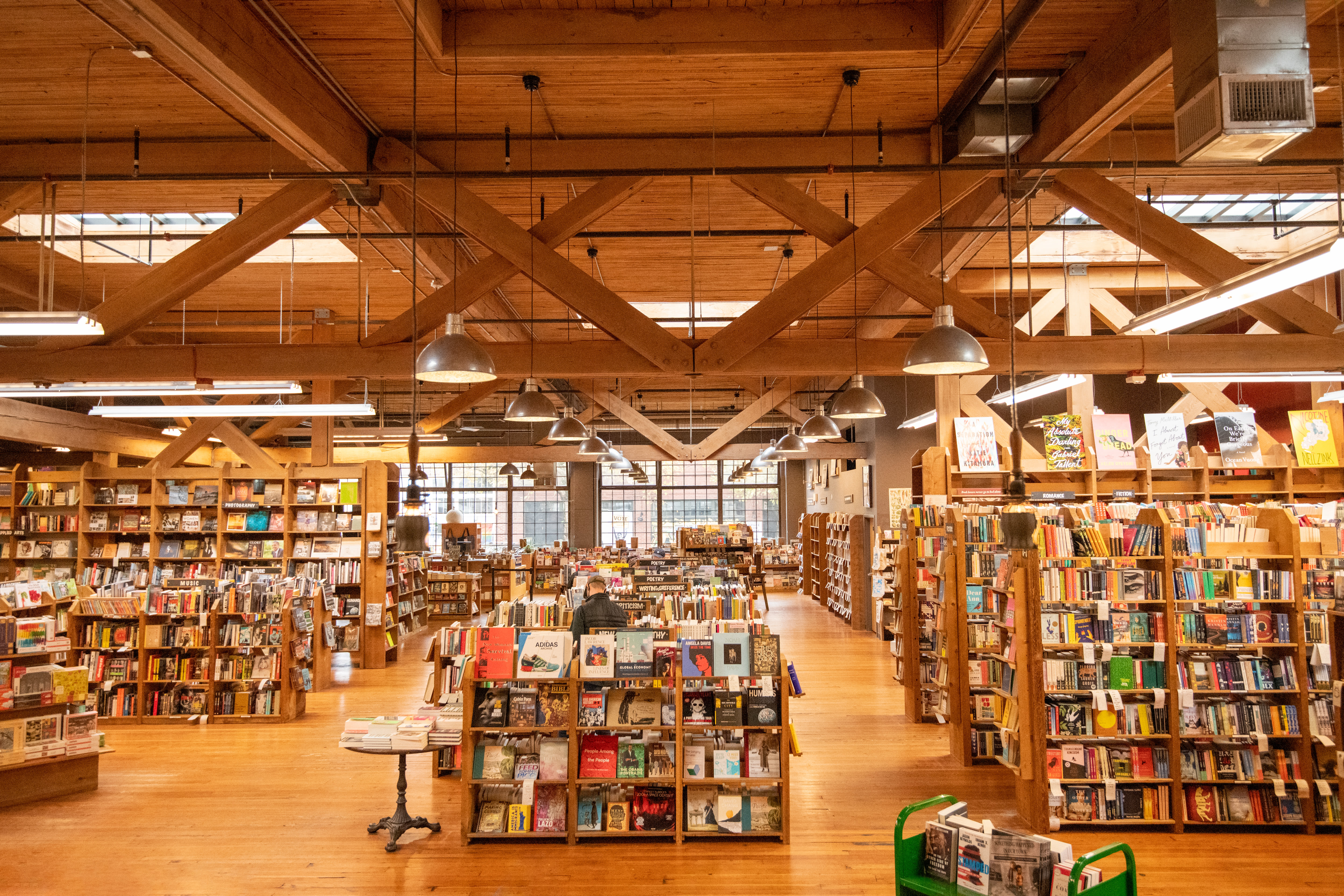
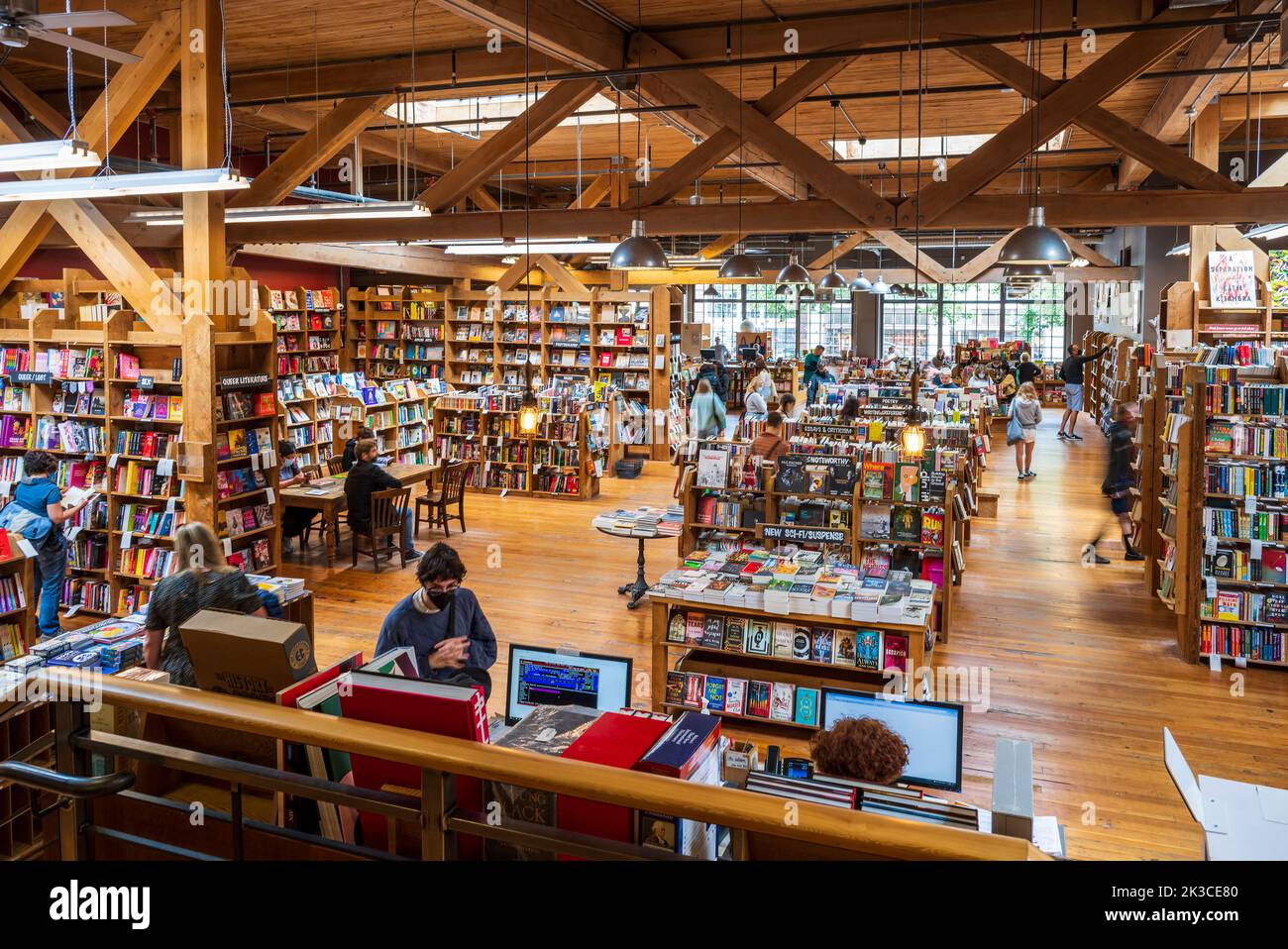
Picture this: you’re walking down a city street, and suddenly—there’s the smell of paper and printing ink. A glass display window full of book covers. Inside—tall shelves reaching up to the ceiling, soft armchairs tucked into the corners, and people who read, whispering to one another about their favorite stories, or simply sit and think. Places like this, in the American city of Seattle, once did something surprising: they saved whole streets from boredom and emptiness—and changed what the entire neighborhood became.
When Big Stores Were Failing, Small Ones Survived
In 2008, a major economic crisis hit the United States. People began spending less money, and many stores closed. Book retail was hit especially hard—large chains, massive stores that looked like warehouses, where books sat in rows like items on supermarket shelves. The famous chain Borders, which had hundreds of stores across the country, completely disappeared by 2011. It seemed like the era of bookstores was ending.
But in Seattle, something strange and wonderful happened. Small, independent bookstores—those that don’t have hundreds of branches, but instead have one room, one owner, and their own special soul—didn’t just survive; they began opening new locations. By the mid-2010s, Seattle became one of the American cities with the highest number of independent bookstores per capita. That means: if you take one hundred people from Seattle, there will be more bookstores among them than in most other cities around the world.
Why did this happen? The answer isn’t hidden in the books, but in city rules.
Secret Gardens for Small Stores
Every city has special laws about who can open a shop and where. This is called “urban planning”—almost like the rules of a game that shapes how streets are built and how life unfolds on them. In Seattle, the urban planners—people who decide what the city should be like—made a quiet, but very important decision.
In some neighborhoods, they created so-called “neighborhood commercial zones.” These are special streets where it’s very difficult for big retail chains—for example, huge supermarkets or big-box stores—to open up. Meanwhile, small, local businesses have room to thrive. Imagine that in a normal forest, every tree is competing for sunlight, and the bigger ones always win over the smaller ones. In these zones, it’s as if the planners planted the small plants in a separate protected garden, where no one interferes with their growth.
And that’s exactly in these “gardens” that Seattle’s bookstores flourished. They weren’t afraid of competition from giants—and could calmly come up with their own something, special and alive.
One Move That Changed an Entire Neighborhood
The most exciting part of this story is about one specific store and one bold decision.
Elliott Bay Book Company is one of Seattle’s best-known and most beloved bookstores. It opened back in 1973 in the old Pioneer Square neighborhood. There were wooden floors, creaky stair steps, and a basement café where you could sit for hours. Many city residents grew up among these shelves. It seemed like the store would stay there forever.
But in 2010, the owners announced that the store was moving. To another neighborhood—Capitol Hill. Many people panicked. “It’s the end!” people said. “A store like this won’t survive in a new place!”
They were wrong. Something else happened.
When Elliott Bay opened on a new street, magic began to unfold around it. First, a small used bookstore opened nearby—that is, a place that sells old, secondhand books. Then a literary café opened, where people read poems aloud in the evenings. Then another bookstore appeared, specializing in comics and graphic novels. The street seemed to wake up. People started coming not just for one book, but to stroll, to hop from store to store, to grab coffee, and to talk.
Residents of the area came up with an unofficial name for these streets: “the Book Block.” Walking routes appeared from one store to the next. Librarians, teachers, writers—everyone was drawn here. Capitol Hill turned into one of the most literature-filled neighborhoods in all of America.
One of the owners of a nearby store once said in an interview: “When Elliott Bay opened next door, we all felt like we were allowed to exist. As if someone big and respected said that books matter here.”
How Books Change Streets—and People
It might seem like a bookstore is simply a place where books are sold. But in reality, good bookstores do more than that: they create reasons to meet.
In Seattle bookstores, every week there are events with authors, book clubs, poetry nights, and workshops for kids. Children show up for loud, read-aloud sessions. Teenagers gather for discussions about their favorite series. Older people find a book club where, for the first time, there’s someone to talk to about what they’ve read. All of it is real, living neighborhood life—something that began with one move by one store.
City researchers noticed something astonishing: in blocks that have independent bookstores, people more often know their neighbors, more often step out onto the street, and more often take part in neighborhood life. A bookstore is like a small bonfire, around which people gather.
And all of this became possible because a few urban planners once quietly made a decision: in some places in our city, we want to see not retail chains, but living, special, human places.
Small Rules—Big Worlds
The story of Seattle’s bookstores teaches us something important: cities aren’t just houses and roads. They’re decisions. Every time adults decide what to build on empty land, what kind of store to allow on a street, and what rules to write for a neighborhood, they’re choosing what that city will be like for the people who live in it.
Seattle chose books. And the streets answered with life.
The next time you step into a small bookstore—with wooden shelves, odd bookmarks at the register, and the smell of old paper—know this: behind that cozy feeling is someone’s bold idea about what the city should be like. The idea that some things matter more than profit. That a place where people read together should be protected—just as carefully as a rare flower in a garden.