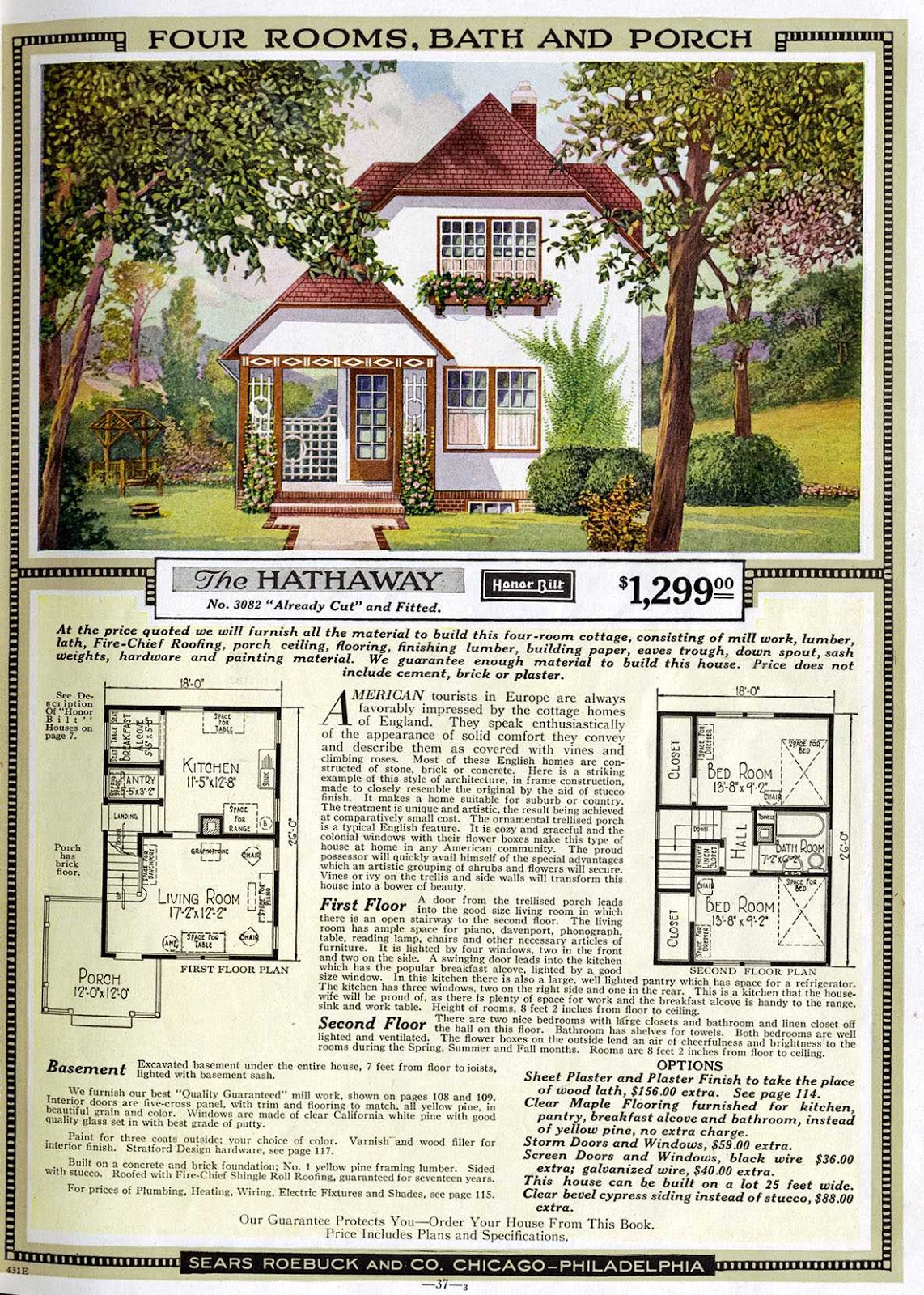
Picture this: you open a thick catalog—almost like a toy catalog—and choose yourself a home. Not a picture of a house, not a fantasy about having a home, but a real house. You tick the box next to the one you like, mail in your money, and within a few weeks a freight train pulls up to your street. From the cars, massive crates are unloaded. Inside are all the parts of your future house: boards already cut to exact size, windows, doors, nails, an instruction manual. All that’s left is to assemble. Roughly like this, in the early twentieth century, many Seattle families received their homes. And those same houses still stand today in the city’s coziest neighborhoods.
Where did these front-porch homes come from?
If you take a walk through Seattle neighborhoods like Wallingford, Fremont, or Ballard, you’ll notice that the houses there are special. Low-slung and cozy, with wide porches and wooden details. The roof overhangs low—like a hat pulled down over your forehead. Inside, there’s warm wood, big windows, and lots of light. These homes are called “craftsman bungalows”—craftsman bungalow. The word “bungalow” comes from Hindi: in India, it was used for simple but comfortable houses with verandas. English travelers brought the word home, and then it made its way to America.
But why this style in particular? In the late nineteenth century, factories and mills changed the world. Everything started being made quickly, with machines, in standardized ways. People worked twelve-hour days at machines and then went back to cramped, cold apartments. Then a group of artists and architects decided: enough. They came up with the Arts and Crafts movement. The main idea was simple: a home should be made with care, from real materials—wood, stone—and the person living in it should feel like a person, not a cog in a machine. The craftsman bungalow became the embodiment of that idea: modest on the outside, warm on the inside, built in a way that makes you want to live there.
A house from a box: an engineering marvel for ordinary families
Here’s the catch: these homes cost money. Hiring an architect, then builders, then carpenters—this wasn’t affordable for every family. And then a brilliant idea appeared that changed everything.
Companies began selling homes through catalogs. The best-known was Sears Roebuck, which published thick books with hundreds of home options. But in Seattle there was a local company of its own: Pacific Ready-Cut Homes. It worked right in the city and offered homes designed specifically for Seattle’s climate—with rain, wind, and mild winters.
How did it work? The company’s engineers figured out each part of the house in advance. All the boards were cut at the factory to exact size—no centimeter more, no centimeter less. Then everything was packed into crates and shipped by rail straight to the buyer’s home. Along with the parts came a detailed instruction manual—almost like a modern LEGO set, just with more pages and heavier pieces. The average family could assemble such a house in about three months. Neighbors, relatives, and friends often helped too—and that, in itself, brought people together even before the house was finished.
This was a real engineering marvel of its time. Standardization—meaning identical, interchangeable parts—made decent housing accessible to teachers, mail carriers, workers, and nurses. People who could never afford to hire an architect got beautiful, warm, sturdy homes instead. Some of these houses are still standing more than a hundred years later—and they’re still solid.
The porch that brought neighbors together
But what’s most interesting about the craftsman bungalow isn’t the walls or the roof. It’s the porch.
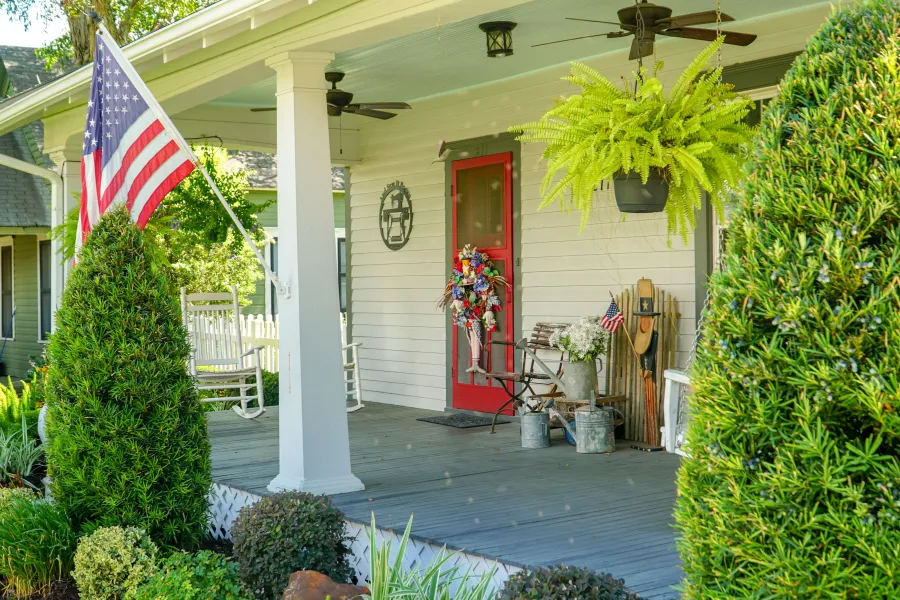
Architects who designed these homes thought not only about making the inside warm and comfortable. They also thought about how people would live next to one another. And they did something clever: they moved the porch right out to the street. A wide, open porch with railings and comfortable chairs—so that you want to sit there in the evenings. And not just sit there, but see the street and be seen.
It was a real social experiment built directly into the architecture. When you step out onto such a porch, you automatically face your neighbors. A passerby can say hello. Kids from the next street can stop to chat. Strangers become familiar, and familiar faces become friends. In neighborhoods with craftsman bungalows, people know their neighbors by name, know their dogs, and know their children. That isn’t an accident—it’s the result of intelligent design.
Compare that with modern houses where the garage faces the street and residents drive in without seeing anyone. In those places, neighbors may not know each other for years. The craftsman bungalow porch made the impossible happen: it literally forced people to become friends—simply because that’s how the house was designed.
What remains from those houses today
Today, neighborhoods of craftsman bungalows are among Seattle’s most beloved. People actively look for housing there—in Wallingford, Fremont, and Madrona. These neighborhoods are seen as lively, real, and human. There are small cafés, bookstores, and even vegetable gardens in backyards. Neighbors host parties on the street and help each other with kids.
Many of these houses are still standing in nearly original form. They’re carefully restored: painted with the same colors as a hundred years ago, and with wooden details preserved. Some families have lived in the same house for a third or even fourth generation. And the porches are still very much in use: on summer evenings, people sit there with cups of tea and talk to passersby—just as their great-grandmothers and great-grandfathers did.
A house as an idea
The story of the craftsman bungalow teaches something important: sometimes the biggest changes in a whole city don’t happen because of laws or politicians, but because someone once decided to build a porch. Engineers figured out how to make a good home affordable for everyone. Architects figured out how to ensure people didn’t forget their neighbors. And together, they didn’t just create homes—they created a whole way of living next to one another.
The next time you look at a cozy porch house, think: what if it once arrived by rail in crates? And what if that very porch, a hundred years ago, introduced two neighbors who later became best friends for life?