Imagine you bought a backpack for 5,000 rubles, and a year later the store sent you a letter: "Thanks for shopping with us! Here’s 500 rubles back." Sounds like magic? But in America there’s a store that has operated exactly like that for almost 90 years. And the most interesting thing — this strange system saved thousands of families when the country hit economic trouble.
This story began in 1938, when a group of friends in Seattle who loved hiking grew tired of buying expensive gear. They decided: "What if we create our own store where we are both the customers and the owners?" That’s how REI — Recreational Equipment Inc. — was born. But it wasn’t an ordinary store. It was a cooperative where each buyer became a co-owner by paying just $20 once in their life.
How a store where everyone is an owner works
In a normal store it’s simple: the owner buys goods cheaply, sells them for more, and pockets the difference. Customers just buy and leave. But REI works differently. When you buy a tent or sleeping bag there, you’re not just a customer — you’re a cooperative member, a small co-owner of that big store.
At the end of each year REI totals how much it earned and shares part of the profit among all members. This is called a "dividend." If you bought goods worth 10,000 rubles in a year, the store will return roughly 1,000 rubles to you. That money can be spent on new purchases or received as cash. Sounds unbelievable, right?
Here’s how it differs from regular stores:
| Regular store | REI (cooperative) |
|---|---|
| Owned by a single person or company | Owners — all customers (more than 23 million people) |
| Profit goes to the owner | Profit is shared among members |
| Customer pays and leaves | Customer gets money back every year |
| Store decides what to sell | Members vote at meetings on what they need |
But the most interesting part didn’t happen when things were going well — it happened when trouble began.
The year the strange system turned out to be magical
In 2008 the U.S. experienced an economic crisis. People lost jobs, banks closed, many families couldn’t even afford food. Stores declared bankruptcy one after another. Experts said: "People will stop buying expensive items like outdoor gear. REI will surely close."
But the opposite happened. REI members not only didn’t stop buying — they bought more! Why? Because they knew: every dollar spent would partly come back to them. This wasn’t just spending money, it was investing in their own store.
Journalist Sarah Miller from Portland later recounted: "My husband and I lost our jobs in 2009. We had almost no money. But we knew that in a year we'd get an REI dividend — about $200. We deliberately saved and bought all our hiking gear at REI because we understood: this wasn’t just spending, it was a way to hold onto money and get it back when we needed it." Her family couldn’t afford an expensive hotel vacation, but they could buy a tent and sleeping bags. The dividend helped offset the cost.
Thousands of families were like that. People began to think of REI as a kind of piggy bank: you spend money on necessary items, but part of the money returns to you. In 2009, when most stores were losing customers, REI’s sales fell by only 2%. It was almost a miracle.
How the cooperative changed entire towns
But REI’s economic impact was much bigger than just the survival of one store. The company owns large stores in many cities, and each such store becomes a hub of the local economy.
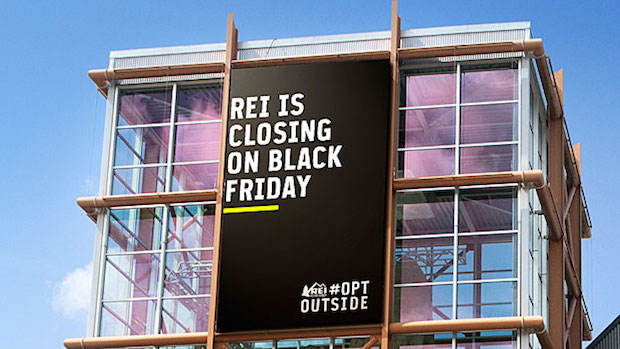
When in 2016 REI announced it would close its stores on Black Friday (the biggest shopping day of the year) and send all 12,000 employees outdoors with full pay, it wasn’t just a nice gesture. It was an economic experiment. REI wanted to prove: you can make money without forcing people to work on holidays and without participating in the frantic discount race.
Other companies laughed: "They’ll lose millions!" But REI barely lost anything. Moreover, online sales rose because people admired the decision and intentionally shopped at REI to support that approach. Economists calculated that REI "lost" about $10 million in sales that day, but earned five times more in customer loyalty in the following months.
That changed the industry. Dozens of other companies began closing on Black Friday, giving employees the day off. REI proved that the economy can work differently.
Why this matters to all of us
Today REI is more than just a store. It’s proof that business can operate not only for owner profit but also for people. Over its 85 years, REI has returned more than $2 billion to its members in dividends. That’s money that helped millions of families go on hikes, buy bikes for their children, and learn rock climbing.
But the most important thing is the idea. REI showed you can build an economy where customers don’t just hand over money and receive goods, but become part of something bigger. Where your purchases help not only you but your neighbors, because you are all co-owners.
Maybe when you grow up you’ll start a cooperative too — a bookstore where readers get dividends? Or a café where patrons are co-owners? REI’s story teaches us: economics aren’t just boring numbers and charts. They’re stories about people agreeing to help each other. And sometimes the strangest ideas — like a store that gives money back to customers — turn out to be the smartest.