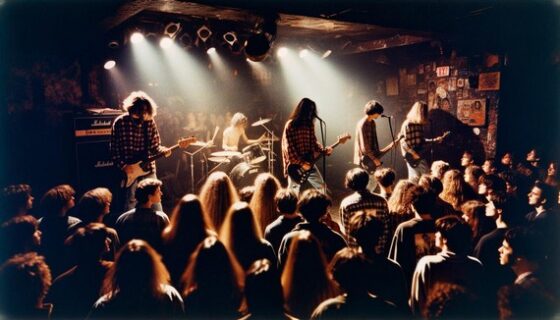
Seattle was once known around the world for grunge music—loud, honest and a little “messy,” like a favorite pair of ripped jeans. But what happened to the city when the grunge trend faded? As it turns out, the music did not disappear. It moved into small clubs and venues where people found ways to improve the sound and keep the spaces alive. Let’s take a look inside.
What Is “Grunge,” and Why Does It Matter?
The word “grunge” is often explained simply: it is a style of rock music that emerged in Seattle in the late 1980s and early 1990s. The best-known band of that era was Nirvana. People listened to its songs all over the world, and Seattle suddenly became “the city where a new sound came from.”
But imagine that you have grown a beautiful tree, and suddenly crowds of people with cameras gather around it. A few years later, the trend fades, but the tree remains. The same thing happened here: when the global attention quieted down, musicians and listeners stayed in their city. They needed places to play and listen—not huge stadiums anymore, but cozy, genuine venues.
The Club with a Crocodile on the Wall
One of the best-known places is The Crocodile. It opened in 1991 in the Belltown neighborhood. The name is unusual, and a huge crocodile is painted on the building. You can spot it from far away, like a bright road sign for music lovers.
Bands that later became famous performed on The Crocodile’s stage, including Nirvana and R.E.M. For up-and-coming musicians, a club like this is similar to a small diving board in a swimming pool: first you jump from a low board, and later you may feel ready for the high platform.
But the venue’s story took a difficult turn. In 2007, the club closed. Running a small venue in a growing city is expensive and complicated. Many people thought it was the end. However, The Crocodile reopened in 2009. This happened thanks to the people who cared about it: the owners, musicians and audience members themselves. Stories like this show that a “city” is not only made up of buildings and roads, but also of shared places that people love.
Invisible Engineering: How a Venue “Sings”
Now for the most interesting part—the things you cannot see. Every venue is a kind of “sound box.” When a guitar plays, sound travels in every direction and bounces off the walls, ceiling and floor, almost like a ball thrown against a wall.
If a room is empty and its walls are smooth, the sound-balls bounce many times, creating an echo. You have probably noticed how loudly your voice sounds in a bathroom. But if a venue has soft curtains, wooden panels and people inside, the sound is partly “absorbed,” making the music clearer and more comfortable for the ears.
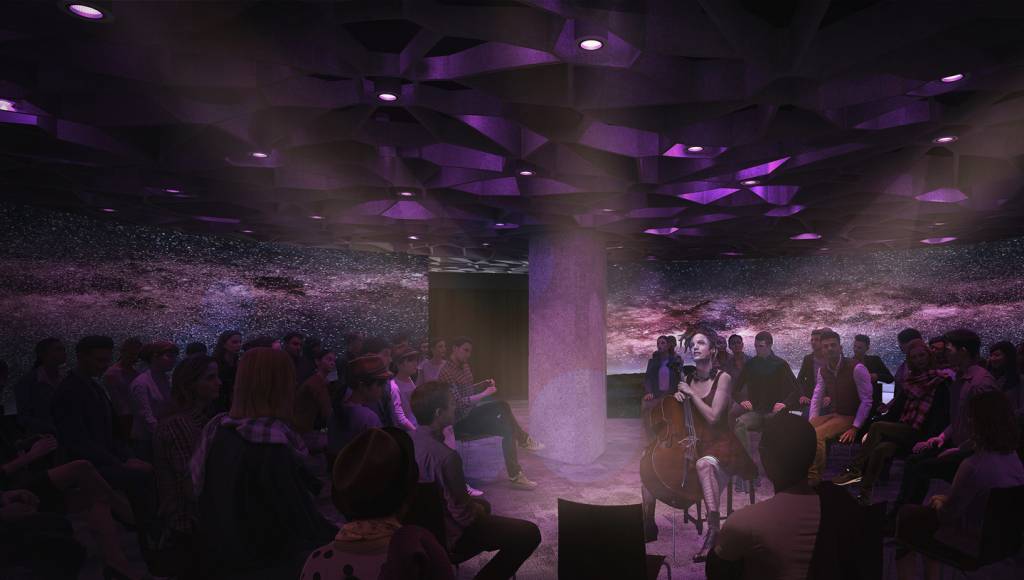
That is why sound engineers and club owners are part engineers and part artists. They choose materials for the walls, place speakers in the right locations and adjust the microphones so that both the front row and the farthest corner can hear the music clearly. This is especially important in small venues: space is limited, but the music still needs to sound beautiful. It is somewhat like the way a chef balances salt and spices: a little more or a little less can change the taste.
The People Who Keep the Music from Falling Silent
Engineering is only half the secret. The other half is people. Sound engineers set up the equipment, servers and security staff help guests, and volunteers sometimes put up posters and help prepare the venue. Then there are the audience members—the people who come to concerts even when the band performing is unknown.
I think that is where the real magic of small clubs lies: you can hear the music up close, see a musician smile and feel that you are part of something shared. A huge stadium is like a giant movie theater, while a small club is like an evening at home with friends.
What This Story Teaches Us
The story of Seattle’s clubs after grunge shows that even when a trend fades, something genuine can survive if people take care of it. It takes both smart ideas—such as figuring out how to make sound beautiful—and caring people who refuse to let beloved places disappear.
And if you ever find yourself in Seattle, look around for a huge painted crocodile. It still serves as a reminder that the most important stories often begin in small venues.