Imagine you moved to another country and none of the foods you’re used to at home exist there. No favorite spices, vegetables, even the fish is completely different. That’s exactly what Vietnamese refugees encountered when they began arriving in Seattle in the late 1970s. But instead of simply mourning what was lost, they created something entirely new — a cuisine that existed neither in Vietnam nor in America. And it all started with small envelopes full of seeds that people secretly passed to one another.
A secret seed network on balconies
When the first Vietnamese families settled in Seattle, they discovered a strange reality: American grocery stores didn’t carry cilantro, lemongrass, Thai basil, and other herbs essential to Vietnamese food. Supermarkets sold iceberg lettuce and parsley, but it was not the same.
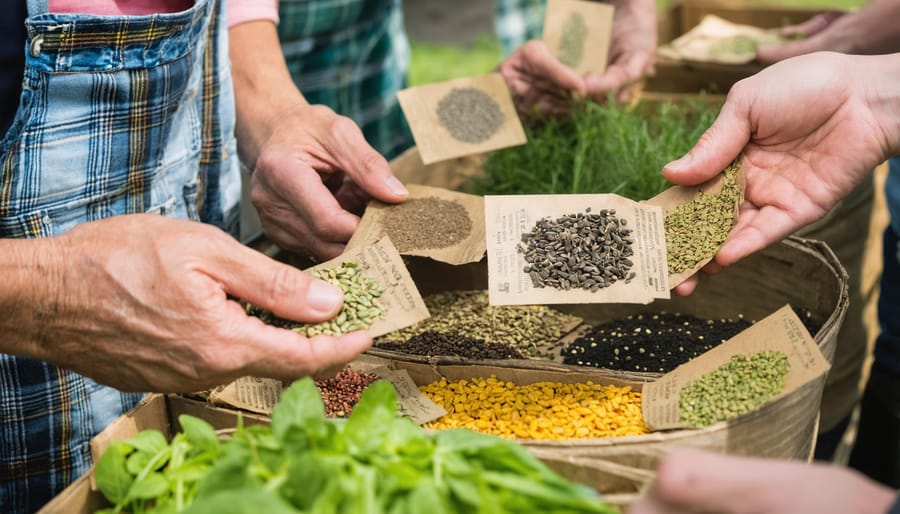
So the refugee women began doing something remarkable. The few who managed to bring seeds from Vietnam (hidden in pockets and clothing linings) started growing plants on the balconies of their small apartments. Balconies turned into tiny tropical gardens amid rainy Seattle. When the plants produced new seeds, the women packed them into paper envelopes, labeled them in Vietnamese, and passed them to other families.
Thus a true “seed network” arose — an informal exchange system where each family grew something and shared it. One family specialized in lemongrass, another in bitter melon, a third in a particular mint. People met at churches, community centers, and just on the street, exchanging small envelopes as if they were secret messages.
A teacher who compiled a substitution book
Among the refugees was a woman named Thanh, who had worked as a biology teacher in Saigon. In Seattle she couldn’t find work in her field because of the language barrier, but her plant knowledge proved invaluable in another way.
Thanh began visiting American supermarkets and Asian grocers to study which vegetables and herbs were available. She tasted and smelled them, comparing them to what she remembered from Vietnam. Then she started experimenting in her kitchen: which American vegetable could replace a Vietnamese one? Which local fish from the cold waters of the Pacific resembled the tropical fish from the South China Sea?
She compiled a whole notebook of substitutions, handwritten in Vietnamese. For example: - A certain type of tropical basil can be replaced with Italian basil plus a little mint - Local rainbow trout works as a substitute for Vietnamese river fish - American napa cabbage is very similar to the Chinese cabbage used in Vietnam - Apple vinegar with sugar can stand in for a special Vietnamese rice vinegar
Thanh began giving free lessons to other refugees in the basement of a local church. She didn’t just teach cooking — she taught adaptation, how to find solutions and create something new from what was on hand. Her notebook was recopied by hand and passed from family to family like a precious spellbook.
From dinners for friends to real restaurants
By the early 1980s many Vietnamese families in Seattle were doing something extraordinary. In the evenings they cooked more food than their household needed and invited other refugees over for dinner. At first it was free — simply a way to gather, speak their native language, and feel at home.
Then someone suggested, “Let’s each contribute a little money so the hostess can buy ingredients for next time.” That’s how “dinner clubs” appeared. They weren’t quite restaurants, more like home canteens. A family cooked in their apartment, and 10–15 people came to eat, sitting on the floor or on chairs brought from home.
One such canteen belonged to the Nguyen family. Mrs. Nguyen cooked pho (Vietnamese noodle soup) on Fridays and Saturdays. People learned about it by word of mouth — one person told another, who told a third. No advertising, no signs. Just an address everyone knew: “If you want real pho, go to the Nguyens on 12th Street.”
Interestingly, the food served at these home canteens was no longer purely Vietnamese. It was a new cuisine — “Seattle‑Vietnamese.” It used Vietnamese recipes and cooking techniques but with local ingredients and the substitutions from Thanh’s notebook. Pho was made with local beef, fattier than Vietnamese beef. Pancakes were made with shrimp from Puget Sound. Herbs were grown on balconies in the rainy climate and tasted slightly different.
How home canteens became a neighborhood
By the mid-1980s some of these home canteens had grown enough that families decided to open real restaurants. But they didn’t know how things worked in America — how to get a license, how to lease a space, how to run a business.
Another remarkable thing happened here. The Vietnamese community banded together to help. Those who had learned some English assisted with paperwork. Those who had savings lent money without interest. Those with construction skills helped renovate spaces. It was true teamwork.
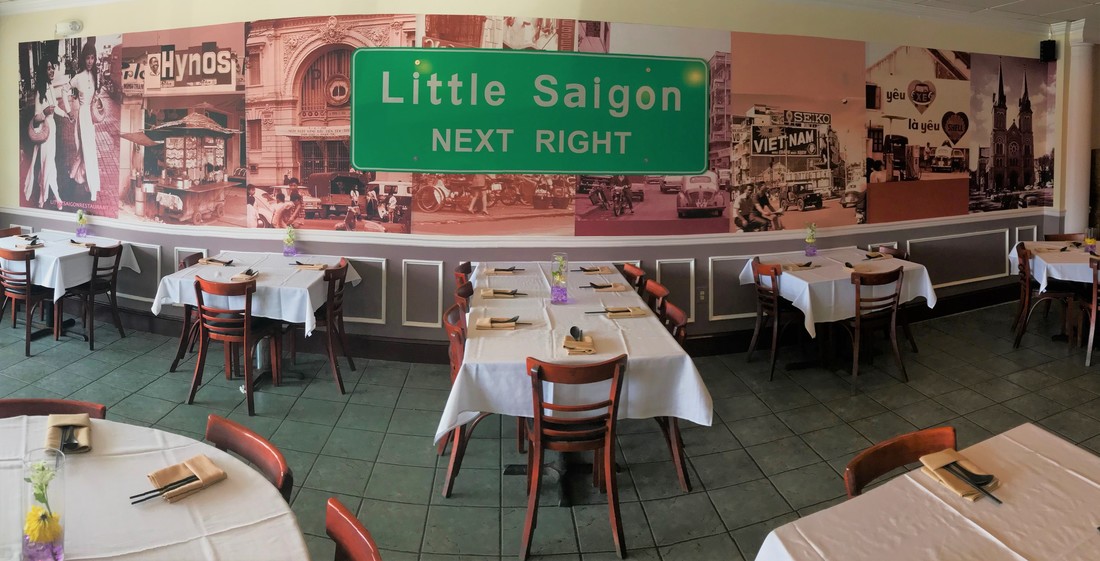
The first restaurants opened in the area that would later be called “Little Saigon.” They were very simple — plastic chairs, cheap tables, handwritten menus. But the food was incredible because it was made by people who put more than recipes into it; they put their history of survival and adaptation.
What’s particularly notable: these restaurants didn’t compete fiercely. They helped one another. If one restaurant ran out of an ingredient, it could borrow from a neighbor. If equipment broke, others shared theirs. Owners even recommended customers go to competitors if they made a particular dish better.
Lessons for other cities
The story of Vietnamese cuisine in Seattle teaches several important things:
Adaptation is not the loss of tradition but its evolution. Vietnamese refugees couldn’t cook exactly as they had at home, but they didn’t abandon their cuisine. Instead they created a new version that preserved the soul of Vietnamese food while using what was available.
Community is more powerful than individual effort. The seed network, Thanh’s substitution notebook, dinner clubs, mutual aid in opening restaurants — all of this worked because people helped one another. No one tried to do everything alone.
Immigrants bring not only their culture but also adaptability. Vietnamese refugees demonstrated incredible inventiveness. They didn’t wait for someone to create conditions for them — they created them themselves, using balconies, church basements, and their apartments.
Today other cities with Vietnamese communities can learn from Seattle’s experience. It’s important not just to provide immigrants with a place to live, but also to support their initiatives — community gardens, cultural centers, help starting small businesses. It’s important to understand that immigrant cuisines often become “hybrid” — and that’s fine; it’s part of making a new home.
The story of seeds in envelopes reminds us that the most interesting things often arise not by plan but out of necessity. Seattle‑Vietnamese cuisine wasn’t anyone’s business idea. It grew out of homesickness, the desire to share food with neighbors, and little seeds planted in pots on balconies. That’s why it became so special — it carries not only flavor but also the story of how people find a home in a new place without forgetting the old.