In the early 1900s, streets began to appear in Seattle that looked as if a single architect had designed them. Houses stood in neat rows, each slightly different from its neighbor, yet together they gave the impression that someone very clever had thought everything through in advance. Colors flowed from one to another — from warm brown to soft green, then to gray-blue. It seemed like the result of careful planning. But the truth was quite different, and much more interesting.
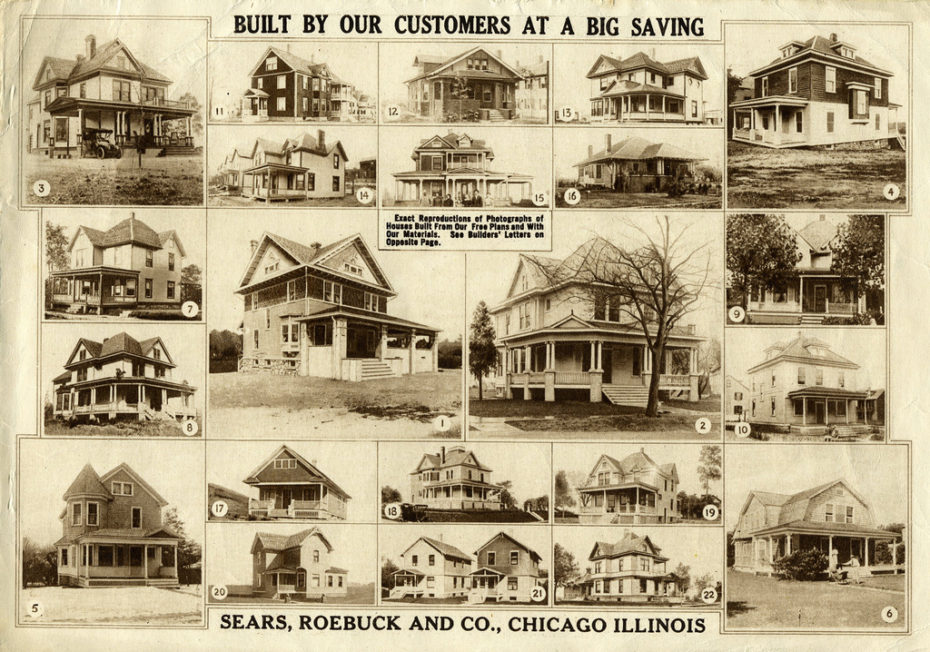
These houses were not planned by anyone. They were ordered by mail, like toys or books are ordered online today. A huge catalog would arrive from companies like Sears or Montgomery Ward, people would pick a house they liked, and within weeks enormous crates with numbered boards, windows, doors and even nails would be delivered to their lot. This was called a "kit house." And the harmonious look of the streets was created by the women who met secretly and agreed on colors while their husbands thought they were just having tea and gossiping.
Catalog houses and neighbor-builders
Imagine opening a thick magazine and finding whole houses instead of clothing or toys. Under each house was a price — about what a good car would cost today. The 1908 Sears catalog listed more than 40 different house models. You could choose a small four-room bungalow for $650 or a large two-story house for $2,500.
When an order arrived, 10,000 to 30,000 pieces were unloaded onto the lot! Each board was numbered, and a 75-page instruction manual with drawings was included. It was like the biggest LEGO set in the world, only made of real wood. And this is where the most interesting part began.
Families rarely built the houses alone. In Seattle neighborhoods now called "craftsman neighborhoods," there was a tradition of "building parties." When someone received a kit house, neighbors came to help. The men sawed boards and hammered nails, the women prepared food for all the workers and discussed how the house should look on the outside. Children ran around, handed tools and played on the scrap wood.
One longtime Fremont resident recalled how his grandmother said: "In three weekends we built the Johnsons' house, then two weeks later ours, then we helped the O'Briens. By the end of summer the whole street was finished, and we knew every family as if they were relatives."
Mrs. Anderson’s living-room secret meetings
But what truly made these streets special was not the houses themselves, but how the women decided to paint them. And here begins a story that almost no one knows.
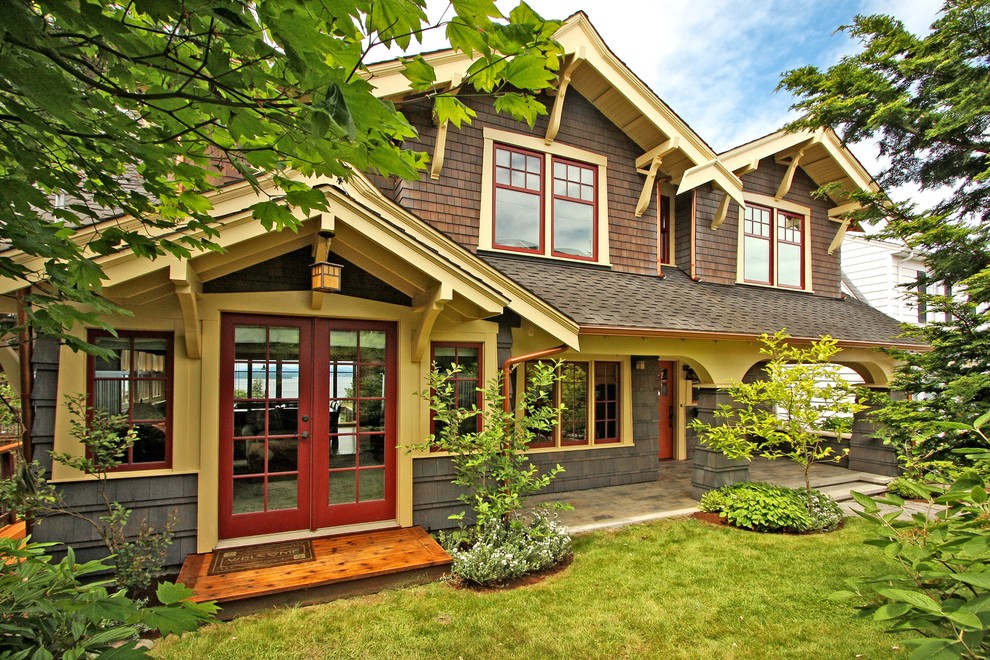
In 1910, seven kit houses were being built at once on a street now called Phinney Avenue North. They all looked similar — low, wide-porched, with gabled roofs and wooden columns. It was the classic craftsman style, very popular then in America. The problem was that if all the houses were painted the same, the street would look dull, like seven twins. But if each chose colors independently, it could become chaotic — imagine a bright pink house next to a lurid green and a neon yellow one.
The women decided to take matters into their own hands. Elizabeth Anderson, a former schoolteacher, invited her neighbors "for tea" — what women's gatherings were called then. But instead of gossip, they discussed colors. Elizabeth brought fabric swatches in various shades and laid them out on the table, trying to find combinations that would look good side by side.
"My husband thinks a house should be brown like the earth so it doesn't stand out," one woman said. "Mine says paint is an unnecessary expense; we can just leave the wood as it is," another added. But the women felt differently. They had just moved into a new neighborhood; many had come from other states or even countries. They wanted to create something beautiful, a place that would feel like home, not a row of identical boxes.
Elizabeth proposed a plan: they would choose a palette of five or six colors that worked well together, and each family would paint their house in one of those colors. It would be like a rainbow, but soft and pleasing to the eye. The women agreed, but decided not to tell the husbands yet — they might object or insist on their own preferences.
A rainbow born of secrecy
For several weeks the women met in secret. They went to paint stores where the clerk showed them samples, explained which colors made a house look bigger or smaller, which faded in sunlight and which stayed vibrant for years. It was like art class, only their canvas was whole houses.
They chose a palette of six shades: a warm cocoa brown, a soft mossy green, a gray-blue like the sky before rain, a creamy butter yellow, terracotta (a reddish-orange like clay pots), and a deep charcoal gray. All these colors were natural and muted — in the craftsman style, loud, gaudy paints were not used.
When it came time to paint, each woman "accidentally" picked the exact color they had agreed on. The husbands were surprised by the coincidence but were too busy with work to ask many questions. "What a happy coincidence!" they said as the street transformed into a pleasing composition.
One husband, Mr. Olson, did become suspicious. He asked his wife directly: "Mildred, were you planning this?" Mildred smiled and replied, "Dear, we were only having tea and talking about what colors we like. Is that a crime?" Technically she did not lie — they really were having tea. She simply omitted that they had also been laying out fabric swatches and making color schemes.
By the end of the summer of 1910 the street was complete. Seven houses stood in a row, each its own color, yet together they formed a harmonious picture. People from other neighborhoods came to see the "rainbow street." The local paper even ran a short note: "A new street in the Phinney district demonstrates remarkable unity of taste among settlers."
How the secret became tradition
The story of the women's "tea meetings" quickly spread to other developing areas of Seattle. It turned out many women wanted the same thing — beauty and harmony — but feared being labeled wasteful or vain. Learning that someone had already done it successfully, other groups of women began to replicate the idea.
In Ballard in 1912, women went even further. They not only coordinated house colors but also agreed on what flowers to plant in the front yards. In spring the whole street was covered in pinks and whites, and in summer blues and purples. A longtime resident remembered: "My great-grandmother said they wanted the street to be like one big garden, where each house is a flowerbed."
Interestingly, this tradition of coordination helped create what architects now call the "visual identity" of Seattle's craftsman neighborhoods. If you look at old photos from the 1910s and 1920s, you can see that the houses appear deliberate and harmonious, even though different families built them at different times. It was not an accident or the work of a professional designer — it was the result of women talking, sharing ideas and finding compromises.
The husbands eventually learned the truth, but by then they no longer objected. Too many people were praising their streets. Some were even proud: "My wife helped plan the whole neighborhood!" Though in reality it was the wives who did the planning work, quietly over tea.
What remains of those houses and those secrets
Today, more than a hundred years later, many of those houses still stand. Phinney Ridge, where Elizabeth Anderson lived, is considered one of Seattle's most beautiful neighborhoods. Tourists come to photograph old craftsman bungalows, unaware that their harmonious look is the result of secret women's meetings.
Of course, over the decades houses have been repainted many times, and not always in the original colors. But the tradition of coordinating colors with neighbors has endured. In some neighborhoods there are even informal "color committees" where residents discuss paint choices so as not to spoil the overall look of the street. Now men take part in those committees too, and the meetings are no longer secret.
This story teaches a few important lessons. First, beauty often requires cooperation. One beautiful house is nice, but an entire street of houses that complement each other is magical. Second, sometimes important decisions are made not in official offices but in kitchens and living rooms over a cup of tea. Third, what appears natural and accidental is often the product of someone's effort and care.
The women who met in Elizabeth Anderson's living room were not architects or designers. They were ordinary people who wanted to make their new homes beautiful. But it was their small secret meetings that shaped the appearance of whole Seattle neighborhoods that we see and love today. They proved you don't need to be an expert to create beauty — you just need to talk with your neighbors, listen to one another and find solutions that make life better for everyone.
And who knows — maybe in your neighborhood there's something beautiful and harmonious that came about because someone once simply talked with their neighbors over a cup of tea.