Imagine you found a dusty box of children's drawings in an old house. But these weren't just pictures — they were real instructions for growing vegetables in a special way so the soil would never get tired. Those drawings kept a secret for seventy years that today helps entire cities! And the drawings were made by children who were once forced to leave their homes simply because their families had Japanese names and faces.
Farmers who knew how to talk to the soil
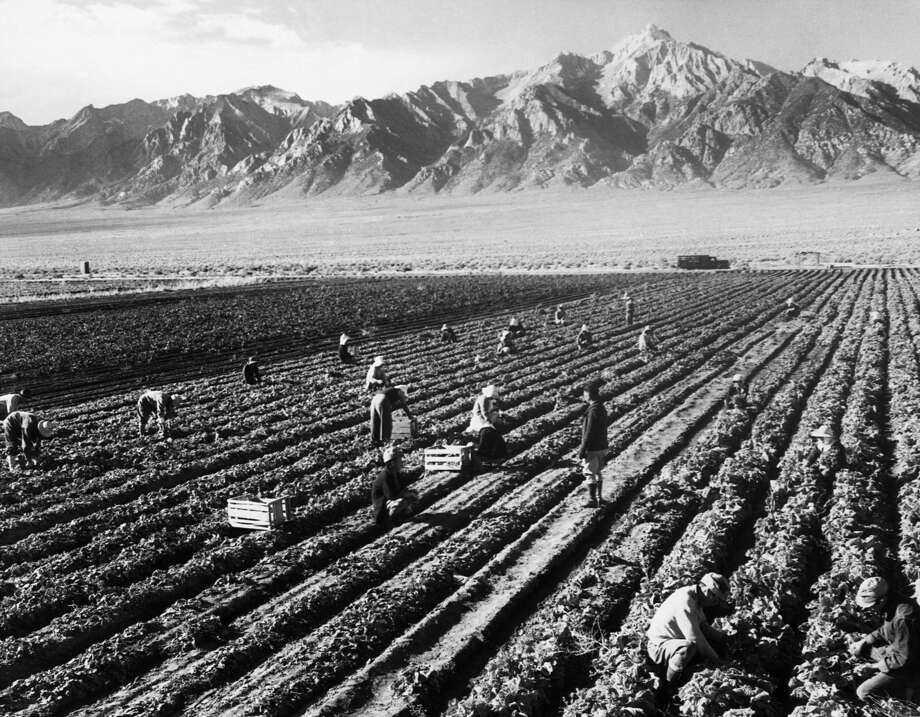
Before 1942 in California, on the west coast of the United States, thousands of families of Japanese descent lived there. Many of them were farmers, and they knew things about growing plants that their neighbors did not. For example, the Yamamoto family from a small town near San Francisco invented a special way to water strawberries: they made tiny channels between the beds so the water flowed exactly where it was needed, and not a drop was wasted.
Another family, the Tanakas, grew several kinds of vegetables in the same field — not side by side, but together. Tomatoes grew near beans, and the beans helped the tomatoes because their roots made the soil more nutritious. This is called "companion planting," and few people did it at the time. Japanese farmers had learned this from their grandparents, who for centuries had grown rice on small plots in Japan where every centimeter of land was precious.
Thanks to methods like these, Japanese-American farmers grew nearly half of all vegetables in California, even though their farms occupied only a small portion of the land. Their secret wasn't big tractors or chemicals, but that they understood the soil and the plants.
The day the neighbors vanished
But in 1942, during World War II, something terrible happened. America was at war with Japan, and the government decided that all people of Japanese descent — even those born in America who had never been to Japan — could be dangerous. It was unfair and based only on fear and prejudice.
Families were given just a few days to pack. Twelve-year-old Mary Yamamoto later remembered: "My mother cried in the garden. She stroked the strawberry leaves as if saying goodbye to friends." Families could take only what fit in a suitcase. They were sent to camps — specially isolated places in the desert, surrounded by barbed wire, where they had to live in barracks for several years.
When the Japanese families left, their farms were abandoned. Neighboring farmers of European descent tried to grow crops on that land, but nothing worked. The strawberries withered. The tomatoes got sick. The soil became hard and gray. It turned out that without the special knowledge of the Japanese farmers, even good land stopped producing. Stores had fewer fresh vegetables, and prices rose.
The treasure box under the floorboard
But some neighbors of the Japanese families proved to be true friends. The Andersons lived next to the Tanaka family. When the Tanakas left, Mr. Anderson promised, "We'll look after your land. When you come back, it will be waiting for you."
Before leaving, fourteen-year-old Ken Tanaka did something remarkable. He knew his family might lose the farm forever. So he took notebooks and pencils and began to draw. He drew diagrams: how his father made channels for water, how his mother planted in a special pattern, when to water and when not to. He wrote notes: "Plant beans April 15, then tomatoes after them." "Never water at noon, only in the morning." "Fish-head compost makes the soil happy."
Ken gave those notebooks to Mr. Anderson. "This is all our family knows," he said. Anderson hid the notebooks under a floorboard in his house. It was dangerous: at that time helping Japanese families was not welcome, and other neighbors might judge him.
But Anderson didn't just hide the notebooks — he used them. Secretly, at night, he cared for a part of the Tanaka land following Ken's instructions. He dug the same water channels, planted the crops together as drawn. And the land came back to life! His own harvest improved too.
How the children's drawings came back to the city
The war ended in 1945, and Japanese families were finally allowed to return home. But many lost everything: their houses were occupied, farms sold, belongings stolen. The Tanaka family returned to find their land still alive, and Anderson had kept it for them. When he returned Ken's notebooks to the now-grown young man, Ken cried.
But the story didn't end there. In the 1970s, Ken's granddaughter, Amy, was studying ecology at university. She found her grandfather's old notebooks in the attic. And she suddenly realized: the methods her grandfather had drawn as a child were exactly what modern cities needed!
You see, by that time people understood that large farms using chemicals were harming nature. Cities were growing, and farmland was shrinking. Scientists were looking for ways to grow food inside cities, on rooftops and in small gardens, without exhausting the soil. It turned out that the Japanese methods from a century earlier — companion planting, smart watering, natural fertilizers — were perfect for this!
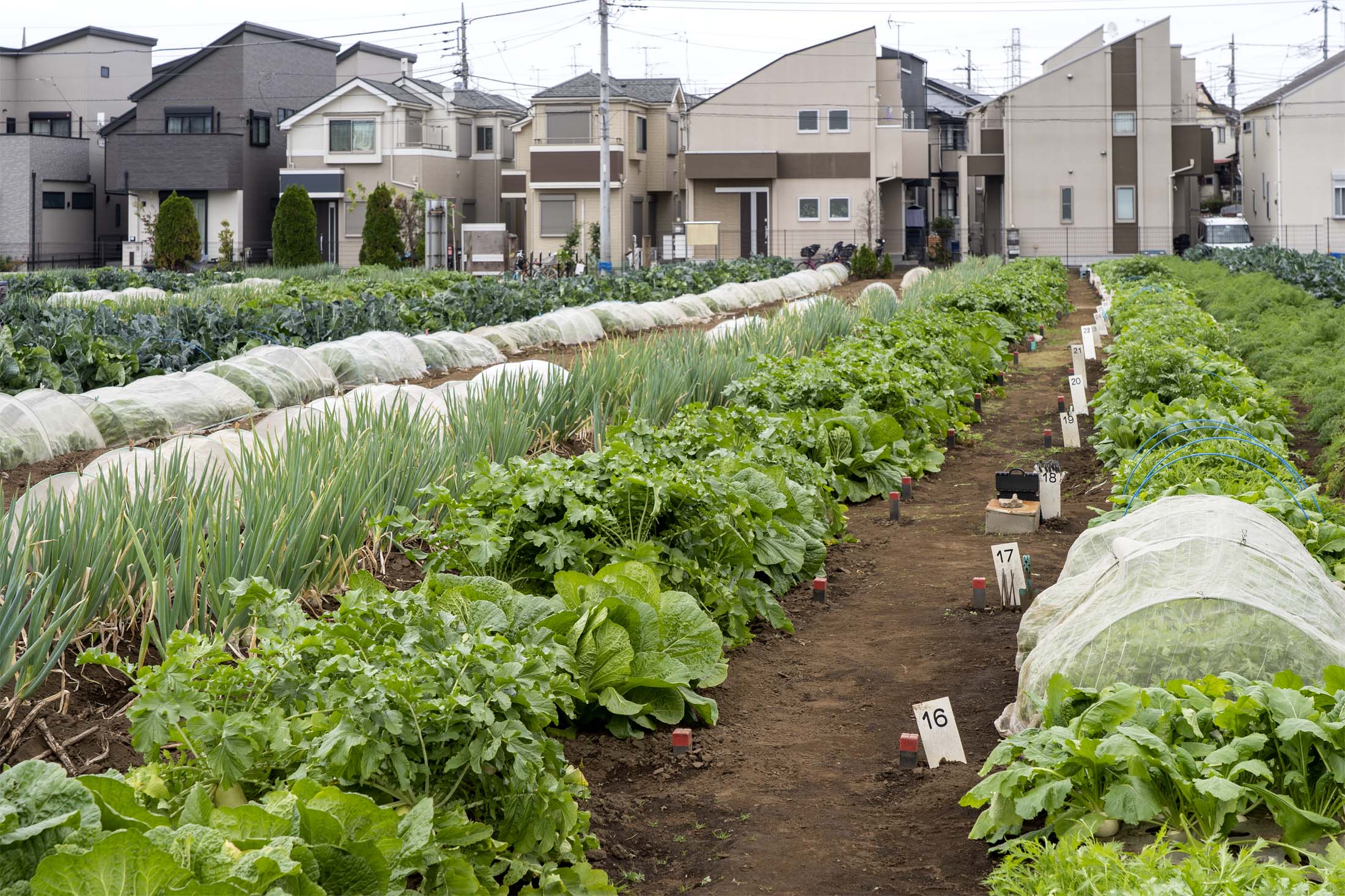
Amy showed her grandfather's drawings to scientists. They were amazed. Soon these methods began to be taught at universities. Today in San Francisco, New York City, and other cities, vegetables are grown on rooftops by the same principles the boy drew before his family was taken to a camp.
Why this story matters today
Now, in 2024, more and more cities around the world are using "urban farming." In Moscow, Tokyo, Paris, people grow lettuce and tomatoes on balconies and roofs. They often don't know they are using methods preserved by children and their friends eighty years ago.
This story teaches three important things. First, knowledge is a treasure that should be preserved, even when everything around you is falling apart. Ken could have left with just a suitcase, but he wrote down what his family knew. Second, true friendship means helping others even when it's difficult or dangerous. Anderson risked a lot to preserve the land and the notebooks. Third, what children create can change the world many years later. Ken was just a teenager with a pencil, but his drawings feed people around the world to this day.
And one more thing: this story reminds us not to judge people by their appearance or origin. Japanese families were as American as anyone else, yet they were punished simply for how they looked. It was unjust then, and it is unjust now when people are judged by nationality, religion, or skin color.
So next time you see a green garden on a rooftop or hear about the importance of caring for nature, remember Ken and his drawings. Remember that even in the darkest times children can preserve the light of knowledge for the future. And that each of us, even a child, can do something important that will help people many, many years from now.