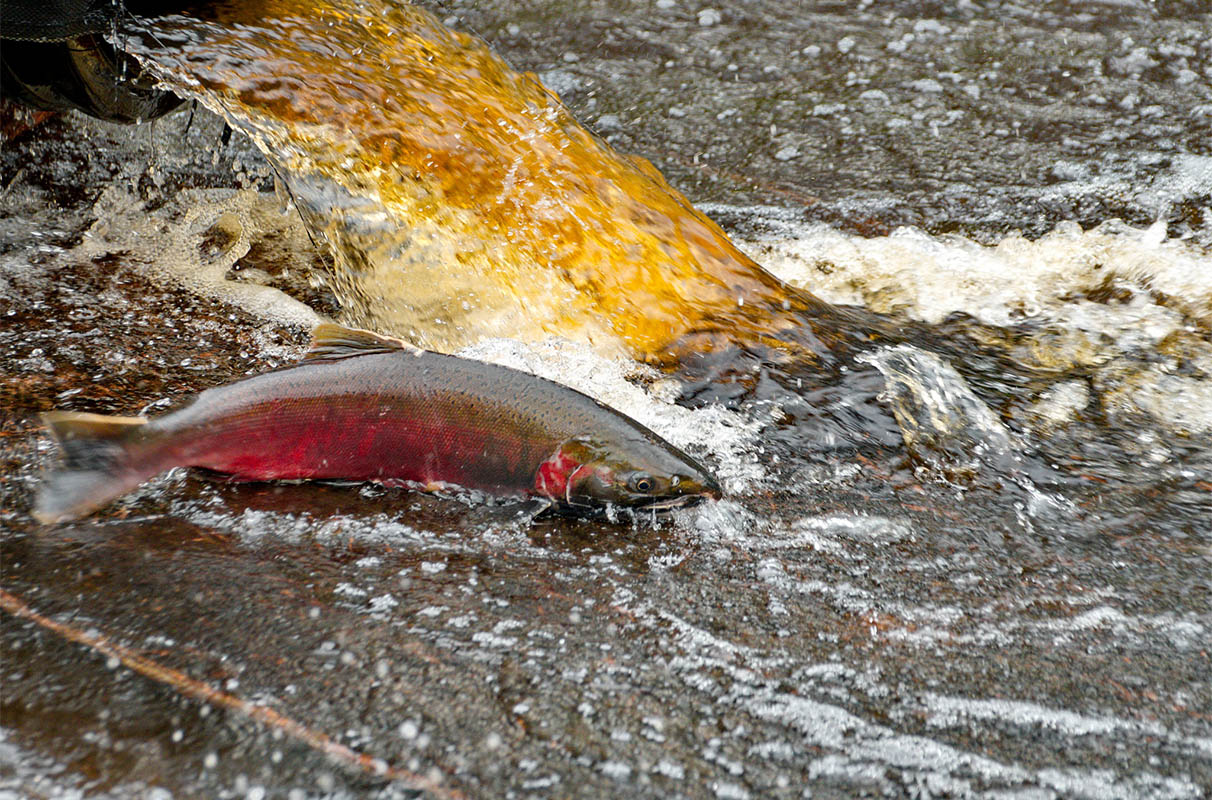
Seattle was built on water, and salmon still live in its streams. But bringing the fish back to the city was no easy walk in the park—it was a genuine investigation. It involved a vanished river, people who were ignored for decades, and an unexpected “culprit”: ordinary car tires.
The River That Disappeared in a Single Year
More than a century ago, water from Lake Washington flowed into the Duwamish River through a winding channel called the Black River. Duwamish people lived along its banks, and salmon entered the river every autumn. In 1916, during construction of a navigable canal, the lake’s water level was lowered by about 2.7 meters. The Black River almost completely dried up, leaving both the fish and the people connected to this route without their familiar passage.
This was not a natural accident; it was a decision made by the people building the city. That is why the story of the salmon’s return begins not with picturesque fish ladders, but with an acknowledgment: much was once done here without regard for those who had lived in the area before.
A Voice That Went Unheard for Too Long
For the Coast Salish peoples, salmon were more than food. They were connected to traditions such as the First Salmon Ceremony, after which the fish’s bones were returned to the water so that the salmon would “know” they were respected. When the Treaty of Point Elliott was signed in 1855—with Chief Seattle among its signatories—Indigenous people were promised the right to fish in their usual places. But that promise went unfulfilled for many years.
In the 1960s and 1970s, members of the Nisqually Tribe, including Billy Frank Jr., organized “fish-ins” on the rivers. He was arrested dozens of times for fishing in the way his ancestors had. In 1974, Judge George Boldt ruled that the tribes had the right to half of the salmon harvest and must participate in the management of fishery resources. Since then, tribes and the state have worked together to monitor rivers and restore them. They were reminding people to protect the fish back when few others were thinking about it.
Fish That Died After the Rain
In the 2000s, scientists noticed something strange in Longfellow Creek in West Seattle. Coho salmon returning from the ocean to spawn would begin circling near the surface after heavy rains and die within hours, without producing offspring. For years, no one could identify the cause.
The investigation proceeded step by step. Scientists from Washington State University